| 凵 | ||
|---|---|---|
| ||
| 凵 (U+51F5) "receptacle" | ||
| Pronunciations | ||
| Pinyin: | kǎn | |
| Bopomofo: | ㄎㄢˇ | |
| Wade–Giles: | kʻan3 | |
| Cantonese Yale: | hom1 | |
| Jyutping: | ham3 | |
| Pe̍h-ōe-jī: | khám | |
| Japanese Kana: | カン kan (on'yomi) | |
| Sino-Korean: | 감 gam | |
| Names | ||
| Chinese name(s): | 凶字框 xiōngzìkuàng 下三框 xiàsānkuāng | |
| Japanese name(s): | 凵繞/かんにょう kannyō 受け箱/うけばこ ukebako 下箱/したばこ shitabako 函構/かんがまえ kangamae | |
| Hangul: | 입벌릴 ip beolril | |
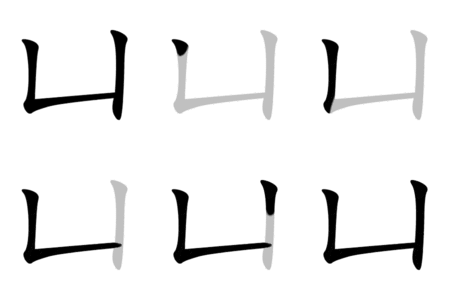
| Stroke order animation | ||
 | ||
Radical 17 or radical open box (凵部) is one of 23 of the 214 Kangxi radicals that are composed of 2 strokes.
凵 is also the 20th indexing component in the Table of Indexing Chinese Character Components predominantly adopted by Simplified Chinese dictionaries published in mainland China.
As for the similar radicals 22 匚 and 13 冂, the name of radical 17 is purely descriptive of its shape, 下三框 "lower three-sided frame".
Evolution
 Oracle bone script character
 Large seal script character
 Small seal script character
Derived characters
| Strokes | Characters |
|---|---|
| +0 | 凵 |
| +2 | 凶 (bad, inauspicious) |
| +3 | 凷 凸 凹 出 (go out, send out) 击SC (=擊 -> 手, to hit) |
| +4 | 凼 |
| +6 | 函SC/TC variant/函Kangxi/JP/KO variant (box) |
| +7 | 凾 (=函) |
| +10 | 凿SC (=鑿 -> 金) |
The radical does not occur as a character on its own. In combination, it historically takes meanings such as "open mouth", "box", "frame", "hole" or "receptacle".
Also derived from the radical are the Simplified Chinese characters including 击 "to hit", without any historical connection to the radical.
幽 "deep, dark" is derived from radical 46 (山 "mountain") rather than radical 17.
Literature
- Fazzioli, Edoardo (1987). Chinese calligraphy : from pictograph to ideogram : the history of 214 essential Chinese/Japanese characters. calligraphy by Rebecca Hon Ko. New York: Abbeville Press. ISBN 0-89659-774-1.
- Leyi Li: “Tracing the Roots of Chinese Characters: 500 Cases”. Beijing 1993, ISBN 978-7-5619-0204-2
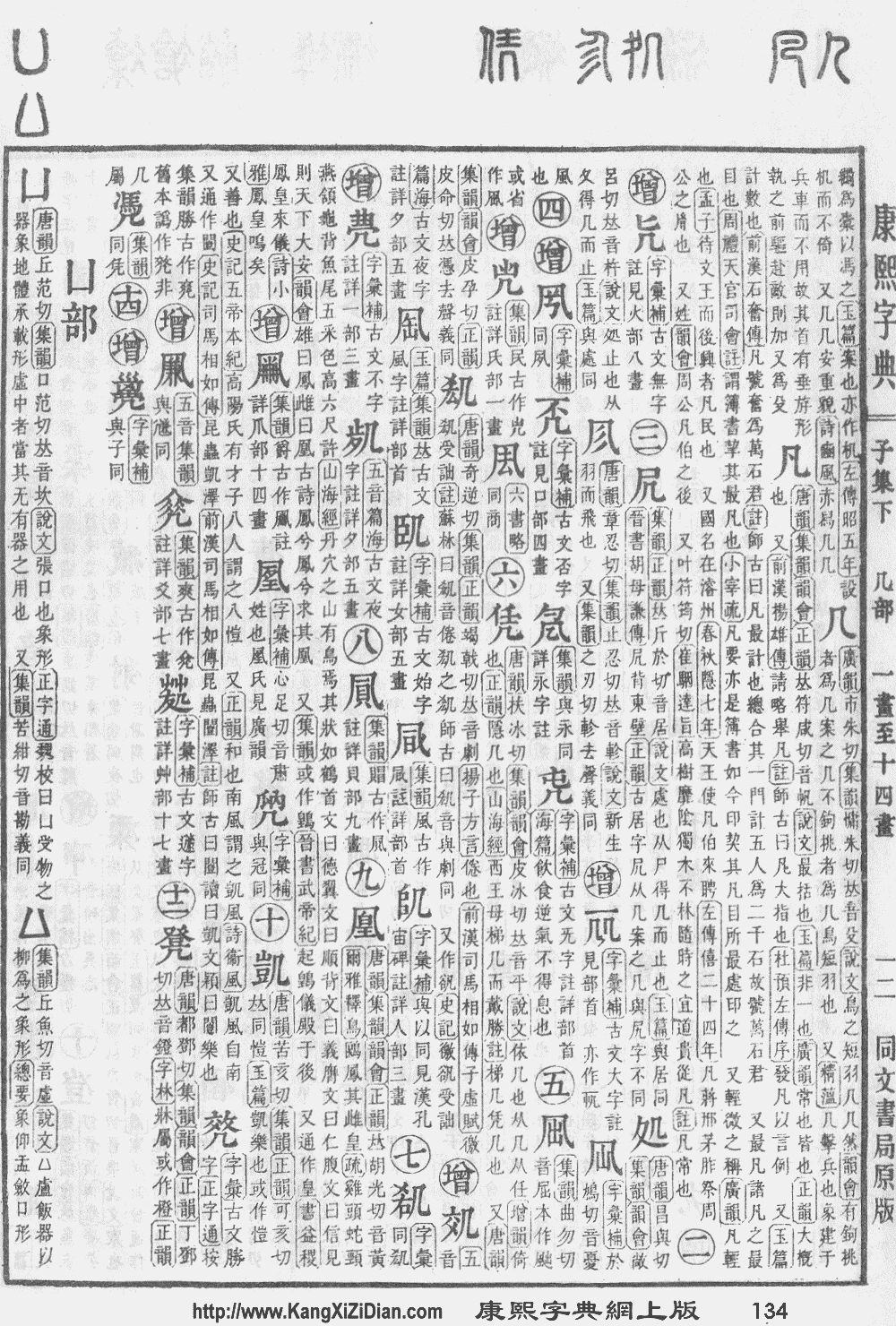
- KangXi: page 134, character 17
External links

Simplified Chinese characters radicals (indexing components) | |
|---|---|
| 1 stroke | |
| 2 strokes | |
| 3 strokes | |
| 4 strokes | |
| 5 strokes | |
| 6 strokes | |
| 7 strokes | |
| 8 strokes | |
| 9 strokes | |
| 10 strokes | |
| 11 strokes | |
| 12 strokes | |
| 13 strokes | |
| 14 strokes |
|
| 17 strokes |
|
GF 0011-2009 Table of Indexing Chinese Character Components prescribes 201 principle indexing components and 100 associated indexing components (in brackets) used in Simplified Chinese. Not all associated indexing components are listed above. | |