| 食 | ||
|---|---|---|
| ||
| 食 (U+98DF) "eat, food" | ||
| Pronunciations | ||
| Pinyin: | shí | |
| Bopomofo: | ㄕˊ | |
| Wade–Giles: | shi2 | |
| Cantonese Yale: | sik6 | |
| Jyutping: | sik6 | |
| Japanese Kana: | ショク shoku (on'yomi) く-う ku-u / た-べる ta-beru (kun'yomi) | |
| Sino-Korean: | 식 sik | |
| Hán-Việt: | thực, tự | |
| Names | ||
| Chinese name(s): | (Left) 食字旁 shízìpáng (Bottom) 食字底 shízì | |
| Japanese name(s): | 食/しょく shoku (Left) 食偏/しょくへん shokuhen | |
| Hangul: | 밥 bap | |
| Stroke order animation | ||
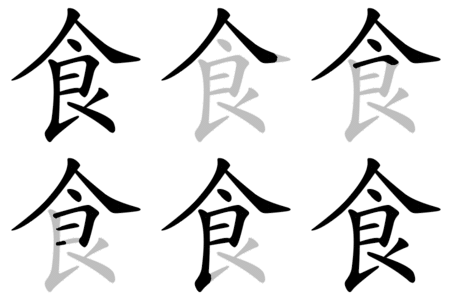 | ||
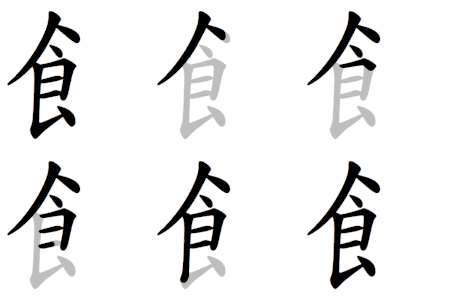
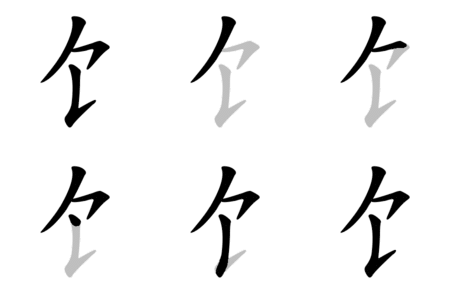
Radical 184 or radical eat (食部) meaning "eat" or "food" is one of the 11 Kangxi radicals (214 radicals in total) composed of 9 strokes.
In the Kangxi Dictionary, there are 403 characters (out of 49,030) to be found under this radical.
食 is also the 185th indexing component in the Table of Indexing Chinese Character Components predominantly adopted by Simplified Chinese dictionaries published in mainland China, with the simplified left component form 饣 and its traditional form 飠 listed as its associated indexing components.
Evolution
 Oracle bone script character
 Bronze script character
 Large seal script character
 Small seal script character
Derived characters
| Strokes | Characters (食飠) | Characters (饣) |
|---|---|---|
| +0 | 食 飠Component | 饣SC component (=飠) |
| +2 | 飡 (=餐) 飢 飣 飤 (=飼) | 饤SC (=飣) 饥SC (=飢) |
| +3 | 飥 飦 飧 飨SC (=饗) | 饦SC (=飥) 饧SC (=餳) |
| +4 | 飩 飪 飫 飬 飭 飮 (=飲) 飯 飰 (=飯) 飱 (=飧) 飲 | 饨SC (=飩) 饩SC (=餼) 饪SC (=飪) 饫SC (=飫) 饬SC (=飭) 饭SC (=飯) 饮SC (=飲) |
| +5 | 飳 飴 飵 飶 飷 飸 (=饕) 飹 飻 飼 飽 飾 飿 | 饯SC (=餞) 饰SC (=飾) 饱SC (=飽) 饲SC (=飼) 饳SC (=飿) 饴SC (=飴) |
| +6 | 飺 餀 餁 (=飪) 餂 餃 餄 餅 餆 餇 餈 (=糍 -> 米) 餉 養 餋 餌 餍SC (=饜) 餎 餏 | 饵SC (=餌) 饶SC (=饒) 饷SC (=餉) 饸SC (=餄) 饹SC (=餎) 饺SC (=餃) 饻SC (=餏) 饼SC (=餅) |
| +7 | 餐 餑 餒 餓 餔 餕 餖 餗 餘 餙 餝 | 饽SC (=餑) 饾SC (=餖) 饿SC (=餓) 馀SC (=餘) 馁SC (=餒) 馂SC (=餕) |
| +8 | 餚 餛 餜 餞 餟 餠 (=餅) 餡 餢 餣 餤 餥 餦 餧 (=餵) 館 餩 | 馃SC (=餜) 馄SC (=餛) 馅SC (=餡) 馆SC (=館) |
| +9 | 餪 餫 餬 (=糊 -> 米) 餭 餮 餯 餰 餱 餲 餳 餴 餵 餷 | 馇SC (=餷) 馈SC (=饋) 馊SC (=餿) 馋SC (=饞) |
| +10 | 餶 餸 餹 (=糖 -> 米) 餺 餻 (=糕 -> 米) 餼 餽 餾 餿 饀 饁 饂 饃 | 馉SC (=餶) 馌SC (=饁) 馍SC (=饃) 馎SC (=餺) 馏SC (=餾) 馐SC (=饈) |
| +11 | 饄 (=糖 -> 米) 饅 饆 饇 饈 饉 | 馑SC (=饉) 馒SC (=饅) |
| +12 | 饊 饋 饌 饍 (=膳 -> 肉) 饎 饏 饐 饑 饒 饓 | 馓SC (=饊) 馔SC (=饌) |
| +13 | 饔 饕 饖 饗 饘 饙 | |
| +14 | 饚 饛 饜 | |
| +16 | 饝 (=饃) | |
| +17 | 饞 饟 (=餉) | |
| +19 | 饠 饡 | |
| +22 | 饢 | 馕SC (=饢) |
Variant forms
This radical character has different forms in different languages when used as an individual character and as a component.
Traditionally, when used as an individual character, its third stroke is printed as either a horizontal line (食) or a vertical line (食), but more often written as a slanted dot (食); when used as a left component, it is usually printed as 𩙿 and written as 飠 in regular script.
In China, xin zixing adopted the handwritten form 食 and 飠 and applies it also to printing typefaces. This change is applied chiefly to Traditional Chinese publications in mainland China; the left component form 飠 was already replaced by the simplified form 饣 prior to the printing typeface reform. Taiwan's Standard Form of National Characters and Hong Kong's List of Graphemes of Commonly-Used Chinese Characters use 食 and 飠 (the third stroke is horizontal) as the standard forms, while other alternative forms (e.g. 食/𩙿, 食/飠) are still rather prevalent in publishing.
In modern Japanese, 食 (third stroke is horizontal) and 𩙿 are seen as the traditional/orthodox forms. The shinjitai reform changed the third stroke in 食 as an individual character or as a non-left component to a short horizontal line (食); changed the left component form 𩙿 to 飠. In principle, these changes apply only to jōyō kanji (more specifically, jōyō kanji before 2010 revision; some characters added in 2010 were not simplified); the traditional form is used for hyōgai kanji.
| Kangxi Dict. Korean |
Japanese | Trad. Chinese (TW, HK, MO) |
Trad. Chinese (Mainland China) |
Simp. Chinese |
|---|---|---|---|---|
| 食 | 食 | 食 | 食 | 食 |
| 飼 | 飼 | 飼 | 飼 | 饲 |
| 饉 | 饉 | 饉 | 饉 | 馑 |
| 饕 | 饕 | 饕 | 饕 | 饕 |
Literature
- Fazzioli, Edoardo (1987). Chinese calligraphy : from pictograph to ideogram : the history of 214 essential Chinese/Japanese characters. calligraphy by Rebecca Hon Ko. New York: Abbeville Press. ISBN 0-89659-774-1.
External links

Simplified Chinese characters radicals (indexing components) | |
|---|---|
| 1 stroke | |
| 2 strokes | |
| 3 strokes | |
| 4 strokes | |
| 5 strokes | |
| 6 strokes | |
| 7 strokes | |
| 8 strokes | |
| 9 strokes | |
| 10 strokes | |
| 11 strokes | |
| 12 strokes | |
| 13 strokes | |
| 14 strokes |
|
| 17 strokes |
|
GF 0011-2009 Table of Indexing Chinese Character Components prescribes 201 principle indexing components and 100 associated indexing components (in brackets) used in Simplified Chinese. Not all associated indexing components are listed above. | |


