| Euphorbia tanaensis | |
|---|---|
 | |
Scientific classification  | |
| Kingdom: | Plantae |
| Clade: | Tracheophytes |
| Clade: | Angiosperms |
| Clade: | Eudicots |
| Clade: | Rosids |
| Order: | Malpighiales |
| Family: | Euphorbiaceae |
| Genus: | Euphorbia |
| Species: | E. tanaensis |
| Binomial name | |
| Euphorbia tanaensis Bally | |
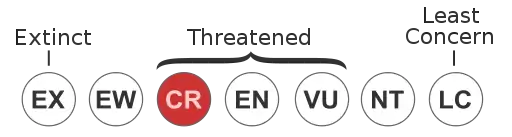
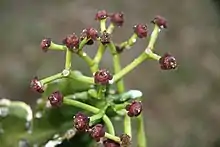
Euphorbia tanaensis, commonly known as the Tana River Euphorbia, is a Critically Endangered flowering plant indigenous to the Tana River in Kenya. Flourishing on the fringes of lowland wet forests dominated by Treminalia zambesiaca, this unique species faces an alarming population decline. Initially identified with nine trees in 1988, a subsequent survey in 2006 revealed a stark reduction to only four individuals, with no evidence of natural regeneration. The species is confined to a solitary site at Witu, covering 4 km2 (1.5 sq mi), and its habitat is under immediate threat from serious logging, pole-cutting, and pit saws. With no known occurrences in protected areas or ex situ collections, and an estimated population of just four mature individuals, demanding urgent conservation measures to safeguard its existence and address the imminent threats to its survival.[2]
Habitat
Euphorbia tanaensis thrives in the delicate ecosystems on the periphery of lowland wet forests, particularly those dominated by Treminalia zambesiaca. Its natural habitat is centered around the Tana River in Kenya, specifically at the singular site of Witu. This specific ecological niche contributes to the plant's distinct characteristics and vulnerability.[2]
Conservation
The conservation status of Euphorbia tanaensis is critically endangered, reflecting the urgency and severity of its risk of extinction. Limited to 4 km2 (1.5 sq mi) at Witu on the Tana River, this species faces imminent threats to its habitat, necessitating immediate conservation efforts. With an estimated population of only four mature individuals and no known occurrences in protected areas or ex situ collections, conservation initiatives must focus on preserving its unique habitat and implementing strategies for population recovery.[2]
Threats
The primary threats to Euphorbia tanaensis stem from human activities, notably serious logging in its habitat. Evidence of pole-cutting and the use of pit saws in close proximity to the species underscores the immediate dangers it faces. The decline in the population from nine trees in 1988 to only four in 2006, coupled with the absence of natural regeneration, signals a critical need to address and mitigate these threats. The overall habitat degradation, compounded by the suspected decreasing population trend, emphasizes the urgency of addressing anthropogenic pressures to ensure the survival of this critically endangered species.[2]
References
- ↑ Beentje, H.J.; Gereau, R.E.; Hilton-Taylor, C.; Howard, G.; Kindeketa, W.; Luke, W.R.Q.; Maunder, M.; Mwachala, G.; Mwangoka, M.; Ndangalasi, H.; Njau, E.-F.; Schatz, G.E.; Siro Masinde, P.; Wilkins, V.L. (2020). "Euphorbia tanaensis". IUCN Red List of Threatened Species. 2020: e.T30898A2798380. doi:10.2305/IUCN.UK.2020-3.RLTS.T30898A2798380.en. Retrieved 16 November 2021.
- 1 2 3 4 "Redlist - Euphorbia tanaensis".