| Part of the Politics series |
| Monarchy |
|---|
.svg.png.webp) |
 Politics portal Politics portal |
This is a list of dynasties and dynastic regimes in the context of monarchy organized by geographic region. Extant dynasties are rendered in bold and highlighted.
General information
Criteria for inclusion
This list includes defunct and extant monarchical dynasties of sovereign, non-sovereign, national, and subnational statuses. Monarchical polities each ruled by a single family—that is, a dynasty, although not explicitly styled as such, like the Golden Horde and the Qara Qoyunlu—are included. Dynasties had/have come into power in various types of monarchical entities, from loose hereditary tribal units to multinational dynastic empires.
While most dynasties were/are reckoned through the male line, the relatively uncommon cases of dynasties formed through matrilineal succession, such as the Rain Queen dynasty, are also listed.
Although thrones could theoretically be rotated among several families in elective monarchies, some entities consistently elected/elect their rulers from the same family, effectively functioning as hereditary monarchies controlled by dynasties. For example, the Holy Roman Empire was de jure an elective monarchy, but came under the de facto hereditary rule of the House of Habsburg from AD 1440 to AD 1740, and is therefore listed as such in the "Germany" section.
This list also includes monarchical regimes whose ruling houses became extinct or were removed from power after having only one monarch, but would otherwise have been dynastic in their throne successions. For instance, whereas the Thonburi Kingdom had only one ruler, it would likely have produced a series of monarchs from the same ruling clan had the throne not been usurped by the Chakri dynasty; the Thonburi Kingdom is thus included under the "Thailand (Siam)" section.
Where possible, descendants of overthrown dynasties and pretenders are also listed. For instance, the House of Plantagenet laid claim to the throne of the Kingdom of Sicily between AD 1254 and AD 1263, and is thus listed under the "Italy" section. Likewise, the Osmanoğlu family is descended from the Ottoman dynasty, and is therefore included in the "Anatolia (Asia Minor)" section.
Entries in each section are sorted by the start year and end year of their rule, irrespective of the exact dates. Dynasties with unverifiable or disputed periods of rule are listed after those with reign periods that are generally agreed upon by scholars. In cases wherein several dynasties are typically grouped together in conventional historiography, such as the Northern and Southern dynasties of China, they are listed as such for ease of reference.
Houses of nobility that had/have no territorial holdings (and thus were/are not monarchical dynasties in their own right), like the House of Sayn-Wittgenstein-Ludwigsburg and the House of Jocelyn; dynasties of micronations, like the Bertoleoni dynasty; dynasties of religious sects, like the Nusaybah family and the Slonim dynasty; political families, like the Roosevelt family and the Chiang family; family dictatorships, like the Mount Paektu bloodline and the Duvalier dynasty; and dynastic military regimes, like the Choe clan and the Ashikaga shogunate, are not included.
Nomenclature
A dynasty may be known by more than one name, either due to differences between its official and historiographical denominations, and/or due to the existence of multiple official and/or historiographical names. For example, the Amorian dynasty is also referred to as the "Phrygian dynasty".
Due to variations in romanization, the name of a dynasty may be rendered differently depending on the source. For instance, the Qing dynasty is also written as "Ch῾ing dynasty" using the Wade–Giles romanization.
In layman and academic parlance, the name of a dynasty is often affixed before the common name of a state in reference to a state under the rule of a particular dynasty. For example, whereas the official name of the realm ruled by the Qajar dynasty was the "Sublime State of Iran", the domain is commonly known as "Qajar Iran".
Period of rule
The year of establishment and/or the year of collapse of a dynasty may be unknown or remain contentious among scholars. In the latter cases, only an approximate time frame will be given. For example, the Deva dynasty is believed to have ruled during the 12th and 13th centuries AD, but the exact dates are disputed.
The year of establishment and/or the year of collapse of a dynasty could differ from its period of rule over a particular realm and/or geographic region. In such cases, the year(s) provided indicate the period during which a dynasty was/is in power in a particular realm and/or geographic region. For instance, whereas the House of Savoy was founded in AD 1003 in the County of Savoy and maintained its rule until AD 1946 in the Kingdom of Italy, it briefly held the throne of Spain from AD 1870 to AD 1873, and is thus reflected as such in the "Spain" section.
Location of rule
This list is sorted by the territorial extent of dynasties. Listing a particular dynasty under a specific section need not necessarily denote affiliation—political, ethnic, religious, cultural, or otherwise—between the historical dynasty and the contemporary polity/polities existing in the same region. As the succession of states and the identities of the rulers, elites, and subjects or citizens are complex and contentious issues, the classification of dynasties may be multidimensional. For example, the Ayyubid dynasty has been variously described as "Egyptian" and "Syrian" based on its geographic location and the titles held by its monarchs; "Kurdish" according to its rulers' ethnicity; "Arabized" according to its cultural identity; and "Muslim", "Islamic", and "Sunni" based on its religious faith.
Some dynasties appear more than once in this list, because:
- more than one realm was/is ruled by a single dynasty; or
- a single dynastic realm spanned/spans across more than one geographic region.
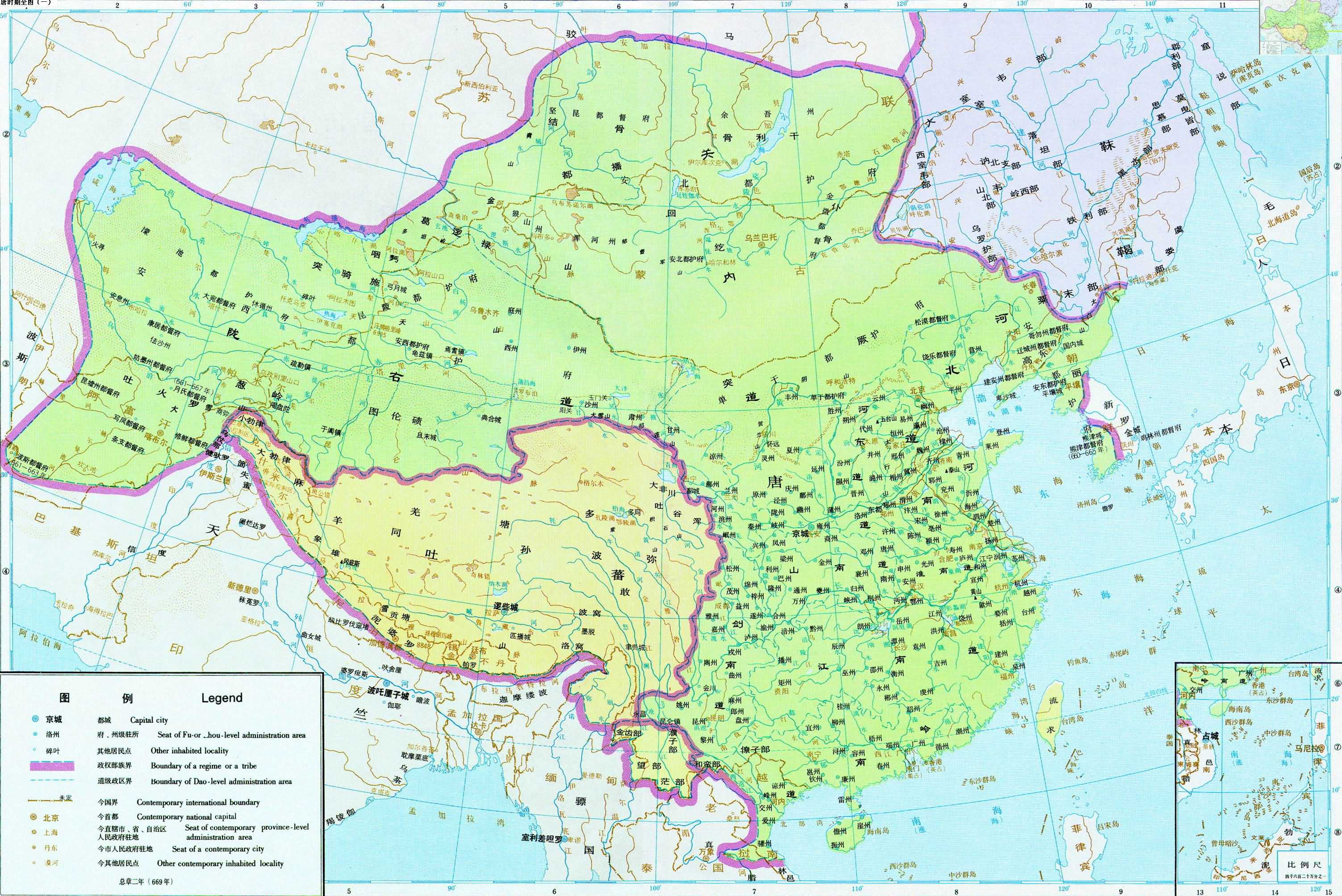
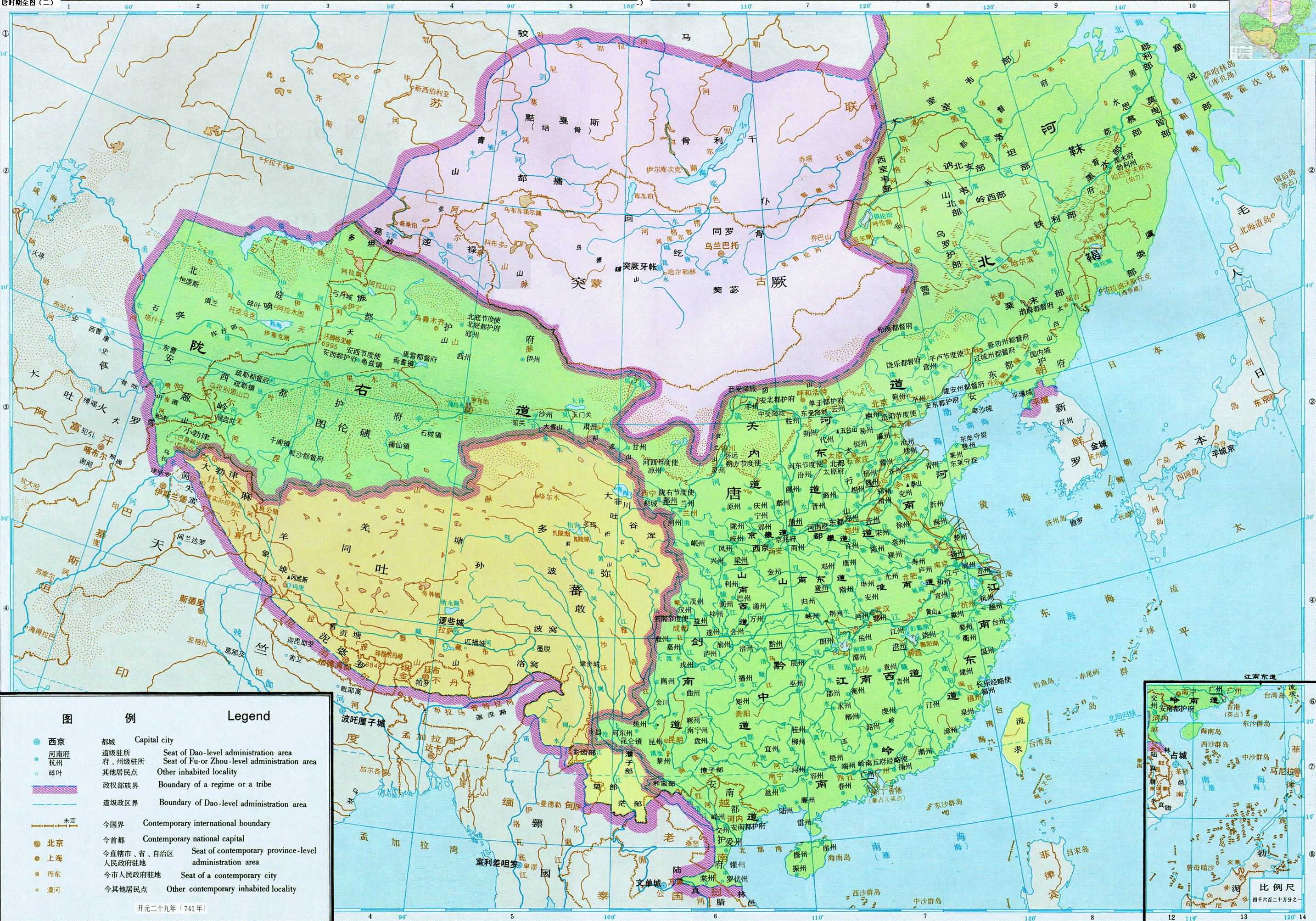
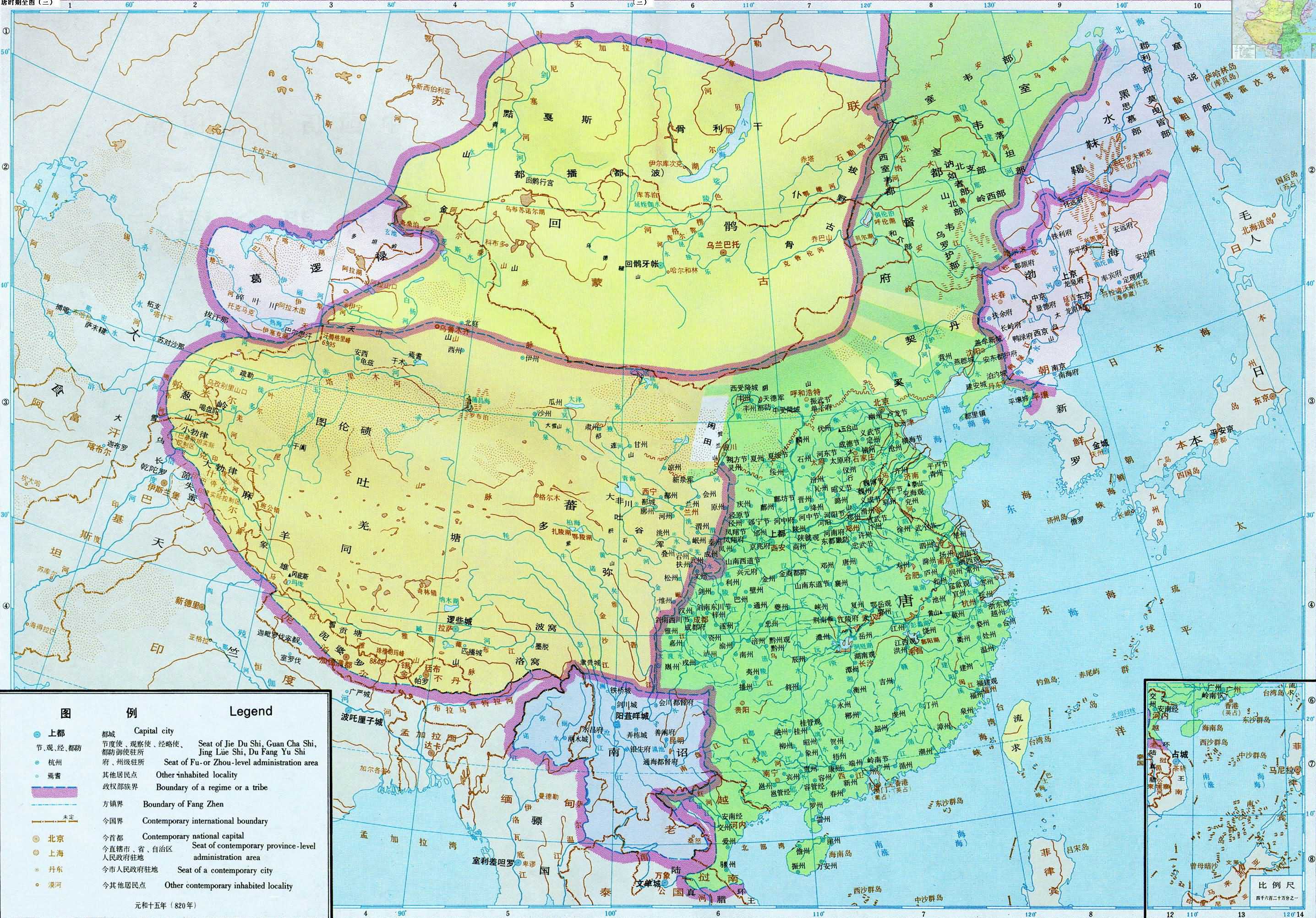
For example, apart from previously ruling over the possessions of the British Empire and numerous sovereign states that later abolished the monarchy, the House of Windsor remains the ruling dynasty of 15 sovereign states and their associated territories, and is therefore included in multiple sections.[1] Likewise, although the Tang dynasty existed as a single realm, it had at various points in time ruled over China proper, Dzungaria, the Tarim Basin, the Mongolian Plateau, Inner Manchuria, Outer Manchuria, as well as parts of Central Asia, the Korean Peninsula, Vietnam, Siberia, and Afghanistan, and is thus listed under multiple sections.[2][3][4]
Regions with long lines of "local" dynasties—including dynasties of indigenous and non-indigenous (but had/have assumed "local" characteristics) provenances—that experienced partial or full colonization in the modern era are given separate lists for clarity. For instance, the "Indian Subcontinent (South Asia)" section includes a main list containing "local" South Asian dynasties, such as the indigenous Chola dynasty and the non-indigenous Mughal dynasty, and a subsection listing the decidedly "foreign" dynasties of colonial entities, like the House of Bourbon of French India.
Extant dynasties
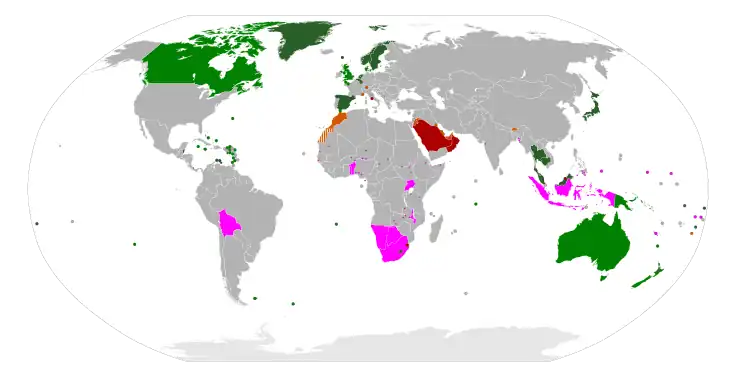
List of extant dynasties ruling sovereign monarchies
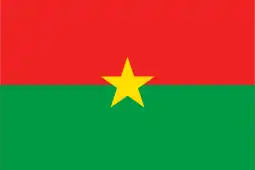
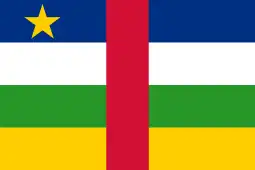
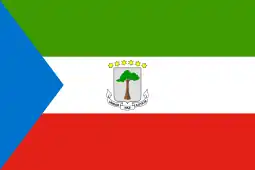
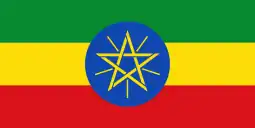
At present, there are 44 sovereign realms—including 43 sovereign states (and their associated territories) and one sovereign entity in international law without territorial possession—ruled by monarchs, of which 41 are under dynastic control.[lower-alpha 1] There are currently 26 sovereign dynasties, two of which rule more than one sovereign realm.

.svg.png.webp)

.svg.png.webp)








.svg.png.webp)

.svg.png.webp)


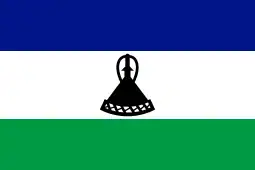


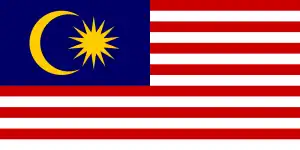



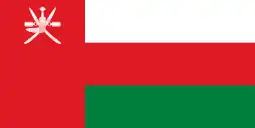






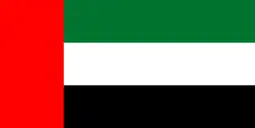
List of sovereign states and territories with extant non-sovereign dynasties
The following is a list of sovereign states and territories with existing dynasties ruling non-sovereign polities. Such dynasties usually possess and exercise authority over subnational divisions or people groups.
Non-sovereign dynasties may be conferred official status through constitutional arrangement or government recognition, like the dynasties ruling the Republic of Botswana's subnational chiefdoms. Alternatively, non-sovereign dynasties may exist without official recognition, as in the case of the Te Wherowhero dynasty of the Māori King Movement in New Zealand.
Non-sovereign dynasties could have once held sovereign power (and vice versa). For example, as the Emirate of Umm Al Quwain was formerly an independent shiekdom but is now a constituent emirate of the United Arab Emirates, the currently non-sovereign House of Mualla therefore held sovereign power historically.
Dynasties could simultaneously reign in both sovereign and non-sovereign polities, as is the case of the Bendahara dynasty whose reigning ruler is both the sovereign monarch of Malaysia and the non-sovereign monarch of the Malaysian state of Pahang Darul Makmur.




































.svg.png.webp)
List of dynasties in Africa
Algeria
- Gaetuli
- Garamantes
- Mauri
- Musulamii
- Quinquegentiani
- Houara
- Masaesyli
- Massylii
- Numidia
- Bavares
- Vandal Kingdom
- Mauro-Roman Kingdom
- Kingdom of the Aurès
- Kingdom of Altava
- Kingdom of Capsus
- Kingdom of Ouarsenis
- Jarawa (Berber tribe)
- Banu Ifran
- Ifranid dynasty
- Muhallabids (771–793)
- Rustamid dynasty (777–909)
- Sanhaja
- Aghlabid dynasty (800–909)
- Fatimid dynasty – Algeria within the Fatimid Caliphate
- Kutama
- Maghrawa
- Miknasa
- Sulaymanid dynasty (814–922)
- Zirid dynasty (972–1148)
- Awlad Mandil
- Banu Khazrun (1001–1146)
- Hammadid dynasty (1014–1152)
- Banu Hilal
- Banu Kinanah
- Banu Ghaniya
- Zenata
- Hafsid dynasty (1229–1574)
- Zayyanid dynasty (1236–1337, 1348–1352, 1359–1550) – Kingdom of Tlemcen
- Ottoman dynasty (1515–1830) – Algeria under Ottoman rule
- Kingdom of Kuku
- Kingdom of Ait Abbas
- Banu Djellab – Sultanate of Tuggurt
- Emirate of Abdelkader
Benin
- Aladaxonou dynasty (1600–1900) – Kingdom of Dahomey
Cabo Verde (Cape Verde)
- House of Aviz (AD 1462–1580) – Cabo Verde under Portuguese rule
- House of Aviz-Beja (AD 1495–1580) – Cabo Verde under Portuguese rule
- House of Braganza (AD 1640–1910) – Cabo Verde under Portuguese rule
- House of Braganza-Saxe-Coburg and Gotha (AD 1853–1910) – Cabo Verde under Portuguese rule
- Philippine dynasty (AD 1581–1640) – Cabo Verde under Portuguese rule
Central African Republic
- al-'Abbasi dynasty (AD 1501–1912) – Wadai Sultanate
- House of Bokassa (c. AD 1976–1979) – Central African Empire (Limited international recognition)
Chad
- Duguwa dynasty (c. AD 700–1086) – Kanem–Bornu Empire
- Sayfawa dynasty (c. AD 1086–1846) – Kanem–Bornu Empire
- Kenga dynasty (AD 1522–1897) – Sultanate of Bagirmi
- al-'Abbasi dynasty (AD 1501–1912) – Wadai Sultanate
Congo
- House of Kilukeni (AD 1390–1567) – Kingdom of Kongo
- Kingdom of Loango (AD 1550–1883)
- Kwilu dynasty (AD 1568–1622, AD 1626–1636) – Kingdom of Kongo
- Kingdom of Luba (AD 1585–1889)
- House of Nsundi (AD 1622–1626) – Kingdom of Kongo
- Kingdom of Lunda (AD 1665–1887)
- House of Kinlaza (AD 1665–1666, AD 1669–1716, AD 1743–1752, AD 1764–1787, AD 1842–1857, AD 1859–1891) – Kingdom of Kongo
- House of Kimpanzu (AD 1665, AD 1666–1669, AD 1669–1670, AD 1673–1715, AD 1718–1743, AD 1752–1758, AD 1763–1764, AD 1857–1859, AD 1891–1896) – Kingdom of Kongo
- House of Água Rosada (AD 1688–1718, AD 1803–1842) – Kingdom of Kongo
- Anziku Kingdom (AD 17th century–19th century)
- House of Saxe-Coburg and Gotha (AD 1885–1920) – Congo Free State (AD 1885–1908) and Congo under Belgian rule (AD 1908–1920)
- House of Belgium (AD 1920–1960) – Congo under Belgian rule
Egypt
- Dynasty I of Egypt (c. 3100–2900 BC)
- Dynasty II of Egypt (2890–2686 BC)
- Dynasty III of Egypt (2686–2613 BC) – Old Kingdom of Egypt
- Dynasty IV of Egypt (2613–2498 BC) – Old Kingdom of Egypt
- Dynasty V of Egypt (2498–2345 BC) – Old Kingdom of Egypt
- Dynasty VI of Egypt (2345–2181 BC) – Old Kingdom of Egypt
- Dynasty VII of Egypt (c. 2181 BC) – Existence is disputed among historians
- Dynasty VIII of Egypt (2181–2160 BC)
- Dynasty IX of Egypt (2160–2130 BC)
- Dynasty X of Egypt (2130–2040 BC)
- Dynasty XI of Egypt (2130–1991 BC) – Middle Kingdom of Egypt
- Dynasty XII of Egypt (1991–1802 BC) – Middle Kingdom of Egypt
- Dynasty XIII of Egypt (1803–1649 BC)
- Dynasty XIV of Egypt (1725–1650 BC) – Egypt under Canaanite rule
- Abydos dynasty (1650–1600 BC) – Hypothesized
- Dynasty XV of Egypt (1650–1550 BC) – Egypt under Hyksos rule
- Dynasty XVI of Egypt (1649–1582 BC)
- Dynasty XVII of Egypt (1580–1550 BC)
- Dynasty XVIII of Egypt (1550–1292 BC) – New Kingdom of Egypt
- Dynasty XIX of Egypt (1292–1189 BC) – New Kingdom of Egypt
- Dynasty XX of Egypt (1189–1077 BC) – New Kingdom of Egypt
- Dynasty XXI of Egypt (1069–945 BC)
- Dynasty XXII of Egypt (945–720 BC) – Egypt under Meshwesh rule
- Dynasty XXIII of Egypt (837–728 BC) – Egypt under Meshwesh rule
- Dynasty XXIV of Egypt (732–720 BC)
- Dynasty XXV of Egypt (744–656 BC) – Egypt under Nubian rule
- Dynasty XXVI of Egypt (664–525 BC)
- Dynasty XXVII of Egypt (525–404 BC) – Historiographical nomenclature denoting the rule of the Achaemenid dynasty in Egypt from Cambyses II to Darius II (Egypt under Persian rule)
- Dynasty XXVIII of Egypt (404–398 BC)
- Dynasty XXIX of Egypt (398–380 BC)
- Dynasty XXX of Egypt (380–343 BC)
- Dynasty XXXI of Egypt (343–332 BC) – Historiographical nomenclature denoting the rule of the Achaemenid dynasty in Egypt from Artaxerxes III to Darius III (Egypt under Persian rule)
- Argead dynasty (332–309 BC) – Egypt within the Macedonian Empire (Egypt under Dorian rule)
- Ptolemaic dynasty (305–30 BC) – Egypt within the Ptolemaic Kingdom (Egypt under Macedonian rule)
- Julio-Claudian dynasty (27 BC–AD 68) – Egypt under Roman rule
- Flavian dynasty (AD 69–96) – Egypt under Roman rule
- Nervan-Antonian dynasty (AD 96–192) – Egypt under Roman rule
- Severan dynasty (AD 193–235) – Egypt under Roman rule
- Gordian dynasty (AD 238–244) – Egypt under Roman rule
- Decian dynasty (AD 249–253) – Egypt under Roman rule
- Valerian dynasty (AD 253–268) – Egypt under Roman rule
- Illyrian emperors (AD 268–270, AD 273–284) – Egypt under Roman rule
- House of Odaenathus (AD 270–273) – Egypt within the Palmyrene Empire
- Caran dynasty (AD 282–285) – Egypt under Roman rule
- Constantinian dynasty (AD 303–336) – Egypt under Roman rule
- Valentinianic dynasty (AD 364–378) – Egypt under Roman rule
- Theodosian dynasty (AD 379–457) – Egypt under Roman rule (AD 379–395) and Egypt under Byzantine rule (AD 395–457)
- Leonid dynasty (AD 457–518) – Egypt under Byzantine rule
- Justinian dynasty (AD 518–602) – Egypt under Byzantine rule
- Heraclian dynasty (AD 602–619, AD 628–641) – Egypt under Byzantine rule
- Sasanian dynasty (AD 619–628) – Egypt within the Sasanian Empire (Egypt under Persian rule)
- Umayyad dynasty (AD 661–750) – Egypt within the Umayyad Caliphate (Egypt under Arab rule)
- Abbasid dynasty (AD 750–935) – Egypt within the Abbasid Caliphate (Egypt under Arab rule)
- Tulunid dynasty (AD 868–905) – Egypt under Turkic rule
- Ikhshidid dynasty (AD 935–969) – Egypt under Turkic rule
- Fatimid dynasty (AD 969–1171) – Egypt within the Fatimid Caliphate (Egypt under Arab rule)
- Banu Kanz (AD 1004–1412) – Egypt under Arab rule
- Awlad Mandil (AD 1160–1372)
- Ayyubid dynasty (AD 1171–1250) – Egypt under Kurdish rule
- Bahri dynasty (AD 1250–1382) – Egypt within the Mamluk Sultanate (Egypt under Turkic rule)
- Burji dynasty (AD 1382–1517) – Egypt within the Mamluk Sultanate (Egypt under Circassian rule)
- Ottoman dynasty (AD 1517–1798, AD 1801–1867) – Egypt within the Ottoman Empire (Egypt under Turkic rule)
- Muhammad Ali dynasty (AD 1805–1953) – Egypt under Albanian rule
Eswatini (Swaziland)
- House of Dlamini (1745–present)
- House of Saxe-Coburg and Gotha (1906–1917) – Eswatini under British rule
- House of Windsor (1917–1968) – Eswatini under British rule
Ethiopia
- Dʿmt (980–400 BC)
- Solomonic dynasty (ሰለሞናዊው ሥርወ መንግሥት) (AD 100–940, AD 1270–1974) – Kingdom of Aksum and Ethiopian Empire
- Gondarine line (AD 1606–1769)
- Tewodros dynasty (AD 1855–1868)
- Tigrayan line (AD 1871–1889)
- Shewan line (AD 1889–1936, AD 1941–1975)
- Makhzumi dynasty (AD 896–1286)
- Zagwe dynasty (c. AD 900–1270, AD 1868–1871) – Ethiopian Empire
- Walashma dynasty (AD 1285–1577)
- Kingdom of Garo (AD 1567–1883)
- Gideons dynasty (?–AD 1627) – Kingdom of Semien
- Mudaito dynasty (AD 1734–1971)
- House of Savoy (AD 1936–1947) – Ethiopia under Italian rule
- Gideonite dynasty (?–?) – Legendary
Ghana
- Oyoko Abohyen dynasty (1670–present) – Ashanti Empire and traditional leaders of the Asante people (Non-sovereign)
Guinea
- Keita dynasty (c. 1200–1670)
- Wassoulou Empire (1878–1898)
Lesotho
- House of Moshesh (1822–present)
Libya
- Gaetuli
- Garamantes
- Psylli
- Libu
- Meshwesh
- Zenata
- Houara
- Twenty-second Dynasty of Egypt
- Twenty-third Dynasty of Egypt
- Nasamones
- Laguatan
- Jarawa (Berber tribe)
- Muhallabids (771–793)
- Rustamid dynasty (777–909)
- Aghlabid dynasty (800–909)
- Banu Khazrun (1001–1046)
- Banu Ghaniya (1126–1203)
- Awlad Mandil (1160–1372)
- Hafsid dynasty (1229–1574)
- Banu Hilal
- Banu Sulaym
- Banu Kinana
- Banu Thabet
- Bani-Nasr dynasty
- Theocratic kingdoms of Kharijite sectarians
- Awlad Suleiman dynasty in Murzuq
- Karamanli dynasty (1711–1835)
- House of Senussi (1951–1969) – Kingdom of Libya
Madagascar
- Hova dynasty (1540–1897) – Merina Kingdom
Mali
- Keita dynasty (11th century–17th century) – Mali Empire
- Za dynasty
- Sonni dynasty (14th century–1493) – Songhai Empire
- Askiya dynasty (1493–1591) – Songhai Empire
- Coulibaly dynasty (1712–1862) – Bamana Empire
- Toucouleur Empire (1848–1893)
Mauritius
- House of Bourbon-Vendôme (AD 1715–1792) – Mauritius under French rule
- House of Bonaparte (AD 1804–1810) – Mauritius under French rule
- House of Hanover (AD 1810–1901) – Mauritius under British rule
- House of Saxe-Coburg and Gotha (AD 1901–1917) – Mauritius under British rule
- House of Windsor (AD 1917–1992) – Mauritius under British rule (AD 1917–1968) and Mauritius as a Commonwealth realm (AD 1968–1992)
Morocco (+ Mauritania)
- Gaetuli
- Garamantes
- Mauri
- Houara
- Mauretania
- Jarawa (Berber tribe)
- Emirate of Sijilmasa
- Kingdom of Nekor (710–1019)
- Barghawata (744–1058)
- Midrarid dynasty (757–976)
- Idrisid dynasty (789–974)
- Banu Isam
- Reguibat tribe
- Tajakant
- Miknasa
- Godala
- Masmuda
- Ghomaras
- Sanhaja
- Lamtuna
- Hammudid dynasty
- Taifa of Ceuta
- Almoravid dynasty (1060–1147)
- Maqil
- Beni Ḥassān
- Banu Kinanah
- Tinmel
- Almohad dynasty (1147–1258)
- Awlad Mandil
- Zenata
- Marinid dynasty (1258–1465)
- Wattasid dynasty (1472–1554)
- Kunta (tribe)
- Bled es-Siba
- Ouartajin dynasty (1430–1563) – Principality of Debdou
- Ait Yafelman
- Aït Atta
- Ait Saghrouchen
- Tekna
- Zaouia of Dila
- Saadi dynasty (1554–1659)
- Kingdom of Fez
- Kingdom of Sus
- Kingdom of Marrakesh
- Hintata
- Kingdom of Tafilalt
- Alaouite dynasty (1666–present)
Niger
- Sonni dynasty (14th century–1493) – Songhai Empire
- Askiya dynasty (1493–1901) – Songhai Empire (1493–1591) and Dendi Kingdom (1591–1901)
Nigeria
- Eri dynasty of the Igbo and Igala peoples
- Hausa Kingdoms
- Ibn Fodio dynasty of Sokoto and Gwandu
- Jaja dynasty of Opobu
- Modibo Adama dynasty of Adamawa
- el-Kanemi dynasty of Bornu
- Ooduan dynasty of Ife, Egba, Ketu, Sabe, Oyo, Ijero and the Ilas
- Omoremilekun Asodeboyede dynasty of Akure (a cadet branch of the Ooduan dynasty)
- Ado dynasty of Lagos (a cadet branch of the Ooduan dynasty)
- Eweka dynasty of Benin (a cadet branch of the Ooduan dynasty)
- Ado dynasty of Lagos (a cadet branch of the Ooduan dynasty)
- Omoremilekun Asodeboyede dynasty of Akure (a cadet branch of the Ooduan dynasty)
- Sayfawa dynasty of Bornu
- House of Nnofo (1498–present) – Ruling house of the Nnewi Kingdom (Non-sovereign)
- Sokoto Caliphate (1804–1903)
São Tomé and Príncipe
- House of Aviz (AD 1470–1580) – São Tomé and Príncipe under Portuguese rule
- House of Aviz-Beja (AD 1495–1580) – São Tomé and Príncipe under Portuguese rule
- House of Braganza (AD 1640–1910) – São Tomé and Príncipe under Portuguese rule
- House of Braganza-Saxe-Coburg and Gotha (AD 1853–1910) – São Tomé and Príncipe under Portuguese rule
- Philippine dynasty (AD 1581–1640) – São Tomé and Príncipe under Portuguese rule
Senegambia
- Lamanic period
- Joos dynasty (1367–1855)
- Denianke dynasty (1512–1776) – Empire of Great Fulo
Seychelles
- House of Bourbon-Vendôme (AD 1756–1792) – Seychelles under French rule
- House of Bonaparte (AD 1804–1810) – Seychelles under French rule
- House of Hanover (AD 1810–1901) – Seychelles under British rule
- House of Saxe-Coburg and Gotha (AD 1901–1917) – Seychelles under British rule
- House of Windsor (AD 1917–1976) – Seychelles under British rule
Somalia
- Macrobia Kingdom – Legendary
- House of Garen (AD 9th century–17th century) – Sultanate of Mogadishu and Ajuran Sultanate
- Gobroon dynasty (AD 17th century–1910) – Sultanate of the Geledi
- Majeerteen Sultanate (Saldanadii Majeerteen) (c. AD 1800–1924)
- Sultanate of Hobyo (Saldanadii Hobyo) (AD 1878–1925)
- House of Savoy (AD 1889–1946) – Somalia under Italian rule
Somaliland
- Macrobia Kingdom – Legendary
- Adal Sultanate (AD 9th century–13th century)
- Walashma dynasty (Boqortooyadii Walashma) (AD 1285–1577) – Sultanate of Ifat and Adal Sultanate
- Guled dynasty (AD 1750–1884) – Isaaq Sultanate
- Habr Yunis Sultanate (Saldanadii Habar Yoonis) (c. AD late 18th century-1884)
- House of Hanover (AD 1884–1901) – Somaliland under British rule
- House of Saxe-Coburg and Gotha (AD 1901–1917) – Somaliland under British rule
- House of Windsor (AD 1917–1940, AD 1941–1960) – Somaliland under British rule
South Africa
- Zulu royal family – Traditional leaders of the Zulu tribe (Non-sovereign)
- Rain Queen dynasty – Traditional leaders of the Balobedu tribe (Non-sovereign)
- Transkeian dynasty – Traditional leaders of the Thembu tribe (Non-sovereign)
- AmaNyawuza dynasty – Traditional leaders of the Mpondo tribe (Non-sovereign)
- Molotlegi dynasty – Royal Bafokeng Nation (Non-sovereign)
- Mandela family – Mvezo (Non-sovereign)
Sudan
- Daju dynasty (12th century–15th century) – Daju Kingdom
- Tunjur dynasty (15th century–1650) – Tunjur Kingdom
- Keira dynasty (1603–1874) – Sultanate of Darfur
- Muhammad Ali dynasty (1821–1885) – Also called "Alawiyya dynasty"
- House of al-Mahdi (1845–1945)
Tunisia
- Gaetuli
- Garamantes
- Musulamii
- Zenata
- Houara
- Ancient Carthage
- Massylii
- Kingdom of Capsus
- Vandal Kingdom
- Jarawa (Berber tribe)
- Sanhaja
- Aghlabid dynasty
- Fatimid dynasty
- Muhallabids (771–793)
- Zirid dynasty (972–1148)
- Awlad Mandil
- Banu Hilal
- Banu Ghaniya
- Banu Kinanah
- Khurasanid dynasty (1059–1158)
- Kingdom of Africa
- Hafsid dynasty (1229–1574)
- Hintata
- Husainid dynasty
Uganda
- Abalasangeye dynasty (?–present) – Kingdom of Buganda (Non-sovereign)
Western Sahara
- House of Bourbon-Anjou (AD 1884–1931, AD 1975–1976) – Western Sahara under Spanish rule
- Alaouite dynasty (AD 1976–present) – Moroccan claim to Western Sahara
Zimbabwe
- House of Changamire (1660–1889) – Rozvi Empire
List of dynasties in Asia
Afghanistan
- Median dynasty (678–550 BC)
- Achaemenid dynasty (550–330 BC) – Afghanistan within the Achaemenid Empire
- Seleucid dynasty (330–150 BC)
- Maurya Empire (305–180 BC)
- House of Diodotus (255–223 BC) – Greco-Bactrian Kingdom
- Arsacid dynasty (247 BC–AD 224)
- Euthydemid dynasty (230 BC–AD 10) – Greco-Bactrian Kingdom and Indo-Greek Kingdom
- House of Eucratides (170–130 BC) – Greco-Bactrian Kingdom
- House of Suren (12 BC–AD 130) – Indo-Parthian Kingdom
- Kushan Empire (AD 30–375)
- Sasanian dynasty (AD 230–651) – Afghanistan within the Sasanian Empire and Kushano-Sasanian Kingdom
- Kidarites (AD 320–465)
- Alchon Huns (AD 370–670)
- Hephthalite Empire (AD 440–710)
- Nezak Huns (AD 484–665)
- Tokhara Yabghus (AD 625–758)
- Tang dynasty (AD 657–670) – Chinese rule over parts of Afghanistan under the Protectorate General to Pacify the West
- Umayyad dynasty (AD 661–750) – Afghanistan within the Umayyad Caliphate
- Kabul Shahi (AD 665–1026)
- Turk Shahis (AD 665–850)
- Hindu Shahis (AD 850–1026)
- Zunbils (AD 680–870)
- Abbasid dynasty (AD 750–821) – Afghanistan within the Abbasid Caliphate
- Lawik dynasty (AD 750–977)
- Tahirid dynasty (AD 821–873)
- Saffarid dynasty (AD 863–900)
- Samanid Empire (AD 875–999)
- Ghurid dynasty (AD 879–1215)
- Farighunids (AD 9th century–1010)
- Ghaznavid dynasty (AD 977–1186)
- Seljuq dynasty (AD 1037–1194)
- Anushtegin dynasty (AD 1215–1231) – Afghanistan within the Khwarazmian Empire
- Qarlughid dynasty (AD 1224–1266)
- Chagatai Khanate (AD 1225–1370)
- Kart dynasty (AD 1244–1381)
- Ilkhanate (AD 1256–1353)
- Khalji dynasty (AD 1290–1320)
- Samma dynasty (AD 1351–1524)
- Timurid dynasty (AD 1370–1738) – Afghanistan within the Timurid Empire and Mughal Empire
- Safavid dynasty (AD 1510–1709)
- Arghun dynasty (AD 1520–1554)
- Tarkhan dynasty (AD 1554–1591)
- Katoor dynasty (AD 1570–1947)
- Hotak dynasty (AD 1709–1738)
- Afsharid dynasty (AD 1738–1747)
- Durrani dynasty (AD 1747–1826, AD 1839–1842) – Durrani Empire (AD 1747–1826) and Emirate of Afghanistan (AD 1839–1842)
- Barakzai dynasty (AD 1818–1973) – Principality of Qandahar (AD 1818–1855), Emirate of Afghanistan (AD 1823–1839, AD 1842–1926), and Kingdom of Afghanistan (AD 1926–1973)
- Musahiban (AD 1929–1973)
Anatolia (Asia Minor)
- Hittite Empire (c. 1600–1178 BC)
- Heraclid dynasty (12th century–687 BC)
- Adaside dynasty (911–745 BC) – Neo-Assyrian Empire
- House of Suhi (10th century–848 BC) – Kingdom of Carchemish
- House of Astiruwa (848–717 BC) – Kingdom of Carchemish
- Sargonid dynasty (722–609 BC) – Neo-Assyrian Empire
- Pre-Sargonid dynasty (745–722 BC) – Neo-Assyrian Empire
- Mermnad dynasty (680–546 BC)
- Median dynasty (678–549 BC)
- Achaemenid dynasty (550–330 BC) – Achaemenid Empire
- Mithridatic dynasty (281 BC–AD 62) – Kingdom of Pontus
- Pharnacid dynasty (480–320 BC)
- Hecatomnids (395–334 BC)
- Argead dynasty (334–305 BC) – Anatolia under Macedonian rule
- Ariarathid dynasty (331–96 BC) – Kingdom of Cappadocia
- Antigonid dynasty (306–286 BC, 276–168 BC) – Anatolia under Macedonian rule
- Antipatrid dynasty (305–294 BC, 279–276 BC) – Anatolia under Macedonian rule
- Attalid dynasty (282–129 BC) – Kingdom of Pergamon
- Arsacid dynasty (247 BC–AD 224) – Anatolia within the Parthian Empire
- Seleucid dynasty (200–188 BC) – Anatolia within the Seleucid Empire
- House of Ariobarzanes (96–36 BC) – Kingdom of Cappadocia
- House of Archelaus (36 BC–AD 17) – Kingdom of Cappadocia
- House of Odaenathus (AD 270–273) – Palmyrene Empire
- Constantinian dynasty (AD 330–363) – Anatolia under Byzantine rule
- Valentinianic dynasty (AD 364–379) – Anatolia under Byzantine rule
- Theodosian dynasty (AD 379–457) – Anatolia under Byzantine rule
- Leonid dynasty (AD 457–518) – Anatolia under Byzantine rule
- Justinian dynasty (AD 518–602) – Anatolia under Byzantine rule
- Heraclian dynasty (AD 610–711) – Anatolia under Byzantine rule
- Isurian dynasty (AD 717–802) – Anatolia under Byzantine rule
- Bohtan (AD 8th century–1847)
- Nikephorian dynasty (AD 802–813) – Anatolia under Byzantine rule
- Amorian dynasty (AD 820–867) – Anatolia under Byzantine rule
- Kaysite dynasty (AD 860–964)
- Macedonian dynasty (AD 867–1056) – Anatolia under Byzantine rule
- Sajid dynasty (AD 889–929)
- Seljuq dynasty (AD 1037–1308) – Seljuk Empire (AD 1037–1194) and Sultanate of Rum (AD 1077–1308)
- Principality of Eğil (AD 1049–1864)
- Doukid dynasty (AD 1059–1081) – Anatolia under Byzantine rule
- Danishmendid dynasty (AD 1071–1178)
- Saltukids (AD 1071–1202)
- House of Mengüjek (AD 1072–1277)
- Erzincan branch (AD 1142–1228)
- Divriği branch (AD 1142–1277)
- Rubenids (AD 1080–1226) – Armenian Kingdom of Cilicia
- Beylik of Smyrna (AD 1081–1098)
- Komnenos dynasty (AD 1081–1185) – Anatolia under Byzantine rule
- Beylik of Çubukoğulları (AD 1085–1112)
- Beylik of Dilmaç (AD 1085–1398)
- Inalids (AD 1095–1183)
- Hauteville family (AD 1098–1163) – Principality of Antioch
- Artuqid dynasty (AD 1101–1409)
- Mardin branch (AD 1101–1409)
- Aleppo subbranch (AD 1117–1128)
- Hasankeyf branch (AD 1102–1233)
- Harput branch (AD 1185–1234)
- Mardin branch (AD 1101–1409)
- Shah-Armens (AD 1110–1207)
- Zengid dynasty (AD 1128–1183)
- House of Poitiers (AD 1163–1268) – Principality of Antioch
- Principality of Bitlis (AD 1182–19th century)
- Angelos dynasty (AD 1185–1204) – Anatolia under Byzantine rule
- House of Flanders (AD 1204–1216) – Latin Empire
- Laskarid dynasty (AD 1204–1261) – Empire of Nicaea (Exiled court of the Byzantine Empire)
- Capetian House of Courtenay (AD 1216–1261) – Latin Empire
- Hethumids (AD 1226–1341) – Armenian Kingdom of Cilicia
- Chobanids (AD 1227–1309)
- Emirate of Bingöl (AD 1231–1864)
- Emirate of Hasankeyf (AD 1232–1524)
- Karamanid dynasty (AD 1250–1487)
- Ilkhanate (AD 1256–1353)
- Menteshe (AD 1261–1424)
- Palaiologos dynasty (AD 1261–1453) – Anatolia under Byzantine rule
- Beylik of Lâdik (AD 1262–1391)
- Sahib Ataids (AD 1275–1341)
- Pervâneoğlu (AD 1277–1322)
- Eshrefids (AD 1280–1326)
- Candar dynasty (AD 1292–1461)
- Alaiye (AD 1293–1471)
- Karasid dynasty (AD 1296–1357)
- Ottoman dynasty (AD 1299–1924) – Ottoman Empire (AD 1299–1922) and Ottoman Caliphate (AD 1517–1924)
- Osmanoğlu family – Descendants of the Ottoman throne
- Emirate of Çemişgezek (AD 13th century–1663)
- Hamidid dynasty (AD 1300–1391)
- Tekeoğulları dynasty (AD 1321–1423)
- Sarukhanid dynasty (AD 1300–1410)
- Germiyanids (AD 1300–1429)
- Tacettinoğulları dynasty (AD 1308–1425)
- Aydınid dynasty (AD 1308–1426)
- Sutayids (AD 1312–1351)
- Hacıemiroğulları dynasty (AD 1313–1392)
- Eretnids (AD 1335–1381)
- Principality of Zirqan (AD 1335–1835)
- Beylik of Dulkadir (AD 1337–1522)
- Kutluşah dynasty (AD 1340–1393)
- House of Poitiers-Lusignan (AD 1342–1448) – Armenian Kingdom of Cilicia (AD 1342–1375), and Antalya and Corycus within the Kingdom of Cyprus (AD 1361–1448)
- Qara Qoyunlu (AD 1374–1468)
- Bahdinan (AD 1376–1843)
- Aq Qoyunlu (AD 1378–1501)
- Beylik of Erzincan (AD 1379–1410)
- Emirate of Hakkâri (AD 14th century–1847)
- Principality of Mahmudi (AD 1406–1839)
- Beylik of Afshar (AD 1480–1534)
- Emirate of Palu (AD 1495–1850)
- Emirate of Pazooka (AD 1499–1587)
- Principality of Suleyman (AD 15th century–1838)
- Maeoniae dynasty (?–?)
Armenia
- Orontid dynasty
- Artaxiad dynasty or the Artashesi Dynasty (189 BC-12 AD)
- Arsacid dynasty of Armenia or the Arshakuni Dynasty (54–428)
- Siunia dynasty
- Bagratuni dynasty or the Bagratid Dynasty of Armenia (885–1045)
- Rubenid dynasty of the Armenian Kingdom of Cilicia (1080–1225)
- Zakarids–Mkhargrdzeli (1201–1360) – Zakarid Armenia
- House of Lusignan, the Armenian Kingdom of Cilicia (1342–1467)
- Kara Koyunlu (1374–1468)
- Javanshir clan (1748–1822) – Karabakh Khanate
- House of Holstein-Gottorp-Romanov (1828–1917) – Armenia under Russian rule
Azerbaijan
- Arsacid dynasty of Caucasian Albania – Caucasian Albania
- Mihranids
- Mazyadid dynasty
- Shaddadids (951–1199)
- Rawadid dynasty (955–1116)
- Seljuq dynasty
- Eldiguzids
- Javanshir clan (1748–1822) – Karabakh Khanate
- House of Black Monk – Shaki Khanate
- Khanates of the Caucasus
- House of Holstein-Gottorp-Romanov (1813–1917) – Azerbaijan under Russian rule
Bahrain
- Achaemenid dynasty (550–330 BC)
- Arsacid dynasty (247 BC–AD 224)
- House of Sasan (AD 224–590, AD 591–651)
- House of Mihran (AD 590–591, AD 629)
- House of Ispahbudhan (AD 591–596, AD 630–631)
- Umayyad dynasty (AD 661–750)
- Abbasid Caliphate (AD 750–899)
- Uyunid dynasty (AD 1076–1253)
- Usfurids (AD 1253–1320)
- Jarwanid dynasty (AD 14th century–15th century)
- Jabrids (AD 15th century–16th century)
- House of Aviz-Beja (AD 1521–1580) – Bahrain under Portuguese rule
- Philippine dynasty (AD 1581–1602) – Bahrain under Portuguese rule
- Safavid dynasty (AD 1602–1717)
- Afsharid dynasty (AD 1736–1753)
- House of Khalifa (AD 1783–present)
Bhutan
- Wangchuck dynasty (དབང་ཕྱུག་རྒྱལ་བརྒྱུད་) (1907–present)
Brunei
- House of Bolkiah (1368–present)
Cambodia
- Varman dynasty (13th century–present)
- House of Norodom (រាជវង្សនរោត្តម) (1860–1904, 1941–1970, 1993–present)
- House of Sisowath (រាជវង្សស៊ីសុវតិ្ថ) (1904–1941)
- Imperial House of Japan (1941–1945) – Japanese occupation of Cambodia
Central Asia
- House of Diodotus (255–223 BC) – Greco-Bactrian Kingdom
- Euthydemid dynasty (230 BC–AD 10) – Greco-Bactrian Kingdom and Indo-Greek Kingdom
- Luandi clan (209 BC–AD 93) – Xiongnu confederation (209 BC–AD 48) and Northern Xiongnu (AD 48–93)
- House of Eucratides (170–130 BC) – Greco-Bactrian Kingdom
- Xianbei state (c. AD 93–234)
- Sasanian dynasty (AD 224–651) – Sasanian Empire and Kushano-Sasanian Kingdom
- Afrighid dynasty (AD 305–995)
- Kidarites (AD 320–500)
- Ashina tribe (AD 552–657) – First Turkic Khaganate (AD 552–581) and Western Turkic Khaganate (AD 581–657)
- Tokhara Yabghus (AD 625–758)
- Tang dynasty (AD 640–690, AD 705–790) – Chinese rule over Central Asia under the Protectorate General to Pacify the West and various other protectorates
- Wu Zhou (AD 690–705) – Interrupted the Tang dynasty; Chinese rule over Central Asia under the Protectorate General to Pacify the West and various other protectorates
- Ikhshids of Sogdia (AD 642–755)
- Bukhar Khudahs (AD 681–890)
- Ajo clan (AD 693–1207) – Yenisei Kyrgyz Khaganate
- Principality of Chaghaniyan (AD 7th century–8th century)
- Principality of Khuttal (AD 7th century–750)
- Principality of Farghana (AD 8th century–819)
- Karluk Yabghu State (AD 756–840)
- Oghuz Yabgu State (AD 766–1055)
- Samanid Empire (AD 819–999)
- Kara-Khanid Khanate (AD 840–1212)
- Eastern Kara-Khanid (AD 1032–1210)
- Western Kara-Khanid (AD 1041–1212)
- Banijurids (AD 848–908)
- Ghurid dynasty (c. AD 879–1215)
- Principality of Ushrusana (?–AD 892)
- Ghaznavid dynasty (AD 977–1186)
- Ma'munid dynasty (AD 995–1017)
- Muhtajids (AD 10th century–11th century)
- Seljuq dynasty (AD 1037–1194) – Seljuk Empire
- Anushtegin dynasty (AD 1077–1231) – Khwarazmian Empire
- Western Liao dynasty (AD 1124–1218) – Also called "Qara Khitai"
- Mongol Empire (AD 1207–1368)
- House of Ögedei (AD 1225–1309)
- Chagatai Khanate (AD 1225–1346)
- Western Chagatai Khanate (AD 1346–1402)
- Moghulistan (AD 1347–1680)
- Yarkent Khanate (AD 1514–1705)
- Golden Horde (AD 1242–1502)
- Shaybanid dynasty (AD 1428–1883)
- Manghit dynasty (AD 1785–1920) – Emirate of Bukhara
- Nogai Horde (AD 1440s–1634)
- Manghit dynasty (AD 1785–1920) – Emirate of Bukhara
- Kazakh Khanate (AD 1465–1848)
- Bukey Horde (AD 1801–1849)
- Shaybanid dynasty (AD 1428–1883)
- Ilkhanate (AD 1256–1353)
- Kart dynasty (AD 1244–1381)
- Sufi dynasty (AD 1361–1379)
- Timurid dynasty (AD 1370–1507) – Timurid Empire
- Khanate of Khiva (AD 1511–1920)
- Janid dynasty (AD 1599–1747)
- Hotak dynasty (AD 1709–1738)
- Khanate of Kokand (AD 1709–1876)
- Durrani dynasty (AD 1747–1826) – Durrani Empire
- Qing dynasty (AD 1759–1912) – Chinese rule over parts of Central Asia as far west as Lake Balkhash
- Sarybagysh dynasty (AD 1842–1854) – Kara-Kyrgyz Khanate
- House of Holstein-Gottorp-Romanov (AD 1867–1917) – Western Turkestan under Russian rule
Chagos Archipelago
- House of Bourbon-Vendôme (AD 1715–1792) – Chagos Archipelago under French rule
- House of Bonaparte (AD 1804–1814) – Chagos Archipelago under French rule
- House of Hanover (AD 1814–1901) – Chagos Archipelago under British rule
- House of Saxe-Coburg and Gotha (AD 1901–1917) – Chagos Archipelago under British rule
- House of Windsor (AD 1917–present) – Chagos Archipelago under British rule (Disputed by Mauritius)
Champa
- 1st dynasty (192–336)
- 2nd dynasty (336–420)
- 3rd dynasty (420–529)
- 4th dynasty (529–758)
- 5th dynasty (758–854)
- 6th dynasty (854–989)
- 7th dynasty (989–1044)
- 8th dynasty (1044–1074)
- 9th dynasty (1074–1139)
- 10th dynasty (1139–1145)
- 11th dynasty (1145–1190)
- 12th dynasty (1190–1318)
- 13th dynasty (1318–1390)
- 14th dynasty (1390–1458)
- 15th dynasty (1458–1471)
- Dynasty of Po Saktiraidaputih (1695–1822)
China
- Three Sovereigns and Five Emperors (三皇五帝) (?–2070 BC) – Legendary
- Xia dynasty (夏朝) (2070–1600 BC) – Semi-legendary; Ruled by the House of Si (姒) of Huaxia descent
- Shang dynasty (商朝) (1600–1046 BC) – Ruled by the House of Zi (子) of Huaxia descent
- Jizi Chaoxian (箕子朝鮮) (1120–194 BC) – Ruled by the House of Zi (子) of Huaxia descent
- Zhou dynasty (周朝) (1046–256 BC) – Ruled by the House of Ji (姬) of Huaxia descent
- Western Zhou (西周) (1046–771 BC)
- Eastern Zhou (東周) (770–256 BC)
- Zhangzhung (象雄) (500 BC–AD 625)
- Minyue (閩越) (334–111 BC) – Ruled by the House of Zou (騶) of Baiyue descent
- Daguang (達光) (4th century BC–AD 6th century)
- Dian (滇) (278–109 BC)
- Fuyu (扶餘) (239 BC–AD 494)
- Northern Fuyu (北扶餘) (239–58 BC)
- Zuben Fuyu (卒本扶餘) (86–37 BC)
- Eastern Fuyu (東扶餘) (86 BC–AD 22)
- Later Fuyu (後扶餘) (AD 22–494)
- Northern Fuyu (北扶餘) (239–58 BC)
- Qin dynasty (秦朝) (221–207 BC) – Ruled by the House of Ying (嬴) of Huaxia descent
- Pre-Qin dynastic fiefs (先秦諸侯國) (?–209 BC)
- Ancient Shu (古蜀) (2500–316 BC)
- Cancong dynasty (蠶叢) (2500 BC–?)
- Boguan dynasty (柏灌) (?–1700 BC)
- Yufu dynasty (魚鳧) (1700–1200 BC)
- Duyu dynasty (杜宇) (1200–600 BC)
- Kaiming dynasty (開明) (600–316 BC)
- Yue (越) (2032–222 BC) – Ruled by the House of Si (姒) of Baiyue descent
- Mixu (密須) (21st century–10th century BC) – Ruled by the House of Ji (姞) of Huaxia descent
- Dong (董) (21st century–7th century BC) – Ruled by the House of Ji (己) of Huaxia descent
- Guzhu (孤竹) (1600–660 BC) – Ruled by the House of Zi (子) of Huaxia descent
- Qi (杞) (16th century–445 BC) – Ruled by the House of Si (姒) of Huaxia descent
- Deng (鄧) (1200–678 BC) – Ruled by the House of Man (曼) of Huaxia descent
- Xi (息) (1122–680 BC) – Ruled by the House of Ji (姬) of Huaxia descent
- E (鄂) (12th century–863 BC) – Ruled by the House of Ji (姞) of Huaxia descent
- Quan (權) (12th century–704 BC) – Ruled by the House of Zi (子) of Huaxia descent
- Wu (吳) (1096–473 BC) – Ruled by the House of Ji (姬) of Huaxia descent
- Bei (邶) (?–1059 BC) – Ruled by the House of Zi (子) of Huaxia descent
- Guan (管) (1046–1039 BC) – Ruled by the House of Ji (姬) of Huaxia descent
- Feng (酆) (1046–1023 BC) – Ruled by the House of Ji (姬) of Huaxia descent
- Jiao (焦) (1046–775 BC) – Ruled by the House of Ji (姬) of Huaxia descent
- Zhu (祝) (1046–768 BC) – Ruled by the House of Ji (姬) of Huaxia descent
- Eastern Guo (東虢) (1046–767 BC) – Ruled by the House of Ji (姬) of Huaxia descent
- Su (宿) (1046–684 BC) – Ruled by the House of Feng (風) of Huaxia descent
- Tan (譚) (1046–684 BC) – Ruled by the House of Si (姒) of Huaxia descent
- Huo (霍) (1046–661 BC) – Ruled by the House of Ji (姬) of Huaxia descent
- Shu (舒) (1046–657 BC) – Ruled by the House of Yan (偃) of Huaxia descent
- Yu (虞) (1046–655 BC) – Ruled by the House of Ji (姬) of Huaxia descent
- Western Guo (西虢) (1046–655 BC) – Ruled by the House of Ji (姬) of Huaxia descent
- Northern Guo (北虢) (?–?)
- Southern Guo (南虢) (?–?)
- Wen (溫) (1046–650 BC) – Ruled by the House of Ji (己) of Huaxia descent
- Ying (英) (1046–646 BC) – Ruled by the House of Yan (偃) of Huaxia descent
- Yuan (原) (1046–635 BC) – Ruled by the House of Ji (姬) of Huaxia descent
- Lu (六) (1046–622 BC) – Ruled by the House of Yan (偃) of Huaxia descent
- Shuliao (舒蓼) (1046–601 BC) – Ruled by the House of Yan (偃) of Huaxia descent
- Genmou (根牟) (1046–600 BC) – Ruled by the House of Jiang (姜) of Dongyi descent
- Xun (荀) (1046–7th century BC) – Ruled by the House of Ji (姬) of Huaxia descent
- Shuyong (舒庸) (1046–574 BC) – Ruled by the House of Yan (偃) of Huaxia descent
- Shujiu (舒鳩) (1046–548 BC) – Ruled by the House of Yan (偃) of Huaxia descent
- Mao (毛) (1046–516 BC) – Ruled by the House of Ji (姬) of Huaxia descent
- Pan (番) (1046–504 BC) – Ruled by the House of Ji (己) of Huaxia descent
- Dun (頓) (1046–496 BC) – Ruled by the House of Ji (姬) of Huaxia descent
- Cao (曹) (1046–487 BC) – Ruled by the House of Ji (姬) of Huaxia descent
- Cai (蔡) (1046–447 BC) – Ruled by the House of Ji (姬) of Huaxia descent
- Ju (莒) (1046–431 BC) – Ruled by the House of Ji (己) of Dongyi descent
- Cheng (郕) (1046–408 BC) – Ruled by the House of Ji (姬) of Huaxia descent
- Xu (許) (1046–375 BC) – Ruled by the House of Jiang (姜) of Huaxia descent
- Ba (巴) (1046–316 BC) – Ruled by the House of Ji (姬) of Ba descent
- Teng (滕) (1046–297 BC) – Ruled by the House of Ji (姬) of Huaxia descent
- Zou (鄒) (1046–281 BC) – Ruled by the House of Cao (曹) of Huaxia descent
- Yan (燕) (1046–222 BC) – Ruled by the House of Ji (姬) of Huaxia descent
- Qi (齊) (1046–221 BC)
- Predynastic Zhou (先周) (?–1046 BC) – Ruled by the House of Ji (姬) of Huaxia descent
- Shao (召) (1046 BC–?) – Ruled by the House of Ji (姬) of Huaxia descent
- Bi (畢) (1046 BC–?) – Ruled by the House of Ji (姬) of Huaxia descent
- Zhou Demesne (周邑) (1046 BC–?) – Ruled by the House of Ji (姬) of Huaxia descent
- Rong (榮) (1046 BC–?) – Ruled by the House of Ji (姬) of Huaxia descent
- Yong (雍) (1046 BC–?) – Ruled by the House of Ji (姬) of Huaxia descent
- Rui (芮) (1046 BC–?) – Ruled by the House of Ji (姬) of Huaxia descent
- Northern Rui (北芮) (1046–640 BC)
- Southern Rui (南芮) (806 BC–?)
- Han (邗) (1046 BC–?)
- Ji (冀) (1046 BC–?) – Ruled by the House of Qi (祁) of Huaxia descent
- Chunyu (淳于) (1046 BC–?) – Ruled by the House of Jiang (姜) of Huaxia descent
- Gao (郜) (1046 BC–?) – Ruled by the House of Ji (姬) of Huaxia descent
- Mao (茅) (1046 BC–?) – Ruled by the House of Ji (姬) of Huaxia descent
- Shulong (舒龍) (1046 BC–?) – Ruled by the House of Yan (偃) of Huaxia descent
- Shugong (舒龔) (1046 BC–?) – Ruled by the House of Yan (偃) of Huaxia descent
- Shubao (舒鮑) (1046 BC–?) – Ruled by the House of Yan (偃) of Huaxia descent
- Wan (皖) (1046 BC–?) – Ruled by the House of Yan (偃) of Huaxia descent
- Lu (廬) (1046 BC–?)
- Chen (陳) (1045–478 BC) – Ruled by the House of Gui (媯) of Huaxia descent
- Lu (魯) (1043–249 BC) – Ruled by the House of Ji (姬) of Huaxia descent
- Ji (祭) (1040–750 BC) – Ruled by the House of Ji (姬) of Huaxia descent
- Xing (邢) (1040–635 BC) – Ruled by the House of Ji (姬) of Huaxia descent
- Hong (江) (1040–623 BC) – Ruled by the House of Ying (嬴) of Huaxia descent
- Jiang (蔣) (1040–617 BC) – Ruled by the House of Ji (姬) of Huaxia descent
- Shen (沈) (1040–506 BC) – Ruled by the House of Ji (姬) of Huaxia descent
- Song (宋) (1040–286 BC) – Ruled by the House of Zi (子) of Huaxia descent
- Wei (衞) (1040–661 BC, 659–209 BC) – Ruled by the House of Ji (姬) of Huaxia descent
- Zuo (胙) (1040 BC–?) – Ruled by the House of Ji (姬) of Huaxia descent
- Dan (聃) (1040 BC–?) – Ruled by the House of Ji (姬) of Huaxia descent
- Pugu (薄姑) (?–1039 BC)
- Jin (晉) (1033–376 BC) – Ruled by the House of Ji (姬) of Huaxia descent
- Yi (翼) (745–679 BC)
- Quwo (曲沃) (745–679 BC)
- Ying (應) (1030–646 BC) – Ruled by the House of Ji (姬) of Huaxia descent
- Chu (楚) (1030–223 BC) – Ruled by the House of Mi (芈) of Huaxia descent
- Yuezhang (越章) (880 BC–?)
- Yin (殷) (1027–1024 BC) – Ruled by the House of Zi (子) of Huaxia descent
- Yang (楊) (1020–677 BC) – Ruled by the House of Ji (姬) of Huaxia descent
- Nuo (那) (11th century–704 BC) – Ruled by the House of Ji (姬) of Huaxia descent
- Luo (羅) (11th century–690 BC) – Ruled by the House of Mi (芈) of Huaxia descent
- Jia (賈) (11th century–678 BC) – Ruled by the House of Ji (姬) of Huaxia descent
- Hao (郝) (11th century–7th century BC) – Ruled by the House of Feng (風) of Huaxia descent
- Ji (薊) (11th century–7th century BC) – Ruled by the House of Yiqi (伊祁) of Huaxia descent
- Lai (賴) (11th century–538 BC) – Ruled by the House of Jiang (姜) of Huaxia descent
- Wei (韋) (11th century BC–?) – Ruled by the House of Ji (姬) of Huaxia descent
- Pi (邳) (11th century BC–?) – Ruled by the House of Ren (任) of Huaxia descent
- Qin (秦) (905–221 BC) – Ruled by the House of Ying (嬴) of Huaxia descent
- Sui (隨) (10th century BC–?) – Ruled by the House of Ji (姬) of Huaxia descent
- Xie (謝) (?–841 BC) – Ruled by the House of Ren (任) of Huaxia descent
- Shen (申) (841 BC–?) – Ruled by the House of Jiang (姜) of Huaxia descent
- Zhan (詹) (827 BC–?) – Ruled by the House of Ji (姬) of Huaxia descent
- Zheng (鄭) (806–375 BC) – Ruled by the House of Ji (姬) of Huaxia descent
- Daluo (大駱) (?–9th century BC) – Ruled by the House of Ying (嬴) of Huaxia descent
- Lan (濫) (781–521 BC) – Ruled by the House of Cao (曹) of Huaxia descent
- Yin (尹) (770–513 BC) – Ruled by the House of Ji (姞) of Huaxia descent
- Kuai (鄶) (?–769 BC) – Ruled by the House of Yun (妘) of Huaxia descent
- Liang (梁) (768–641 BC) – Ruled by the House of Ying (嬴) of Huaxia descent
- Hu (胡) (?–763 BC) – Ruled by the House of Ji (姬) of Huaxia descent
- Han (韓) (?–757 BC) – Ruled by the House of Ji (姬) of Huaxia descent
- Ji (極) (?–721 BC) – Ruled by the House of Ji (姬) of Huaxia descent
- Xiang (向) (?–721 BC) – Ruled by the House of Jiang (姜) of Huaxia descent
- Fan (凡) (?–716 BC) – Ruled by the House of Ji (姬) of Huaxia descent
- Dai (戴) (?–713 BC) – Ruled by the House of Zi (子) of Huaxia descent
- Jiao (絞) (?–700 BC) – Ruled by the House of Yan (偃) of Huaxia descent
- Gu (穀) (?–8th century BC) – Ruled by the House of Ying (嬴) of Huaxia descent
- Zhongli (鍾離) (8th century–601 BC) – Ruled by the House of Ying (嬴) of Huaxia descent
- Ni (郳) (8th century–335 BC) – Ruled by the House of Cao (曹) of Huaxia descent
- Xiaozhu (小邾) (653–335 BC)
- Yuyuqiu (於餘邱) (?–692 BC)
- Ji (紀) (?–690 BC) – Ruled by the House of Jiang (姜) of Huaxia descent
- Lu (盧) (?–690 BC) – Ruled by the House of Gui (媯) of Huaxia descent
- Lesser Guo (小虢) (?–687 BC) – Ruled by the House of Ji (姬) of Huaxia descent
- Sui (遂) (?–681 BC) – Ruled by the House of Gui (媯) of Huaxia descent
- Xiao (蕭) (681–597 BC) – Ruled by the House of Zi (子) of Huaxia descent
- Guo (郭) (?–670 BC)
- Lirong (驪戎) (?–666 BC) – Ruled by the House of Ji (姬) of Xirong descent
- Zhang (鄣) (?–664 BC) – Ruled by the House of Jiang (姜) of Huaxia descent
- Lingzhi (令支) (?–664 BC)
- Geng (耿) (?–661 BC) – Ruled by the House of Ji (姬) of Huaxia descent
- Wei (魏) (?–661 BC) – Ruled by the House of Ji (姬) of Huaxia descent
- Gong (共) (?–660 BC) – Ruled by the House of Ji (姬) of Huaxia descent
- Yang (陽) (?–660 BC) – Ruled by the House of Ji (姬) of Huaxia descent
- Xian (弦) (?–655 BC) – Ruled by the House of Wei (隗) of Huaxia descent
- Guang (光) (?–650 BC) – Ruled by the House of Ji (姞) of Huaxia descent
- Huang (黃) (?–648 BC) – Ruled by the House of Ying (嬴) of Huaxia descent
- Xiang (項) (?–643 BC)
- Bai (柏) (?–640 BC) – Ruled by the House of Ji (姞) of Huaxia descent
- Fan (樊) (?–635 BC) – Ruled by the House of Ji (姬) of Huaxia descent
- Kui (夔) (?–634 BC) – Ruled by the House of Mi (芈) of Huaxia descent
- Hua (滑) (?–627 BC) – Ruled by the House of Ji (姬) of Huaxia descent
- Liao (蓼) (?–622 BC) – Ruled by the House of Yan (偃) of Huaxia descent
- Xuqu (須句) (?–620 BC) – Ruled by the House of Feng (風) of Huaxia descent
- Yu (魚) (?–612 BC) – Ruled by the House of Er (兒) of Huaxia descent
- Yong (庸) (?–611 BC)
- Jun (麇) (?–611 BC)
- Li (黎) (?–604 BC) – Ruled by the House of Qi (祁) of Huaxia descent and the House of Ji (姬) of Huaxia descent
- Lushi (潞氏) (604–594 BC) – Ruled by the House of Wei (隗) of Chidi descent
- Western Huang (西黃) (?–7th century BC)
- Duochen (鐸辰) (?–593 BC) – Ruled by the House of Wei (隗) of Huaxia descent
- Jiashi (甲氏) (?–593 BC) – Ruled by the House of Wei (隗) of Huaxia descent
- Liuyu (留吁) (?–593 BC) – Ruled by the House of Wei (隗) of Huaxia descent
- Liu (劉) (592–488 BC) – Ruled by the House of Ji (姬) of Huaxia descent
- Qianggaoru (廧咎如) (?–588 BC) – Ruled by the House of Wei (隗) of Chidi descent
- Zhuan (鄟) (?–585 BC)
- Zeng (鄫) (?–567 BC) – Ruled by the House of Si (姒) of Huaxia descent
- Lai (萊) (?–567 BC) – Ruled by the House of Zi (子) of Dongyi descent
- Biyang (偪陽) (?–563 BC) – Ruled by the House of Yun (妘) of Huaxia descent
- Wangshu (王叔) (?–563 BC) – Ruled by the House of Ji (姬) of Huaxia descent
- Shi (邿) (?–560 BC) – Ruled by the House of Ren (妊) of Huaxia descent
- Yin (陰) (?–532 BC)
- Fei (肥) (?–530 BC) – Ruled by the House of Ji (姬) of Baidi descent
- Fang (房) (?–529 BC) – Ruled by the House of Qi (祁) of Huaxia descent
- Zhoulai (州來) (?–529 BC) – Ruled by the House of Ji (姬) of Huaxia descent
- Yang (養) (?–528 BC) – Ruled by the House of Ying (嬴) of Huaxia descent
- Gu (鼓) (?–520 BC) – Ruled by the House of Qi (祁) of Baidi descent
- Chao (巢) (?–518 BC) – Ruled by the House of Yan (偃) of Huaxia descent
- Gong (鞏) (?–516 BC) – Ruled by the House of Ji (姬) of Huaxia descent
- Xu (徐) (?–512 BC) – Ruled by the House of Ying (嬴) of Huaxia descent
- Zhongshan (中山) (507–406 BC, 380–296 BC) – Ruled by the House of Ji (姬) of Beidi descent
- Xianyu (鮮虞) (?–506 BC) – Ruled by the House of Ji (姬) of Beidi descent
- Tang (唐) (?–505 BC) – Ruled by the House of Qi (祁) of Huaxia descent
- Hu (胡) (?–496 BC) – Ruled by the House of Gui (歸) of Huaxia descent
- Gumie (姑蔑) (?–480 BC)
- Zhongwu (鍾吾) (?–471 BC)
- Western Zhou (西周) (440–256 BC) – Ruled by the House of Ji (姬) of Huaxia descent
- Tan (郯) (?–414 BC) – Ruled by the House of Ji (己) of Huaxia descent
- Han (韓) (403–230 BC) – Ruled by the House of Ji (姬) of Huaxia descent
- Wei (魏) (403–225 BC) – Ruled by the House of Ji (姬) of Huaxia descent
- Zhao (趙) (403–222 BC) – Ruled by the House of Ying (嬴) of Huaxia descent
- Dai (代) (227–222 BC)
- Zeng (曾) (?–5th century BC) – Ruled by the House of Ji (姬) of Huaxia descent
- Chouyou (仇由) (?–5th century BC)
- Ju (苴) (368–316 BC)
- Eastern Zhou (東周) (367–249 BC) – Ruled by the House of Ji (姬) of Huaxia descent
- Xue (薛) (?–298 BC) – Ruled by the House of Ren (任) of Huaxia descent and the House of Gui (媯) of Huaxia descent
- Dai (代) (228–222 BC) – Ruled by the House of Ying (嬴) of Huaxia descent
- Eight States of Xirong (西戎八國) (?–?)
- Zhoucheng (周城) (?–?) – Ruled by the House of Ji (姬) of Huaxia descent
- Baidi (白狄) (?–?) – Ruled by the House of Ji (姬) of Beidi descent
- Chidi (赤狄) (?–?)
- Changdi (長狄) (?–?) – Ruled by the House of Qi (漆) of Beidi descent
- Souman (鄋瞞) (?–?)
- Jiuli (九黎) (?–?) – Ruled by the House of Jiang (姜) of Huaxia descent
- Sanmiao (三苗) (?–?) – Ruled by the House of Ji (姬) of Huaxia descent
- Yuyi (於夷) (?–?)
- Fangyi (方夷) (?–?)
- Huangyi (黃夷) (?–?)
- Baiyi (白夷) (?–?)
- Chiyi (赤夷) (?–?)
- Xuanyi (玄夷) (?–?)
- Fengyi (風夷) (?–?)
- Yangyi (陽夷) (?–?)
- Maorong (茅戎) (?–?)
- Shenrong (申戎) (?–?)
- Rong of Yun clan (允姓之戎) (?–?) – Ruled by the House of Yun (允) of Xirong descent
- Shangfang (商方) (?–?) – Ruled by the House of Zi (子) of Huaxia descent
- Zifang (子方) (?–?)
- Tufang (土方) (?–?)
- Hongfang (𢀛方) (?–?)
- Guifang (鬼方) (?–?)
- Kufang (苦方) (?–?)
- Longfang (龍方) (?–?)
- Mafang (馬方) (?–?)
- Shufang (蜀方) (?–?)
- Yufang (盂方) (?–?)
- Eastern Yufang (東盂方) (?–?)
- Western Yufang (西盂方) (?–?)
- Qiangfang (羌方) (?–?)
- Zhafang (𠭯方) (?–?)
- Peifang (轡方) (?–?)
- Erbangfang (二邦方) (?–?)
- Renfang (人方) (?–?)
- Tangfang (唐方) (?–?)
- Linfang (林方) (?–?)
- Yuexifang (越戲方) (?–?)
- Xingfang (興方) (?–?)
- Shifang (豕方) (?–?)
- Weifang (危方) (?–?)
- Pangfang (旁方) (?–?)
- Gefang (戈方) (?–?)
- Mufang (木方) (?–?)
- Zhoufang (宙方) (?–?)
- Genfang (亙方) (?–?)
- Jifang (基方) (?–?)
- Yafang (亞方) (?–?)
- Shifang (示方) (?–?)
- Shaofang (召方) (?–?)
- Jianfang (湔方) (?–?)
- Yinfang (印方) (?–?)
- Jifang (祭方) (?–?)
- Hufang (虎方) (?–?)
- Weifang (微方) (?–?)
- Bufang (步方) (?–?)
- Xifang (息方) (?–?)
- Diefang (眣方) (?–?)
- Zhifang (止方) (?–?)
- Yinfang (尹方) (?–?)
- Zengfang (曾方) (?–?)
- Zhufang (祝方) (?–?)
- Nongfang (弄方) (?–?)
- Chuifang (吹方) (?–?)
- Chefang (屮方) (?–?)
- Quefang (雀方) (?–?)
- Shifang (矢方) (?–?)
- Yufang (鬱方) (?–?)
- Xiufang (羞方) (?–?)
- Beifang (貝方) (?–?)
- Cangfang (倉方) (?–?)
- Yangfang (昜方) (?–?)
- Foufang (缶方) (?–?)
- Pengfang (彭方) (?–?)
- Songfang (宋方) (?–?)
- Danfang (丹方) (?–?)
- Xiangfang (絴方) (?–?)
- Banfang (班方) (?–?)
- Youmin-shi (有緡氏) (?–?) – Ruled by the House of Yao (姚) of Huaxia descent
- Youshi-shi (有施氏) (?–?)
- Zhenxun-shi (斟鄩氏) (?–?) – Ruled by the House of Si (姒) of Huaxia descent
- Youhu-shi (有扈氏) (?–?) – Ruled by the House of Si (姒) of Huaxia descent
- Younan-shi (有男氏) (?–?) – Ruled by the House of Si (姒) of Huaxia descent
- Tongcheng-shi (彤城氏) (?–?) – Ruled by the House of Si (姒) of Huaxia descent
- Zhenguan-shi (斟灌氏) (?–?) – Ruled by the House of Si (姒) of Huaxia descent
- Youxin-shi (有莘氏) (?–?) – Ruled by the House of Si (姒) of Huaxia descent
- Youxiong-shi (有熊氏) (?–?)
- Youjiao-shi (有蟜氏) (?–?)
- Bao-shi (褒氏) (?–?)
- Fei-shi (費氏) (?–?)
- Qi-shi (杞氏) (?–?)
- Zeng-shi (繒氏) (?–?)
- Xin-shi (辛氏) (?–?)
- Ming-shi (冥氏) (?–?)
- Ge-shi (戈氏) (?–?)
- Youqiong-shi (有窮氏) (?–?)
- Youge-shi (有鬲氏) (?–?)
- Boming-shi (伯明氏) (?–?) – Ruled by the House of Yun (妘) of Dongyi descent
- Ji (及) (?–?)
- You (攸) (?–?) – Ruled by the House of Zi (子) of Huaxia descent
- Meng (盟) (?–?)
- Shen (侁) (?–?)
- Gao (告) (?–?)
- Er (耳) (?–?)
- Feng (逢) (?–?)
- Bao (暴) (?–?)
- Shu (黍) (?–?)
- Zhu (竹) (?–?)
- Dun (盾) (?–?)
- Tui (魋) (?–?)
- Ke (可) (?–?)
- Chou (醜) (?–?)
- Gu (雇) (?–?)
- Er (兒) (?–?)
- Mao (髳) (?–?)
- Feng (豐) (?–?)
- He (禾) (?–?)
- Bing (丙) (?–?)
- Xian (先) (?–?)
- Hao (鎬) (?–?)
- Li (酈) (?–?)
- Nuo (郍) (?–?)
- Gu (顧) (?–?) – Ruled by the House of Ji (己) of Huaxia descent
- Lu (鹿) (?–?)
- Jian (戔) (?–?)
- Gan (干) (?–?)
- Quanrong (犬戎) (?–?)
- Rong of Jiang clan (姜姓之戎) (?–?) – Ruled by the House of Jiang (姜) of Xirong descent
- Jiangrong (姜戎) (?–?)
- Lu (鹿) (?–?)
- Jiuyuan (九苑) (?–?)
- Shangsi (上絲) (?–?)
- Xiawei (下危) (?–?)
- Northern Qi (北齊) (?–?) – Ruled by the House of Jiang (姜) of Huaxia descent
- Zhi (沚) (?–?)
- Lü (呂) (?–?) – Ruled by the House of Jiang (姜) of Huaxia descent
- Southern Yan (南燕) (?–?) – Ruled by the House of Ji (姞) of Huaxia descent
- Ge (葛) (?–?) – Ruled by the House of Ying (嬴) of Huaxia descent
- Shan (單) (?–?) – Ruled by the House of Ji (姬) of Huaxia descent
- Gan (甘) (?–?) – Ruled by the House of Ji (姬) of Huaxia descent
- Bi (偪) (?–?) – Ruled by the House of Ji (姞) of Huaxia descent
- Mi (密) (?–?) – Ruled by the House of Ji (姬) of Huaxia descent
- Yu (邘) (?–?) – Ruled by the House of Ji (姬) of Huaxia descent
- Du (杜) (?–?) – Ruled by the House of Qi (祁) of Huaxia descent
- Bulang (不羹) (?–?) – Ruled by the House of Ying (嬴) of Huaxia descent
- Eastern Bulang (東不羹) (?–?)
- Western Bulang (西不羹) (?–?)
- Dao (道) (?–?)
- Chong (崇) (?–?) – Ruled by the House of Si (姒) of Huaxia descent
- Di (翟) (?–?) – Ruled by the House of Kui (隗) of Chidi descent
- Ji (㠱) (?–?) – Ruled by the House of Jiang (姜) of Huaxia descent
- Yan (鄢) (?–?)
- Chou (疇) (?–?) – Ruled by the House of Ren (任) of Huaxia descent
- Shen (沈) (?–?) – Ruled by the House of Ji (姬) of Huaxia descent
- Si (姒) (?–?) – Ruled by the House of Ji (姬) of Huaxia descent
- Ru (蓐) (?–?) – Ruled by the House of Ji (姬) of Huaxia descent
- Huang (黃) (?–?)
- Peng (倗) (?–?)
- Guan (貫) (?–?)
- Jiafu (甲父) (?–?)
- Zhu (鑄) (?–?) – Ruled by the House of Ren (妊) of Huaxia descent
- Ba (霸) (?–?) – Ruled by the House of Kui (媿) of Huaxia descent
- Nie (聶) (?–?) – Ruled by the House of Jiang (姜) of Huaxia descent
- Fei (費) (?–?) – Ruled by the House of Si (姒) of Huaxia descent
- Yu (鄅) (?–?) – Ruled by the House of Yun (妘) of Huaxia descent
- Jue (厥) (?–?)
- Ren (任) (?–?) – Ruled by the House of Feng (風) of Huaxia descent
- Mou (牟) (?–?)
- Guan (觀) (?–?) – Ruled by the House of Yao (姚) of Huaxia descent
- Han (寒) (?–?) – Ruled by the House of Ren (任) of Huaxia descent
- Zong (鬷) (?–?) – Ruled by the House of Dong (董) of Huaxia descent
- Yan (奄) (?–?)
- Pang (逄) (?–?)
- Yi (夷) (?–?) – Ruled by the House of Yun (妘) of Huaxia descent
- Quegong (闕鞏) (?–?)
- Zhuanyu (顓臾) (?–?) – Ruled by the House of Feng (風) of Huaxia descent
- Fei (費) (?–?) – Ruled by the House of Ji (姬) of Huaxia descent
- Ruo (鄀) (?–?)
- Lower Ruo (下鄀) (?–622 BC)
- Upper Ruo (上鄀) (622 BC–?)
- Zhi (摯) (?–?) – Ruled by the House of Ren (任) of Huaxia descent
- Zhu (諸) (?–?) – Ruled by the House of Si (姒) of Huaxia descent
- Jie (介) (?–?) – Ruled by the House of Yun (妘) of Dongyi descent
- Kan (闞) (?–?)
- You (鄾) (?–?) – Ruled by the House of Man (曼) of Huaxia descent
- Zong (宗) (?–?) – Ruled by the House of Yan (偃) of Huaxia descent
- Guo (過) (?–?) – Ruled by the House of Ren (任) of Huaxia descent
- Rong of Ji clan (己姓之戎) (?–?) – Ruled by the House of Ji (己) of Xirong descent
- Zhen (軫) (?–?) – Ruled by the House of Yan (偃) of Huaxia descent
- Yun (鄖) (?–?) – Ruled by the House of Ying (嬴) of Huaxia descent
- Dai (代) (?–?) – Ruled by the House of Zi (子) of Beidi descent
- Fengfu (封父) (?–?) – Ruled by the House of Jiang (姜) of Huaxia descent
- Anling (安陵) (?–?)
- Mie (蔑) (?–?)
- Er (貳) (?–?)
- Zhou (州) (?–?) – Ruled by the House of Yan (偃) of Huaxia descent
- Tong (桐) (?–?) – Ruled by the House of Yan (偃) of Huaxia descent
- Peng (彭) (?–?)
- Wuzhong (無終) (?–?)
- Ancient Shu (古蜀) (2500–316 BC)
- Zhang Chu (張楚) (209–208 BC) – Ruled by the House of Chen (陳) of Huaxia descent
- Chu (楚) (209–206 BC) – Ruled by the House of Xiang (襄) of Huaxia descent and the House of Mi (羋) of Huaxia descent
- Yan (燕) (209–206 BC) – Ruled by the House of Han (韓) of Huaxia descent
- Zhao (趙) (209–204 BC, 203–202 BC) – Ruled by the House of Wu (武) of Huaxia descent, the House of Ying (嬴) of Huaxia descent, and the House of Zhang (張) of Huaxia descent
- Xiongnu confederation (匈奴) (209 BC–AD 48) – Ruled by the House of Luandi (攣鞮) of Xiongnu descent
- Northern Xiongnu (北匈奴) (AD 48–155)
- Southern Xiongnu (南匈奴) (AD 48–216)
- Wei (魏) (208–206 BC) – Ruled by the House of Ji (姬) of Huaxia descent
- Eighteen Kingdoms (十八國) (208–202 BC)
- Han (韓) (208–205 BC) – Ruled by the House of Ji (姬) of Huaxia descent and the House of Zheng (鄭) of Huaxia descent
- Sai (塞) (206 BC) – Ruled by the House of Sima (司馬) of Huaxia descent
- Di (翟) (206 BC) – Ruled by the House of Dong (董) of Huaxia descent
- Liaodong (遼東) (206 BC) – Ruled by the House of Han (韓) of Huaxia descent
- Jiaodong (膠東) (206 BC) – Ruled by the House of Gui (媯) of Huaxia descent
- Qi (齊) (206 BC) – Ruled by the House of Gui (媯) of Huaxia descent
- Jibei (濟北) (206 BC) – Ruled by the House of Gui (媯) of Huaxia descent
- Yong (雍) (206–205 BC) – Ruled by the House of Zhang (章) of Huaxia descent
- Western Wei (西魏) (206–205 BC) – Ruled by the House of Ji (姬) of Huaxia descent
- Henan (河南) (206–205 BC) – Ruled by the House of Shen (申) of Huaxia descent
- Yin (殷) (206–205 BC) – Ruled by the House of Sima (司馬) of Huaxia descent
- Changshan (常山) (206–205 BC) – Ruled by the House of Zhang (張) of Huaxia descent
- Dai (代) (206–205 BC) – Ruled by the House of Ying (嬴) of Huaxia descent
- Jiujiang (九江) (206–203 BC) – Ruled by the House of Ying (英) of Huaxia descent
- Han (漢) (206–202 BC) – Ruled by the House of Liu (劉) of Huaxia descent
- Hengshan (衡山) (206–202 BC) – Ruled by the House of Wu (吳) of Huaxia descent
- Yan (燕) (206–202 BC) – Ruled by the House of Zang (臧) of Huaxia descent
- Linjiang (臨江) (206–202 BC) – Ruled by the House of Gong (共) of Huaxia descent
- Linzi (臨淄) (206 BC) – Ruled by the House of Gui (媯) of Huaxia descent
- Western Chu (西楚) (206–202 BC) – Ruled by the House of Mi (芈) of Huaxia descent
- Dai (代) (205–204 BC) – Ruled by the House of Chen (陳) of Huaxia descent
- Dynastic fiefs under the Han dynasty (漢朝封國) (205 BC–AD 9, AD 25–221)
- Non-agnatic dynastic fiefs under the Western Han (西漢異姓封國) (205–157 BC)
- Han (韓) (205–200 BC) – Ruled by the House of Ji (姬) of Han descent
- Qi (齊) (203–202 BC) – Ruled by the House of Han (韓) of Han descent
- Huainan (淮南) (203–196 BC) – Ruled by the House of Ying (英) of Han descent
- Zhao (趙) (203–198 BC, 180 BC) – Ruled by the House of Zhang (張) of Han descent and the House of Lü (呂) of Han descent
- Chu (楚) (202–201 BC)
- Liang (梁) (202–196 BC) – Ruled by the House of Peng (彭) of Han descent
- Yan (燕) (202–196 BC, 180 BC) – Ruled by the House of Lu (盧) of Han descent and the House of Lü (呂) of Han descent
- Changsha (長沙) (202–157 BC) – Ruled by the House of Wu (吳) of Han descent
- Lü (呂) (187–180 BC) – Ruled by the House of Lü (呂) of Han descent
- Lu (魯) (187–180 BC) – Ruled by the House of Zhang (張) of Han descent
- Agnatic dynastic fiefs under the Western Han (西漢同姓封國) (201 BC–AD 9) – Ruled by the House of Liu (劉) of Han descent
- Jing (荊) (201–196 BC)
- Qi (齊) (201–127 BC, 117–110 BC)
- Chu (楚) (201–69 BC, 50 BC–AD 9)
- Dai (代) (200–198 BC, 196–114 BC)
- Zhao (趙) (198–181 BC, 179–154 BC, 152 BC–AD 9)
- Huainan (淮南) (196–174 BC, 168–165 BC, 164–122 BC)
- Liang (梁) (196–181 BC, 180 BC, 178 BC–AD 3, AD 5–9)
- Wu (吳) (195–154 BC)
- Yan (燕) (195–181 BC, 179–127 BC, 117–80 BC)
- Hengshan (恆山) (187–180 BC)
- Huaiyang (淮陽) (187–180 BC, 176–169 BC, 155–154 BC, 63 BC–AD 9)
- Langya (琅邪) (181–179 BC)
- Jichuan (濟川) (181–180 BC, 144–138 BC)
- Taiyuan (太原) (178–176 BC)
- Jibei (濟北) (178–177 BC, 164–154 BC, 153–87 BC)
- Chengyang (城陽) (178–169 BC, 165 BC–AD 9)
- Hejian (河間) (178–165 BC, 155 BC–AD 9)
- Jinan (濟南) (164–154 BC)
- Lujiang (廬江) (164–153 BC)
- Hengshan (衡山) (164–122 BC)
- Jiaoxi (膠西) (164–108 BC)
- Jiaodong (膠東) (164–150 BC, 148 BC–AD 9)
- Zichuan (菑川) (164 BC–AD 9)
- Runan (汝南) (155–153 BC)
- Linjiang (臨江) (155–153 BC, 150–148 BC)
- Guangchuan (廣川) (155–152 BC, 148–70 BC, 66–50 BC)
- Changsha (長沙) (155 BC–AD 9)
- Lu (魯) (154–6 BC, 4 BC–AD 9)
- Zhongshan (中山) (154–54 BC, 44–35 BC, 23–1 BC, AD 1–9)
- Jiangdu (江都) (153–121 BC)
- Qinghe (清河) (147–136 BC, 114–66 BC, 47–44 BC)
- Changshan (常山) (145–113 BC)
- Jiyin (濟陰) (144–143 BC)
- Jidong (濟東) (144–116 BC)
- Shanyang (山陽) (144–136 BC, 33–25 BC)
- Liu'an (六安) (121 BC–AD 9)
- Guangling (廣陵) (117–54 BC, 47–17 BC, 11 BC–AD 9)
- Zhending (真定) (114 BC–AD 9)
- Sishui (泗水) (113 BC–AD 9)
- Changyi (昌邑) (97–74 BC)
- Pinggan (平干) (91–56 BC)
- Guangyang (廣陽) (73 BC–AD 9)
- Gaomi (高密) (73 BC–AD 9)
- Dingtao (定陶) (52–50 BC, 25–5 BC)
- Dongping (東平) (52–4 BC, AD 1–7)
- Jiyang (濟陽) (41–33 BC)
- Xindu (信都) (37–23 BC, 5 BC–AD 9)
- Guangde (廣德) (19–18 BC, AD 2–9)
- Guangping (廣平) (4 BC–AD 9)
- Guangshi (廣世) (AD 2–9)
- Guangzong (廣宗) (AD 2–9)
- Agnatic dynastic fiefs under the Eastern Han (東漢同姓封國) (AD 25–221) – Ruled by the House of Liu (劉) of Han descent
- Huaiyang (淮陽) (AD 25, AD 41–73, AD 79–87)
- Guangyang (廣陽) (AD 26–29)
- Sishui (泗水) (AD 26–34)
- Zichuan (淄川) (AD 26–34)
- Taiyuan (太原) (AD 26–35)
- Zhending (真定) (AD 26–37)
- Changsha (長沙) (AD 26–37)
- Lu (魯) (AD 26–37, AD 41–52)
- Chengyang (城陽) (AD 26–35, AD 90–94)
- Zhongshan (中山) (AD 26–37, AD 41–44, AD 54–174)
- Zhao (趙) (AD 29–213)
- Hejian (河間) (AD 31–37, AD 90–220)
- Zuopingyi (左馮翊) (AD 41–54)
- Shanyang (山陽) (AD 41–58, AD 212–220)
- Chu (楚) (AD 41–70)
- Qi (齊) (AD 41–87, AD 90–206)
- Langya (琅邪) (AD 41–216)
- Jinan (濟南) (AD 41–153, AD 174–220)
- Donghai (東海) (AD 41–220)
- Dongping (東平) (AD 41–220)
- Pei (沛) (AD 44–220)
- Beihai (北海) (AD 52–206)
- Guangling (廣陵) (AD 58–67)
- Guangping (廣平) (AD 60–82)
- Qiancheng (千乘) (AD 60–95)
- Julu (鉅鹿) (AD 72–79)
- Runan (汝南) (AD 72–79)
- Lecheng (樂成) (AD 72–96, AD 97–119, AD 120–121)
- Changshan (常山) (AD 72–184)
- Xiapi (下邳) (AD 72–185)
- Jiyin (濟陰) (AD 72–84, AD 124–125, AD 212–220)
- Fuling (阜陵) (AD 73–206)
- Pingchun (平春) (AD 79)
- Jiangling (江陵) (AD 79–85)
- Liang (梁) (AD 79–220)
- Xiping (西平) (AD 82–88)
- Qinghe (清河) (AD 82–147)
- Rencheng (任城) (AD 84–220)
- Liu'an (六安) (AD 85–88)
- Chen (陳) (AD 88–197)
- Pengcheng (彭城) (AD 88–220)
- Jibei (濟北) (AD 90–206, AD 212–220)
- Guangzong (廣宗) (AD 93)
- Le'an (樂安) (AD 95–146)
- Pingyuan (平原) (AD 106–206)
- Guangchuan (廣川) (AD 107–108)
- Anping (安平) (AD 122–184)
- Bohai (渤海) (AD 146–172, AD 189)
- Ganling (甘陵) (AD 148–189)
- Chenliu (陳留) (AD 189)
- Hongnong (弘農) (AD 189–190)
- Nanyang (南陽) (AD 200)
- Donghai (東海) (AD 212–220)
- Boling (博陵) (AD 213–220)
- Hanzhong (漢中) (AD 219–221)
- Non-agnatic dynastic fiefs under the Eastern Han (東漢異姓封國) (AD 40–42, AD 216–220)
- Non-agnatic dynastic fiefs under the Western Han (西漢異姓封國) (205–157 BC)
- Nanyue (南越) (204–111 BC) – Ruled by the House of Zhao (趙) of Huaxia descent
- Han dynasty (漢朝) (202 BC–AD 9, AD 25–220) – Ruled by the House of Liu (劉) of Han descent
- Western Han (西漢) (202 BC–AD 9)
- Eastern Han (東漢) (AD 25–220)
- Yelang (夜郎) (3rd century–27 BC)
- Ailao (哀牢) (3rd century BC–AD 76)
- Nanhai (南海) (195–174 BC)
- Weiman Chaoxian (衛滿朝鮮) (194–108 BC) – Ruled by the House of Wei (衛)
- Dong'ou (東甌) (191–138 BC) – Ruled by the House of Zou (騶)
- Baiyang (白羊) (?–127 BC)
- Loufan (樓煩) (?–127 BC)
- Yarlung dynasty (雅礱王朝) (127 BC–AD 618) – Ruled by the House of sPu-rgyal (悉補野) of Tibetan descent
- Wusun (烏孫) (117 BC–?)
- Gouding (鉤町) (111 BC–AD 316)
- Dongming (東明) (?–108 BC)
- Woju (沃沮) (2nd century BC–AD 5th century)
- Eastern Woju (東沃沮) (?–?)
- Northern Woju (北沃沮) (?–?)
- Gaogouli (高句麗) (37 BC–AD 668) – Ruled by the House of Gao (高) of Yemaek descent
- Feiliu (沸流) (?–36 BC)
- Lelang (樂浪) (1st century BC–AD 47)
- Gaima (蓋馬) (1st century BC–AD 1st century)
- Goutu (句荼) (1st century BC–AD 1st century)
- Xin dynasty (新朝) (AD 9–23) – Interrupted the Han dynasty; Ruled by the House of Wang (王) of Han descent
- Xuan Han (玄漢) (AD 23–25) – Ruled by the House of Liu (劉) of Han descent
- Huainan (淮南) (AD 23–27) – Ruled by the House of Li (李) of Han descent
- Dynastic fiefs under the Xuan Han (玄漢封國) (AD 23–?)
- Agnatic dynastic fiefs under the Xuan Han (玄漢同姓封國) (AD 23–27) – Ruled by the House of Liu (劉) of Han descent
- Non-agnatic dynastic fiefs under the Xuan Han (玄漢異姓封國) (AD 24–?)
- Biyang (比陽) (AD 24–25) – Ruled by the House of Wang (王) of Han descent
- Huaiyang (淮陽) (AD 24–25) – Ruled by the House of Zhang (張) of Han descent
- Rang (穰) (AD 24–25) – Ruled by the House of Liao (廖) of Han descent
- Pingshi (平氏) (AD 24–25) – Ruled by the House of Shen (申) of Han descent
- Sui (隨) (AD 24–25) – Ruled by the House of Hu (胡) of Han descent
- Xiping (西平) (AD 24–25) – Ruled by the House of Li (李) of Han descent
- Wuyin (舞陰) (AD 24–25) – Ruled by the House of Li (李) of Han descent
- Xiangyi (襄邑) (AD 24–25) – Ruled by the House of Cheng (成) of Han descent
- Yinping (陰平) (AD 24–25) – Ruled by the House of Chen (陳) of Han descent
- Deng (鄧) (AD 24–26) – Ruled by the House of Wang (王) of Han descent
- Yan (郾) (AD 24–26) – Ruled by the House of Yin (尹) of Han descent
- Yicheng (宜城) (AD 24–?) – Ruled by the House of Wang (王) of Han descent
- Yingyin (潁陰) (AD 24–?) – Ruled by the House of Zong (宗) of Han descent
- Chuli (楚黎) (AD 24–29) – Ruled by the House of Qin (秦) of Han descent
- Agnatic dynastic fief under the Chimei Han (赤眉漢同姓封國) (AD 25) – Ruled by the House of Liu (劉) of Han descent
- Changsha (長沙) (AD 25)
- Xiping (西平) (AD 25) – Ruled by the House of Lu (盧) of Han descent
- Lu Han (盧漢) (AD 25–?)
- Chimei Han (赤眉漢) (AD 25–27) – Ruled by the House of Liu (劉) of Han descent
- Liu Liang (劉梁) (AD 25–29) – Ruled by the House of Liu (劉) of Han descent
- Chengjia (成家) (AD 25–36) – Ruled by the House of Gongsun (公孫) of Han descent
- Shu (蜀) (AD 24–25)
- Dynastic fiefs under the Liu Liang (劉梁封國) (AD 25–?)
- Agnatic dynastic fiefs under the Liu Liang (劉梁同姓封國) (AD 25–?) – Ruled by the House of Liu (劉) of Han descent
- Non-agnatic dynastic fiefs under the Liu Liang (劉梁異姓封國) (AD 27–30)
- Wu'an (武安) (AD 26–27) – Ruled by the House of Yan (延) of Han descent
- Northern Daifang (北帶方) (?–AD 27)
- Non-agnatic dynastic fiefs under the Chengjia (成家異姓封國) (AD 29–36)
- Xianbei state (鮮卑) (AD 93–234)
- Northern Xianbei (北鮮卑) (AD ?–?)
- Western Xianbei (西鮮卑) (AD ?–?)
- Eastern Xianbei (東鮮卑) (AD ?–?)
- Shaodang Qiang (燒當羌) (?–AD 139)
- Zhongjia (仲家) (AD 197–199) – Ruled by the House of Yuan (袁) of Han descent
- Bailan (白蘭) (AD 2nd century–?)
- Hexi tribe (河西部) (AD 210–397) – Ruled by the House of Tufa (禿髮) of Xianbei descent
- Three Kingdoms (三國) (AD 220–280)
- Cao Wei (曹魏) (AD 220–266) – Ruled by the House of Cao (曹) of Han descent
- Shu Han (蜀漢) (AD 221–263) – Ruled by the House of Liu (劉) of Han descent
- Eastern Wu (東吳) (AD 222–280) – Ruled by the House of Sun (孫) of Han descent
- Agnatic dynastic fiefs under the Shu Han (蜀漢同姓封國) (AD 221–263) – Ruled by the House of Liu (劉) of Han descent
- Dynastic fiefs under the Cao Wei (曹魏封國) (AD 221–?)
- Non-agnatic dynastic fiefs under the Cao Wei (曹魏異姓封國) (AD 221–222, AD 264–266)
- Agnatic dynastic fiefs under the Cao Wei (曹魏同姓封國) (AD 222–?) – Ruled by the House of Cao (曹) of Han descent
- Zhangling (章陵) (AD 222)
- Yiyang (義陽) (AD 222)
- Yiyang (弋陽) (AD 222)
- Lujiang (廬江) (AD 222–223)
- Huainan (淮南) (AD 222–223)
- Guangping (廣平) (AD 222–223)
- Jiyin (濟陰) (AD 222–224)
- Xiapi (下邳) (AD 222–224)
- Hejian (河間) (AD 222–224)
- Wu (吳) (AD 222–224)
- Hedong (河東) (AD 222–225)
- Jingzhao (京兆) (AD 222–225)
- Qiao (譙) (AD 222–226)
- Pingyuan (平原) (AD 222–226)
- Qinghe (清河) (AD 222–223, AD 226)
- Juancheng (鄄城) (AD 222–223, AD 226–232)
- Beihai (北海) (AD 222–224, AD 232–233)
- Rencheng (任城) (AD 222–223, AD 224–246)
- Pengcheng (彭城) (AD 222, AD 232–266)
- Chenliu (陳留) (AD 222–224, AD 232–266)
- Zhongmou (中牟) (AD 223–224)
- Yongqiu (雍丘) (AD 223–227, AD 228–229)
- Chen (陳) (AD 223–224, AD 232)
- Shouzhang (壽張) (AD 223–232)
- Fanyang (范陽) (AD 224–226)
- Lecheng (樂城) (AD 224–226)
- Shouchun (壽春) (AD 224–226)
- Dingtao (定陶) (AD 224–232)
- Shanfu (單父) (AD 224–232)
- Xiangyi (襄邑) (AD 224–232)
- Zan (贊) (AD 224–226, AD 235–248)
- Dongwuyang (東武陽) (AD 225)
- Guantao (館陶) (AD 225–232)
- Yuancheng (元城) (AD 225–232)
- Handan (邯鄲) (AD 225–232)
- Puyang (濮陽) (AD 226–232)
- Juyang (句陽) (AD 226–232)
- Julu (鉅鹿) (AD 226–232)
- Baima (白馬) (AD 226–232)
- Yangping (陽平) (AD 226–232)
- Junyi (浚儀) (AD 227–228)
- Liaocheng (聊城) (AD 227–232)
- Fanyang (繁陽) (AD 228–229)
- Dong'e (東阿) (AD 229–232)
- Quyang (曲陽) (AD 232–244)
- Chu (楚) (AD 232–251)
- Zhao (趙) (AD 232–261)
- Jibei (濟北) (AD 232–266)
- Yan (燕) (AD 232–266)
- Pei (沛) (AD 232–266)
- Zhongshan (中山) (AD 232–266)
- Langya (琅邪) (AD 232–266)
- Dongping (東平) (AD 232–266)
- Liang (梁) (AD 232–266)
- Lu (魯) (AD 232–266)
- Donghai (東海) (AD 232–266)
- Xiang (相) (AD 233–236, AD 255–166)
- Xiao (蕭) (AD 234–?)
- Qin (秦) (AD 235–244)
- Qi (齊) (AD 235–239, AD 254–266)
- Rao'an (饒安) (AD 238–246)
- Laoling (樂陵) (AD 244–266)
- Jinan (濟南) (AD 246–266)
- Wen'an (文安) (AD 246–266)
- Feng (豐) (AD 254–266)
- Zhending (真定) (AD 254–266)
- Yan (燕) (AD 237–238) – Ruled by the House of Gongsun (公孫) of Han descent
- Agnatic dynastic fiefs under the Eastern Wu (東吳同姓封國) (AD 242–?) – Ruled by the House of Sun (孫) of Han descent
- Lu (魯) (AD 242–250, AD 273–280)
- Nanyang (南陽) (AD 252–253)
- Langya (琅邪) (AD 252–258)
- Qi (齊) (AD 252–253, AD 273–?)
- Kuaiji (會稽) (AD 258–260)
- Yuzhang (豫章) (AD 264–265)
- Runan (汝南) (AD 264–265)
- Liang (梁) (AD 264–?)
- Chen (陳) (AD 264–?)
- Huaiyang (淮陽) (AD 269–273)
- Dongping (東平) (AD 269–273)
- Chenliu (陳留) (AD 273–?)
- Zhangling (章陵) (AD 273–?)
- Chengji (成紀) (AD 278–?)
- Xuanwei (宣威) (AD 278–?)
- Zhongshan (中山) (AD 280–?)
- Dai (代) (AD 280–?)
- Duan tribe (段部) (AD 250–356) – Ruled by the Duan tribe (段) of Xianbei descent
- Longxi tribe (隴西部) (AD 265–376) – Ruled by the House of Qifu (乞伏) of Xianbei descent
- Jin dynasty (晉朝) (AD 266–420) – Ruled by the House of Sima (司馬) of Han descent
- Western Jin (西晉) (AD 266–316)
- Eastern Jin (東晉) (AD 317–420)
- Dynastic fiefs under the Jin dynasty (晉朝封國) (AD 266–?)
- Non-agnatic dynastic fiefs under the Jin dynasty (晉朝異姓封國) (AD 266–420)
- Agnatic dynastic fiefs under the Jin dynasty (晉朝同姓封國) (AD 266–?) – Ruled by the House of Sima (司馬) of Han descent
- Bohai (勃海) (AD 266–277)
- Chen (陳) (AD 266–277)
- Dongguan (東莞) (AD 266–277)
- Fufeng (扶風) (AD 266–289)
- Taiyuan (太原) (AD 266–291)
- Longxi (隴西) (AD 266–296)
- Ruyin (汝陰) (AD 266–277, AD ?–286, AD 300)
- Yiyang (義陽) (AD 266–301)
- Changshan (常山) (AD 266–275, AD 291–301)
- Beihai (北海) (AD 266–277, AD 283–302)
- Le'an (樂安) (AD 266–302)
- Yan (燕) (AD 266–302)
- Zhongshan (中山) (AD 266–304)
- Dongping (東平) (AD 266–307)
- Xiapi (下邳) (AD 266–311)
- Pei (沛) (AD 266–311)
- Fanyang (范陽) (AD 266–311)
- Jinan (濟南) (AD 266–277, ?–AD 311)
- Pingyuan (平原) (AD 266–311)
- Qiao (譙) (AD 266–403, AD 405–415)
- Liang (梁) (AD 266–417)
- Langya (琅邪) (AD 266–418)
- Gaoyang (高陽) (AD 266–278, AD 280–420)
- Pengcheng (彭城) (AD 266–420)
- Qi (齊) (AD 266–302, AD 303–420)
- Hejian (河間) (AD 266–306, AD 330–?)
- Anping (安平) (AD 266–281, ?–?)
- Chengyang (城陽) (AD 269–273)
- Nangong (南宮) (AD 270–289)
- Runan (汝南) (AD 270–420)
- Donghai (東海) (AD 273–277, AD 291–402)
- Guanghan (廣漢) (AD 277–280)
- Liaodong (遼東) (AD 277–283)
- Shiping (始平) (AD 277–289)
- Puyang (濮陽) (AD 277–289, AD 301)
- Zhao (趙) (AD 277–301)
- Rencheng (任城) (AD 277–311)
- Xihe (西河) (AD 277–311)
- Qinghe (清河) (AD 277–311)
- Nanyang (南陽) (AD 277–289, AD 306–319)
- Zhangwu (章武) (AD 277–311, AD 314–405)
- Xindu (新都) (AD 277–283, ?–?)
- Leping (樂平) (AD 280, 302–303)
- Donglai (東萊) (AD 283–301)
- Changle (長樂) (AD 284–309)
- Guangling (廣陵) (AD 289–290)
- Piling (毗陵) (AD 289–291)
- Chu (楚) (AD 289–291)
- Yuzhang (豫章) (AD 289–304, AD 306–311)
- Changsha (長沙) (AD 289–291, AD 301–311)
- Shunyang (順陽) (AD 289–311)
- Qin (秦) (AD 289–312)
- Wu (吳) (AD 289–300, AD 301–311, AD 326–327)
- Wuyi (武邑) (AD 289–?)
- Han (漢) (AD 289–?)
- Dai (代) (AD 289–?)
- Chengdu (成都) (AD 289–304, ?–?)
- Huainan (淮南) (AD 289–311, ?–?)
- Zhongqiu (中丘) (AD 291–311)
- Xiyang (西陽) (AD 291–326)
- Dong'an (東安) (AD 291–?)
- Gaomi (高密) (AD 296–420)
- Jiyang (濟陽) (AD 300, AD 301–302)
- Linhuai (臨淮) (AD 300, AD 308–311)
- Xiangyang (襄陽) (AD 300–311)
- Nanping (南平) (?–AD 301)
- Jingzhao (京兆) (AD 301)
- Guangping (廣平) (AD 301)
- Bacheng (霸城) (AD 301)
- Huailing (淮陵) (AD 301–420)
- Jiyang (棘陽) (AD 301–?)
- Yidu (宜都) (AD 301–?)
- Guangyang (廣陽) (AD 302)
- Xinye (新野) (AD 302–311)
- Zhongdu (中都) (AD 304–306)
- Lujiang (廬江) (AD 304–306)
- Wuling (武陵) (AD 304–371, AD 387–420)
- Ruyang (汝陽) (AD 305–311)
- Nandun (南頓) (AD 305–326)
- Shangyong (上庸) (?–AD 306)
- Dongyan (東燕) (AD 306–307)
- Lecheng (樂成) (AD 306–330)
- Guangchuan (廣川) (?–AD 307)
- Jingling (竟陵) (AD 307–311)
- Huarong (華容) (AD 307–311)
- Xincai (新蔡) (AD 307–420)
- Xincai (新蔡) (?–AD 308)
- Sui (隨) (?–AD 311)
- Liangcheng (良城) (?–AD 311)
- Jiyin (濟陰) (?–AD 311)
- Jin (晉) (AD 317–318, AD 319–320)
- Yiyang (弋陽) (AD 326–329)
- Kuaiji (會稽) (AD 327–417)
- Xinning (新寧) (AD 384–387)
- Linchuan (臨川) (AD 384–420)
- Tuyuhun (吐谷渾) (AD 284–608, AD 615–663) – Ruled by the House of Murong (慕容) of Xianbei descent
- Qinghai (青海) (AD 663–9th century)
- Qiuchi (仇池) (AD 296–371, AD 385–442, AD 443–477, AD 478–580) – Ruled by the House of Yang (楊) of Di descent
- Mu'ege (慕俄格) (AD 300–1698) – Ruled by the House of An (安) of Yi descent
- Chiefdom of Shuixi (水西土司) (AD 1279–1698)
- Sixteen Kingdoms (十六國) (AD 304–439)
- Han Zhao (漢趙) (AD 304–329) – Ruled by the House of Liu (劉) of Xiongnu descent
- Northern Han (北漢) (AD 304–319)
- Former Zhao (前趙) (AD 319–329)
- Cheng Han (成漢) (AD 304–347) – Ruled by the House of Li (李) of Di descent
- Chengdu (成都) (AD 304–306)
- Cheng (成) (AD 306–338)
- Han (漢) (AD 338–347)
- Later Zhao (後趙) (AD 319–351) – Ruled by the House of Shi (石) of Jie descent
- Wei (衛) (AD 350)
- Former Liang (前涼) (AD 320–376) – Ruled by the House of Zhang (張) of Han descent
- Xiping (西平) (AD 324–353, AD 355, AD 361–376)
- Former Yan (前燕) (AD 337–370) – Ruled by the House of Murong (慕容) of Xianbei descent
- Former Qin (前秦) (AD 351–394) – Ruled by the House of Fu (苻) of Di descent
- Later Yan (後燕) (AD 384–409) – Ruled by the House of Murong (慕容) of Xianbei descent
- Later Qin (後秦) (AD 384–417) – Ruled by the House of Yao (姚) of Qiang descent
- Western Qin (西秦) (AD 385–400, AD 409–431) – Ruled by the House of Qifu (乞伏) of Xianbei descent
- Yuanchuan (苑川) (AD 387–388)
- Henan (河南) (AD 388–389, AD 394, AD 411–414)
- Jincheng (金城) (AD 389–394)
- Liang (梁) (AD 394–395)
- Later Liang (後涼) (AD 386–403) – Ruled by the House of Lü (呂) of Di descent
- Jiuquan (酒泉) (AD 386–389)
- Sanhe (三河) (AD 389–396)
- Southern Liang (南涼) (AD 397–404, AD 408–414) – Ruled by the House of Tufa (禿髮) of Xianbei descent
- Xiping (西平) (AD 397–398)
- Wuwei (武威) (AD 398–401)
- Hexi (河西) (AD 401–402)
- Northern Liang (北涼) (AD 397–439) – Ruled by the House of Juqu (沮渠) of Lushuihu descent
- Jiankang (建康) (AD 397–399)
- Zhangye (張掖) (AD 401–412)
- Hexi (河西) (AD 412–431, AD 433–439)
- Northern Liang of Gaochang (高昌北涼) (AD 442–460)
- Southern Yan (南燕) (AD 398–410) – Ruled by the House of Murong (慕容) of Xianbei descent
- Western Liang (西涼) (AD 400–421) – Ruled by the House of Li (李) of Han descent
- Later Western Liang (後西涼) (AD 422–442)
- Hu Xia (胡夏) (AD 407–431) – Ruled by the House of Helian (赫連) of Xiongnu descent
- Northern Yan (北燕) (AD 407–436) – Ruled by the House of Feng (馮) of Han descent
- Han Zhao (漢趙) (AD 304–329) – Ruled by the House of Liu (劉) of Xiongnu descent
- Tuoba tribe (拓拔部) (?–AD 310) – Ruled by the House of Tuoba (拓拔) of Xianbei descent
- Dai (代) (AD 310–376) – Ruled by the House of Tuoba (拓拔) of Xianbei descent
- Dingling state (丁零) (AD 330–388) – Ruled by the House of Zhai (翟) of Dingling descent
- Rouran Khaganate (柔然) (AD 330–555) – Ruled by the House of Yujiulü (郁久閭) of Rouran descent
- Cuan-shi (爨氏) (AD 330–580) – Ruled by the House of Cuan (爨) of Cuanman descent
- Yuwen tribe (宇文部) (?–AD 345) – Ruled by the House of Yuwen (宇文) of Xianbei descent
- Ran Wei (冉魏) (AD 350–352) – Ruled by the House of Ran (冉) of Han descent
- Western Yan (西燕) (AD 384–394) – Ruled by the House of Murong (慕容) of Xianbei descent
- Jibei (濟北) (AD 384)
- Xianyu Zhao (鮮于趙) (AD 385) – Ruled by the House of Xianyu (鮮于)
- Northern and Southern dynasties (南北朝) (AD 386–589)
- Northern dynasties (北朝) (AD 386–581)
- Northern Wei (北魏) (AD 386–535) – Ruled by the House of Tuoba (拓跋) of Xianbei descent
- Eastern Wei (東魏) (AD 534–550)
- Western Wei (西魏) (AD 535–557)
- Northern Qi (北齊) (AD 550–577) – Ruled by the House of Gao (高) of Han descent
- Northern Zhou (北周) (AD 557–581) – Ruled by the House of Yuwen (宇文) of Xianbei descent
- Northern Wei (北魏) (AD 386–535) – Ruled by the House of Tuoba (拓跋) of Xianbei descent
- Southern dynasties (南朝) (AD 420–589)
- Liu Song (劉宋) (AD 420–479) – Ruled by the House of Liu (劉) of Han descent
- Southern Qi (南齊) (AD 479–502) – Ruled by the House of Xiao (蕭) of Han descent
- Liang dynasty (梁朝) (AD 502–557) – Ruled by the House of Xiao (蕭) of Han descent
- Western Liang (西梁) (AD 555–587)
- Eastern Liang (東梁) (AD 558–560)
- Chen dynasty (陳朝) (AD 557–589) – Ruled by the House of Chen (陳) of Han descent
- Northern dynasties (北朝) (AD 386–581)
- Zhai Wei (翟魏) (AD 388–392) – Ruled by the House of Zhai (翟) of Dingling descent
- Southern Daifang (南帶方) (AD 4th century–5th century)
- Huan Chu (桓楚) (AD 403–404) – Ruled by the House of Huan (桓) of Han descent
- Western Shu (西蜀) (AD 405–413) – Ruled by the House of Qiao (譙) of Han descent
- Tiefu tribe (鐵弗部) (?–AD 407) – Ruled by the House of Liu (劉) of Xiongnu descent
- Northern Jin (北晉) (AD 414–415) – Ruled by the House of Sima (司馬)
- Dynastic fiefs under the Liu Song (劉宋封國) (AD 420–479)
- Agnatic dynastic fiefs under the Liu Song (劉宋同姓封國) (AD 420–479) – Ruled by the House of Liu (劉) of Han descent
- Yidu (宜都) (AD 420–424)
- Pengcheng (彭城) (AD 420–445)
- Luling (廬陵) (AD 420–424, AD 426–477)
- Changsha (長沙) (AD 420–479)
- Linchuan (臨川) (AD 420–479)
- Yingyang (營陽) (AD 424)
- Jingling (竟陵) (AD 424–432, AD 453–459)
- Jiangxia (江夏) (AD 424–479)
- Hengyang (衡陽) (AD 424–479)
- Nanqiao (南譙) (AD 432–453)
- Nanfeng (南豐) (AD 432–479)
- Wuling (武陵) (AD 435–453, AD 470–479)
- Shixing (始興) (AD 436–453)
- Nanping (南平) (AD 439–478)
- Guangling (廣陵) (AD 443–449)
- Jianping (建平) (AD 444–476)
- Yiyang (義陽) (AD 445–467)
- Donghai (東海) (AD 445–468)
- Ruyin (汝陰) (AD 447–452)
- Huaiyang (淮陽) (AD 448–452)
- Sui (隨) (AD 449–453)
- Wuchang (武昌) (AD 452–455)
- Xiangdong (湘東) (AD 452–465)
- Jian'an (建安) (AD 452–471)
- Nan (南) (AD 453–454)
- Yiyang (宜陽) (AD 453–454)
- Dongping (東平) (AD 454–470)
- Hailing (海陵) (AD 455–461)
- Shanyang (山陽) (AD 455–468)
- Poyang (鄱陽) (AD 455–471)
- Shunyang (順陽) (AD 456–457)
- Xiyang (西陽) (AD 456–461)
- Baling (巴陵) (AD 456–479)
- Guiyang (桂陽) (AD 457–474)
- Anlu (安陸) (AD 458–465)
- Xiangyang (襄陽) (AD 460)
- Liyang (歷陽) (AD 460–461)
- Jin'an (晉安) (AD 460–466)
- Xunyang (尋陽) (AD 460–466)
- Xin'an (新安) (AD 460–467)
- Yuzhang (豫章) (AD 461–465)
- Linhai (臨海) (AD 461–466)
- Yongjia (永嘉) (AD 461–466)
- Shi'an (始安) (AD 461–466, AD 471–476)
- Jinling (晉陵) (AD 462)
- Shaoling (邵陵) (AD 462–466, AD 474–479)
- Linhe (臨賀) (AD 463–465)
- Nanhai (南海) (AD 463–465)
- Huainan (淮南) (AD 463–466)
- Ancheng (安成) (AD 466, AD 471–477)
- Jinxi (晉熙) (AD 467–479)
- Shiping (始平) (AD 467–479)
- Lujiang (廬江) (AD 468–469)
- Jinping (晉平) (AD 468–471)
- Linqing (臨慶) (AD 470–471)
- Nanyang (南陽) (AD 476–478)
- Xinxing (新興) (AD 476–479)
- Shijian (始建) (AD 476–479)
- Suiyang (隨陽) (AD 478–479)
- Non-agnatic dynastic fiefs under the Liu Song (劉宋異姓封國) (AD 420–479)
- Agnatic dynastic fiefs under the Liu Song (劉宋同姓封國) (AD 420–479) – Ruled by the House of Liu (劉) of Han descent
- Yifu Wudi (乙弗勿敵) (?–AD 429) – Ruled by the House of Yifu (乙弗) of Xianbei descent
- Dengzhi (鄧至) (AD 430–554) – Ruled by the House of Xiang (像) of Qiang descent
- Gaochang (高昌) (AD 460–640)
- Kan-shi of Gaochang (闞氏高昌) (AD 460–488) – Ruled by the House of Kan (闞)
- Zhang-shi of Gaochang (張氏高昌) (AD 488–496) – Ruled by the House of Zhang (張) of Han descent
- Ma-shi of Gaochang (馬氏高昌) (AD 496–501) – Ruled by the House of Ma (馬)
- Qu-shi of Gaochang (麴氏高昌) (AD 501–640) – Ruled by the House of Qu (麴) of Han descent
- Dynastic fiefs under the Southern Qi (南齊封國) (AD 479–502)
- Agnatic dynastic fiefs under the Southern Qi (南齊同姓封國) (AD 479–502) – Ruled by the House of Xiao (蕭) of Han descent
- Nan (南) (AD 479–493, ?–AD 498)
- Guiyang (桂陽) (AD 479–494, AD 495–498, ?–AD 502)
- Shi'an (始安) (AD 479–502)
- Yuzhang (豫章) (AD 479–502)
- Linchuan (臨川) (AD 479–502)
- Changsha (長沙) (AD 479–502)
- Wuling (武陵) (AD 479–502)
- Ancheng (安成) (AD 479–502)
- Hengyang (衡陽) (AD 479–494, AD 495–502)
- Poyang (鄱陽) (AD 479–494, AD 501–502)
- Guangxing (廣興) (AD 479–?)
- Jiangxia (江夏) (AD 481–500)
- Anlu (安陸) (AD 482–499)
- Jingling (竟陵) (AD 482–499)
- Sui (随) (AD 482–499)
- Jian'an (建安) (AD 482–501)
- Luling (廬陵) (AD 482–502)
- Jin'an (晉安) (AD 482–502)
- Wuchang (武昌) (AD 483–485)
- Yidu (宜都) (AD 483–494)
- Nanping (南平) (AD 483–495)
- Nanhai (南海) (AD 483–495)
- Baling (巴陵) (AD 484–494, AD 495–498, AD 499–502)
- Xiyang (西陽) (AD 485–498)
- Hedong (河東) (AD 486–498)
- Jinxi (晉熙) (AD 486–494, ?–AD 502)
- Shaoling (邵陵) (AD 486–502)
- Badong (巴東) (AD 488–490)
- Shu (蜀) (AD 489–495)
- Guanghan (廣漢) (AD 489–495)
- Yongyang (永陽) (AD 489–498)
- Linhe (臨賀) (AD 489–498)
- Xuancheng (宣城) (AD 489–490, AD 494, AD 500–501)
- Yi'an (義安) (AD 489–?)
- Nankang (南康) (AD 490–498, AD 499–500)
- Xiangdong (湘東) (AD 490–498, AD 499–502)
- Xin'an (新安) (AD 493–494)
- Shixing (始興) (?–AD 502)
- Non-agnatic dynastic fiefs under the Southern Qi (南齊異姓封國) (AD 479–502)
- Agnatic dynastic fiefs under the Southern Qi (南齊同姓封國) (AD 479–502) – Ruled by the House of Xiao (蕭) of Han descent
- Gaoche (高車) (AD 487–541) – Ruled by the House of Fufuluo (副伏羅) of Tiele descent
- Hou Han (侯漢) (AD 551–552) – Ruled by the House of Hou (侯) of Jie descent
- First Turkic Khaganate (突厥汗國) (AD 552–581) – Ruled by the House of Ashina (阿史那) of Göktürk descent
- Eastern Turkic Khaganate (東突厥) (AD 581–630)
- Later Eastern Turkic Khaganate (後東突厥) (AD 639–681)
- Western Turkic Khaganate (西突厥) (AD 581–657)
- Eastern Turkic Khaganate (東突厥) (AD 581–630)
- Möng Mao (勐卯) (AD 560–1604) – Ruled by the House of Si (思) of Dai descent
- Tanchang (宕昌) (?–AD 564) – Ruled by the House of Liang (梁) of Qiang descent
- Sui dynasty (隋朝) (AD 581–619) – Ruled by the House of Yang (楊) of Han descent
- Chiefdom of Sizhou (思州土司) (AD 582–1413) – Ruled by the House of Tian (田)
- Chiefdom of Sinan (思南土司) (AD 1364–1414)
- Eastern Queendom (東女國) (AD 6th century–8th century)
- Bolü (勃律) (AD 6th century–8th century)
- Lesser Bolü (小勃律) (AD 7th century–8th century)
- Greater Bolü (大勃律) (AD 7th century–8th century)
- Xueyantuo (薛延陀) (AD 605–646) – Ruled by the House of Yilidie (壹利咥) of Xueyantuo descent
- Lin Chu (林楚) (AD 616–622) – Ruled by the House of Lin (林) of Han descent
- Xia (夏) (AD 617–621) – Ruled by the House of Dou (竇) of Han descent
- Later Western Liang (後西梁) (AD 617–621) – Ruled by the House of Xiao (蕭) of Han descent
- Liang (梁) (AD 617–628) – Ruled by the House of Liang (梁) of Han descent
- Liang (涼) (AD 618–619) – Ruled by the House of Li (李) of Han descent
- Xu (許) (AD 618–619) – Ruled by the House of Yuwen (宇文) of Xiongnu descent
- Tibetan Empire (吐蕃) (AD 618–842) – Ruled by the House of sPu-rgyal (悉補野) of Tibetan descent
- Tang dynasty (唐朝) (AD 618–690, AD 705–907) – Ruled by the House of Li (李) of Han descent
- Wu Zhou (武周) (AD 690–705) – Interrupted the Tang dynasty; Ruled by the House of Wu (武) of Han descent
- Zheng (鄭) (AD 619–621) – Ruled by the House of Wang (王)
- Wu (吳) (AD 619–621) – Ruled by the House of Li (李)
- Later Sui (後隋) (AD 620–630) – Ruled by the House of Yang (楊) of Han descent
- Tokhara Yabghu State (吐火羅葉護國) (AD 625–758) – Ruled by the House of Ashina (阿史那) of Göktürk descent
- Tangmao (唐旄) (?–AD 632)
- Pugu tribe (僕固部) (AD 647–765) – Ruled by the House of Pugu (僕固) of Tiele descent
- Second Turkic Khaganate (後突厥) (AD 682–745) – Ruled by the House of Ashina (阿史那) of Göktürk descent
- Bohai (渤海) (AD 698–926) – Ruled by the House of Da (大) of Mohe descent
- Zhen (振) (AD 698–713)
- Türgesh Khaganate (突騎施) (AD 699–766)
- Little Gaogouli (小高句麗) (AD 699–820) – Hypothesized
- Wuluohun (烏羅渾) (?–AD 7th century)
- Dahe-shi (大賀氏) (?–AD 730) – Ruled by the House of Dahe (大賀) of Khitan descent
- Yaonian-shi (遙輦氏) (AD 730–906) – Ruled by the House of Yaonian (遙輦) of Khitan descent
- Basmyl Khaganate (拔悉密汗國) (AD 742–744) – Ruled by the House of Ashina (阿史那) of Göktürk descent
- Uyghur Khaganate (回鶻汗國) (AD 744–840) – Ruled by the House of Yaglakar (藥羅葛) of Uyghur descent and the House of Ädiz (阿跌) of Tiele descent
- Yan (燕) (AD 756–763)
- Former Yan (前燕) (AD 756–759) – Ruled by the House of An (安) of Sogdian descent
- Later Yan (後燕) (AD 759–763) – Ruled by the House of Shi (史) of Göktürk descent
- Karluk Yabghu State (葛邏祿葉護國) (AD 756–840) – Ruled by the House of Ashina (阿史那) of Göktürk descent
- Ji (冀) (AD 782–784) – Ruled by the House of Zhu (朱) of Han descent
- Chu (楚) (AD 784–786) – Ruled by the House of Li (李) of Han descent
- Kepantuo (渴盤陀) (?–AD 8th century)
- Yenisei Kyrgyz Khaganate (黠戛斯汗國) (AD 840–1207) – Ruled by the House of Ajo (阿熱) of Yenisei Kyrgyz descent
- Kara-Khanid Khanate (喀喇汗國) (AD 840–1212)
- Qocho Uyghur Kingdom (高昌回鶻) (AD 843–1360)
- Guiyi Circuit (歸義軍) (AD 851–1036) – Ruled by the House of Zhang (張) of Han descent and the House of Cao (曹)
- Xihan Jinshan (西漢金山) (AD 910–?)
- Xihan Dunhuang (西漢敦煌) (?–AD 914)
- Chiefdom of Bozhou (播州土司) (AD 876–1600) – Ruled by the House of Yang (楊) of Yi descent
- Era of Fragmentation of Tibet (吐蕃分裂時期) (AD 877–1264)
- Lhachen dynasty (拉達克王系) (AD 930–1460)
- Guge dynasty (古格王系) (AD 967–1635) – Ruled by the House of sPu-rgyal (悉補野) of Tibetan descent
- Purang-Guge Kingdom (普蘭-古格王國) (?–?)
- Yatse dynasty (亞澤王系) (AD 12th century–1801)
- Lhasa dynasty (拉薩王系) (?–?)
- Yarlung dynasty (雅隆覺阿王系) (?–?) – Ruled by the House of sPu-rgyal (悉補野) of Tibetan descent
- Puhrang dynasty (普蘭王系) (?–?) – Ruled by the House of sPu-rgyal (悉補野) of Tibetan descent
- Gungthang dynasty (貢塘王系) (?–?) – Ruled by the House of sPu-rgyal (悉補野) of Tibetan descent
- Lhagyari dynasty (拉加里王系) (?–?)
- Huang Qi (黃齊) (AD 881–884) – Ruled by the House of Huang (黃) of Han descent
- Ganzhou Uyghur Kingdom (甘州回鶻) (AD 894–1036) – Ruled by the House of Yaglakar (藥羅葛) of Uyghur descent
- Kucha Uyghur Kingdom (龜茲回鶻) (AD 9th century–11th century)
- Qi (岐) (AD 901–924) – Ruled by the House of Li (李) of Han descent
- Later Three Dynasties of Yunnan (雲南後三朝) (AD 902–937)
- Liugu tribe (六谷部) (AD 906–1016)
- Shatuo tribe (沙陀部) (?–AD 907) – Ruled by the House of Zhuye (朱邪) of Shatuo descent
- Zhao (趙) (AD 907–921) – Ruled by the House of Wang (王) of Uyghur descent
- Five Dynasties and Ten Kingdoms (五代十國) (AD 907–979)
- Five Dynasties (五代) (AD 907–960)
- Later Liang (後梁) (AD 907–923) – Ruled by the House of Zhu (朱) of Han descent
- Later Tang (後唐) (AD 923–937) – Ruled by the House of Li (李) of Shatuo descent
- Former Jin (前晉) (AD 907–923)
- Li Liang (李梁) (AD 946–947)
- Later Jin (後晉) (AD 936–947) – Ruled by the House of Shi (石) of Shatuo descent
- Later Han (後漢) (AD 947–951) – Ruled by the House of Liu (劉) of Shatuo descent
- Later Zhou (後周) (AD 951–960) – Ruled by the House of Guo (郭) of Han descent
- Ten Kingdoms (十國) (AD 907–979)
- Former Shu (前蜀) (AD 907–925) – Ruled by the House of Wang (王) of Han descent
- Han (漢) (AD 917–918)
- Yang Wu (楊吳) (AD 907–937) – Ruled by the House of Yang (楊) of Han descent
- Hongnong (弘農) (AD 905–910)
- Ma Chu (馬楚) (AD 907–951) – Ruled by the House of Ma (馬) of Han descent
- Wuyue (吳越) (AD 907–978) – Ruled by the House of Qian (錢) of Han descent
- Min (閩) (AD 909–945) – Ruled by the House of Wang (王) of Han descent
- Yin (殷) (AD 943–945)
- Southern Han (南漢) (AD 917–971) – Ruled by the House of Liu (劉) of Han descent
- Yue (越) (AD 917)
- Jingnan (荊南) (AD 924–963) – Ruled by the House of Gao (高) of Han descent
- Bohai (渤海) (AD 913–924, AD 932–934)
- Nanping (南平) (AD 924–929, AD 934–960)
- Later Shu (後蜀) (AD 934–965) – Ruled by the House of Meng (孟) of Han descent
- Southern Tang (南唐) (AD 937–976) – Ruled by the House of Li (李) of Han descent
- Xu Qi (徐齊) (AD 937–939)
- Jiangnan (江南) (AD 971–976)
- Northern Han (北漢) (AD 951–979) – Ruled by the House of Liu (劉) of Shatuo descent
- Former Shu (前蜀) (AD 907–925) – Ruled by the House of Wang (王) of Han descent
- Five Dynasties (五代) (AD 907–960)
- Beiping (北平) (AD 909–929) – Ruled by the House of Wang (王) of Han descent
- Yan (燕) (AD 911–913) – Ruled by the House of Liu (劉) of Han descent
- Liao dynasty (遼朝) (AD 916–1125) – Ruled by the House of Yelü (耶律) of Khitan descent
- Northern Liao (北遼) (AD 1122–1123)
- Northwestern Liao (西北遼) (AD 1123)
- Western Liao (西遼) (AD 1124–1218)
- Dongdan (東丹) (AD 926–936) – Ruled by the House of Yelü (耶律) of Khitan descent
- Later Bohai (後渤海) (AD 928–976) – Ruled by the House of Da (大) of Mohe descent
- Dali (大理) (AD 937–1094, AD 1096–1253) – Ruled by the House of Duan (段) of Baiman descent
- Former Dali (前大理) (AD 937–1094)
- Later Dali (後大理) (AD 1096–1253)
- Ding'an (定安) (AD 938–986) – Ruled by the House of Lie (烈) and the House of Wu (烏)
- Song dynasty (宋朝) (AD 960–1279) – Ruled by the House of Zhao (趙) of Han descent
- Northern Song (北宋) (AD 960–1127)
- Southern Song (南宋) (AD 1127–1279)
- Chiefdom of Shuidong (水東土司) (AD 975–1630) – Ruled by the House of Song (宋)
- Restored Bohai (再興渤海) (AD 979–1018) – Ruled by the House of Da (大) of Mohe descent
- Li Shu (李蜀) (AD 994) – Ruled by the House of Li (李) of Han descent
- Wure (兀惹) (AD 995–996) – Ruled by the House of Wu (烏)
- Five Nations (五國部) (AD 1003–?)
- Xingliao (興遼) (AD 1029–1030) – Ruled by the House of Da (大) of Mohe descent
- Changqi (長其) (AD 1029–1055) – Ruled by the House of Nungz (儂) of Zhuang descent
- Tsongkha (唃廝囉國) (AD 1032–1104) – Ruled by the House of sPu-rgyal (悉補野) of Tibetan descent
- Tuoba tribe (拓拔部) (?–AD 1038) – Ruled by the House of Tuoba (拓拔) of Tangut descent
- Western Xia (西夏) (AD 1038–1227) – Ruled by the House of Weiming (嵬名) of Tangut descent
- Luoshi Kingdom (羅氏鬼國) (AD 1042–1278)
- Shazhou Uyghur Kingdom (沙州回鶻) (?–AD 1071)
- Dazhong (大中) (AD 1094–1096) – Interrupted the Dali Kingdom; Ruled by the House of Gao (高) of Baiman descent
- Chiefdom of Yao'an (姚安土司) (AD 1147–1729)
- Chiefdom of Heqing (鶴慶土司) (AD 1253–1437)
- Chiefdom of Yongsheng (永勝土司) (?–AD 1946)
- Keraite state (克烈) (AD 11th century–13th century)
- Chiefdom of Lingtsang (林蔥土司) (AD 11th century–1959)
- Ziqi (自杞) (AD 1100–1259)
- Jin dynasty (金朝) (AD 1115–1234) – Ruled by the House of Wanyan (完顏) of Jurchen descent
- Great Bohai (大渤海) (AD 1116) – Ruled by the House of Gao (高)
- Xi (奚) (AD 1123) – Ruled by the House of Xiao (蕭) of Kumo Xi descent
- Chu (楚) (AD 1127) – Ruled by the House of Zhang (張) of Han descent
- Liu Qi (劉齊) (AD 1130–1137) – Ruled by the House of Liu (劉) of Han descent
- Khamag Mongol (蒙兀) (AD 1148–1171) – Ruled by the House of Borjigin (孛兒只斤) of Mongol descent
- Former Northwestern Liao (前西北遼) (AD 1161–1164) – Ruled by the House of Yelü (耶律) of Khitan descent
- Ren Chu (任楚) (AD 1170) – Ruled by the House of Ren (任) of Han descent
- Chiefdom of Nangqên (囊謙土司) (AD 1175–1955) – Ruled by the House of Zhi (智) of Tibetan descent
- Chiang Hung (景隴金殿國) (AD 1180–1950)
- Chiefdom of Cheli (車里土司) (AD 1384–?)
- Later Northwestern Liao (後西北遼) (AD 1196) – Ruled by the House of Yelü (耶律) of Khitan descent
- Chiefdom of Luowu (羅婺土司) (AD 12th century–20th century) – Ruled by the House of Feng (鳳)
- Naiman state (乃蠻) (?–AD 1206) – Ruled by the House of Güčügüt (古出古惕) of Naiman descent
- Northern Naiman (北乃蠻) (AD 1198–1204)
- Southern Naiman (南乃蠻) (AD 1198–1206)
- Mongol Empire (蒙古帝國) (AD 1206–1368) – Ruled by the House of Borjigin (孛兒只斤) of Mongol descent
- Ögedei Khanate (窩闊台汗國) (AD 1225–1309)
- Chagatai Khanate (察合台汗國) (AD 1225–1346)
- Western Chagatai Khanate (西察合台汗國) (AD 1346–1402)
- Eastern Chagatai Khanate (東察合台汗國) (AD 1347–1680)
- Beshbalik (別失八里) (AD 1389–1418)
- Ili Baliq (亦力把里) (AD 1418–1508)
- Turpan Khanate (吐魯番汗國) (AD 1487–1570)
- Yarkent Khanate (葉爾羌汗國) (AD 1514–1705)
- Yuan dynasty (元朝) (AD 1271–1368)
- Northern Yuan (北元) (AD 1368–1635)
- Tatar state (韃靼) (AD 1388–1635)
- Tüsheet Khanate (土謝圖汗部) (AD 1691–1923)
- Setsen Khanate (車臣汗部) (AD 1691–1923)
- Jasaghtu Khanate (札薩克圖汗部) (AD 1691–1923)
- Altan Khanate (阿拉坦汗部) (AD 1609–1691)
- Sain Noyan Khanate (賽音諾顏汗部) (AD 1731–1923)
- Tatar state (韃靼) (AD 1388–1635)
- Northern Yuan (北元) (AD 1368–1635)
- Wu Shu (吳蜀) (AD 1207) – Ruled by the House of Wu (吳) of Han descent
- Eastern Liao (東遼) (AD 1213–1269) – Ruled by the House of Yelü (耶律) of Khitan descent
- Later Liao (後遼) (AD 1216–1219)
- Eastern Xia (東夏) (AD 1215–1233) – Ruled by the House of Puxian (蒲鮮) of Jurchen descent
- Möng Kawng (孟拱) (AD 1215–1796)
- Kingdom of Mangalai (曼尕賴) (AD 1220–1877)
- Laduijiang (拉堆絳) (AD 1227–1610)
- Sakya dynasty (薩迦王朝) (AD 1253–1358) – Ruled by the House of Khön (昆) of Tibetan descent
- Ningzhou Tuzhizhou (寧州土知州) (AD 1254–?) – Ruled by the House of Lu (祿) of Yi descent
- Chiefdom of Luomeng (落蒙土司) (AD 1255–1270) – Ruled by the House of Uriankhai (兀良哈)
- Chiefdom of Menggen (孟艮土司) (AD 1263–1959) – Ruled by the House of Dao (刀) of Dai descent
- Two Petty Principalities under the Yuan dynasty (元朝二小王國) (AD 1269–?) – Ruled by the House of Borjigin (孛兒只斤) of Mongol descent
- Principality of Xiping (西平王國) (AD 1269–?)
- Principality of Liang (梁王國) (AD 1290–1382)
- Chiefdom of Manyi (蠻夷土司) (AD 1276–19th century) – Ruled by the House of Wen (文)
- Chiefdom of Malong Prefecture (馬龍州土司) (AD 1276–?) – Ruled by the House of An (安) of Yi descent
- Mengzi County Tuxiancheng (蒙自縣土縣丞) (AD 1276–?) – Ruled by the House of Li (李) of Yi descent
- Chiefdom of Tong'an Prefecture (通安州土司) (AD 1277–?) – Ruled by the House of Gao (高) of Bai descent
- Chuxiong Tuxunjian (楚雄土巡檢) (AD 13th century–?) – Ruled by the House of Yang (楊) of Mongol descent
- Chiefdom of Rongmei (容美土司) (AD 1310–1735) – Ruled by the House of Tian (田) of Tujia descent
- Chiefdom of Shunning Prefecture (順寧府土司) (AD 1327–?) – Ruled by the House of Meng (猛) of Blang descent
- Three Great Principalities under the Yuan dynasty (元朝三大王國) (?–AD 1332) – Ruled by the House of Borjigin (孛兒只斤) of Mongol descent
- Principality of Beiping (北平王國) (?–AD 1282)
- Principality of Yan (燕王國) (AD 1262–1331)
- Principality of Anxi (安西王國) (AD 1272–1332)
- Chiefdom of Langqu (蒗蕖土司) (AD 1332–1917) – Ruled by the House of A (阿)
- Chiefdom of Jindong (金峒土司) (AD 1346–1735) – Ruled by the House of Tan (覃) of Tujia descent
- Tianwan (天完) (AD 1351–1360) – Ruled by the House of Xu (徐) of Han descent
- Chiefdom of Zhongxiao (忠孝土司) (AD 1351–1734) – Ruled by the House of Tian (田) of Tujia descent
- Zhang Zhou (張周) (AD 1354–1367) – Ruled by the House of Zhang (張) of Han descent
- Phagmodrupa dynasty (帕木竹巴) (AD 1354–1618) – Ruled by the House of rLangs Lha-gzigs (朗林色) of Tibetan descent
- Han Song (韓宋) (AD 1355–1366) – Ruled by the House of Han (韓) of Han descent
- Chiefdom of Tangya (唐崖土司) (AD 1355–1735) – Ruled by the House of Tan (覃) of Mongol descent
- Chen Han (陳漢) (AD 1360–1364) – Ruled by the House of Chen (陳) of Han descent
- Ming Xia (明夏) (AD 1363–1371) – Ruled by the House of Ming (明) of Han descent
- Chiefdom of Maogang (茅岡土司) (AD 1364–20th century) – Ruled by the House of Tan (覃) of Tujia descent
- Ming dynasty (明朝) (AD 1368–1644) – Ruled by the House of Zhu (朱) of Han descent
- Western Wu (西吳) (AD 1364–1368)
- Southern Ming (南明) (AD 1644–1662)
- Chiefdom of Tianping (添平土司) (AD 1369–1735) – Ruled by the House of Tan (覃) of Tujia descent
- Chiefdom of Zhonglu (忠路土司) (AD 1371–1390, AD 1407–1735) – Ruled by the House of Tan (覃) of Tujia descent
- Xundian Tuzhifu (尋甸土知府) (AD 1372–?)
- Chiefdom of Biligongwa (必力工瓦土司) (AD 1373–?)
- Chiefdom of Baojing Prefecture (保靖州土司) (AD 1374–1729) – Ruled by the House of Peng (彭)
- Chiefdom of Duogandan (朵甘丹土司) (AD 1374–?)
- Chiefdom of Duogancangtang (朵甘倉溏土司) (AD 1374–?)
- Duogansi Xuanweishisi (朵甘思宣慰使司) (AD 1374–?)
- Duogansi Zhaotaosi (朵甘思招討司) (AD 1374–?)
- Duogansi Qianhusuo (朵甘思千戶所) (AD 1374–?)
- Chiefdom of Duoganchuan (朵甘川土司) (AD 1374–?)
- Chiefdom of Duoganlongda (朵甘隴答土司) (AD 1374–?)
- Chiefdom of Mo'erkan (磨兒勘土司) (AD 1374–?)
- Chiefdom of Dasima (答思麻土司) (AD 1374–?)
- Chiefdom of Changhexi (長河西土司) (AD 1374–?)
- Chiefdom of Sha'erke (沙兒可土司) (AD 1375–?)
- Chiefdom of Naizhu (乃竹土司) (AD 1375–?)
- Chiefdom of Luosiduan (羅思端土司) (AD 1375–?)
- Chiefdom of Elisi (俄力思土司) (AD 1375–?)
- Chiefdom of Dalong (答籠土司) (AD 1375–?)
- Kara Del (哈密國) (AD 1380–1513) – Ruled by the House of Borjigin (孛兒只斤) of Mongol descent
- Kingdom of Mustang (木斯塘王國) (AD 1380–2008)
- Chiefdom of Yongning (永寧土司) (AD 1381–1956) – Ruled by the House of A (阿) of Mosuo descent
- Chiefdom of Baishuiguan (白水關土司) (AD 1381–?) – Ruled by the House of Li (李)
- Chiefdom of Anning Prefecture (安寧州土司) (AD 1381–?) – Ruled by the House of Dong (董) of Bai descent
- Chiefdom of Nan'an Prefecture (南安州土司) (AD 1381–?) – Ruled by the House of Li (李)
- Chiefdom of Lubiao (祿脿土司) (AD 1381–?) – Ruled by the House of Zhao (趙) of Bai descent
- Chiefdom of Jinshajiang (金沙江土司) (AD 1381–?) – Ruled by the House of De (得)
- Lijiang Tuzhifu (麗江土知府) (AD 1382–1723) – Ruled by the House of Mu (木) of Nakhi descent
- Chiefdom of Situodian (思陀甸土司) (AD 1382–1912)
- Chiefdom of Lujiang (潞江土司) (AD 1382–1956) – Ruled by the House of Nang (曩) of Dai descent
- Chiefdom of Mengding (孟定土司) (AD 1382–?) – Ruled by the House of Dao (刀) of Dai descent and the House of Han (罕) of Dai descent
- Chiefdom of Yangsiduo (仰思多土司) (AD 1382–?)
- Chiefdom of Shaqiaoyi (沙橋驛土司) (AD 1382–?) – Ruled by the House of Yang (楊) of Bai descent
- Chiefdom of Chengjiang Prefecture (澄江府土司) (AD 1382–?) – Ruled by the House of Dao (刀) of Dai descent
- Chiefdom of Lunan Prefecture (路南州土司) (AD 1382–?) – Ruled by the House of Qin (秦) of Yi descent
- Chiefdom of Guangnan Prefecture (廣南府土司) (AD 1382–?) – Ruled by the House of Nong (儂) of Zhuang descent
- Chiefdom of Luoxiong Prefecture (羅雄州土司) (AD 1382–?) – Ruled by the House of Zhe (者) of Yi descent
- Chiefdom of Qujing Prefecture (曲靖府土司) (AD 1382–?) – Ruled by the House of Yang (楊) of Bai descent
- Chiefdom of Guanjianshan (觀間山土司) (AD 1382–?) – Ruled by the House of Wang (王) of Yi descent
- Chiefdom of Xuanhuaguan (宣化關土司) (AD 1382–?) – Ruled by the House of Luo (羅) of Yi descent
- Chiefdom of Mishajing (彌沙井土司) (AD 1382–?) – Ruled by the House of Sha (沙)
- Chiefdom of Guanyinshanyi (觀音山驛土司) (AD 1382–?) – Ruled by the House of Guo (郭) of Yi descent
- Chiefdom of Yimen County (易門縣土司) (AD 1382–?) – Ruled by the House of Wang (王) of Bai descent
- Chiefdom of Dengchuan Prefecture (鄧川州土司) (AD 1382–?) – Ruled by the House of A (阿) of Dai descent
- Chiefdom of Dali Prefecture (大理府土司) (AD 1382–?) – Ruled by the House of Dong (董) of Bai descent
- Chiefdom of Caojian (漕澗土司) (AD 1382–?) – Ruled by the House of Zuo (左)
- Chiefdom of Qingsuobi (青索鼻土司) (AD 1382–?) – Ruled by the House of Yang (楊) of Bai descent
- Chiefdom of Annanpo (安南坡土司) (AD 1382–?) – Ruled by the House of Li (李) of Bai descent
- Chiefdom of Fengyuxiang (鳳羽鄉土司) (AD 1382–?) – Ruled by the House of Yin (尹) of Bai descent
- Chiefdom of Upper Jiangzui (上江嘴土司) (AD 1382–?) – Ruled by the House of Yang (楊) of Bai descent
- Chiefdom of Shijing (師井土司) (AD 1382–?) – Ruled by the House of Yang (楊) of Bai descent
- Chiefdom of Shenmodong (神摩洞土司) (AD 1382–?) – Ruled by the House of Zhao (趙) of Bai descent
- Chiefdom of Shundangjing (順蕩井土司) (AD 1382–?) – Ruled by the House of Li (李) of Bai descent
- Chiefdom of Shundangyanjing (順蕩鹽井土司) (AD 1382–?) – Ruled by the House of Yang (楊) of Bai descent
- Chiefdom of Langqiong County (浪穹縣土司) (AD 1382–?) – Ruled by the House of Wang (王) of Bai descent
- Chiefdom of Deshengguanyi (德勝關驛土司) (AD 1382–?) – Ruled by the House of Wang (王) of Bai descent
- Chiefdom of Yunnanyi (雲南驛土司) (AD 1382–?) – Ruled by the House of Yuan (袁)
- Chiefdom of Erxiyi (洱西驛土司) (AD 1382–?) – Ruled by the House of Zhang (張) of Bai descent
- Chiefdom of Guangtong (廣通土司) (AD 1382–?) – Ruled by the House of Duan (段) of Bai descent
- Chiefdom of Nalouchadian (納樓茶甸土司) (AD 1382–?) – Ruled by the House of Pu (普) of Yi descent
- Chiefdom of Kuirongdian (虧容甸土司) (AD 1382–?) – Ruled by the House of Sun (孫) of Dai descent
- Chiefdom of Entuodian (恩陀甸土司) (AD 1382–?) – Ruled by the House of Li (李) of Hani descent
- Chiefdom of Xichudian (溪處甸土司) (AD 1382–?) – Ruled by the House of Zhao (趙) of Hani descent
- Chiefdom of Yingwuguan (英武關土司) (AD 1382–?) – Ruled by the House of Zhang (張) of Bai descent
- Chiefdom of Zhennanguan (鎮南關土司) (AD 1382–?) – Ruled by the House of Yang (楊) of Bai descent
- Chiefdom of Shayi (沙矣土司) (AD 1382–?) – Ruled by the House of Su (蘇)
- Chiefdom of Wazha (瓦渣土司) (AD 1382–?) – Ruled by the House of Qian (錢) of Hani descent
- Heqing Tutongzhi (鶴慶土同知) (AD 1382–?) – Ruled by the House of Gao (高) of Bai descent
- Heqing Tuzhishi (鶴慶土知事) (AD 1382–?) – Ruled by the House of Dong (董) of Bai descent
- Huidengguan Tuxunjian (回蹬關土巡檢) (AD 1382–?) – Ruled by the House of Yang (楊) of Yi descent
- Huidengguan Tuxunjian (回蹬關土巡檢) (AD 1382–?) – Ruled by the House of Cheng (成)
- Chuxiong County Tuxiancheng (楚雄縣土縣丞) (AD 1382–?) – Ruled by the House of Yang (楊) of Bai descent
- Dingyuan County Tuzhubu (定遠縣土主簿) (AD 1382–?) – Ruled by the House of Li (李) of Yi descent
- Xi'e County Tuzhixian (嶍峨縣土知縣) (AD 1382–?) – Ruled by the House of Lu (祿) of Yi descent
- Heqing Prefecture Tuyicheng (鶴慶州土驛丞) (AD 1382–?) – Ruled by the House of Tian (田) of Bai descent
- Zhennan Prefecture Tupanguan (鎮南州土判官) (AD 1382–?) – Ruled by the House of Chen (陳)
- Baoshan Prefecture Tuzhizhou (寶山州土知州) (AD 1382–?) – Ruled by the House of He (和) of Nakhi descent
- Shi'erguan Tuxunjian (十二關土巡檢) (AD 1382–?) – Ruled by the House of Li (李) of Bai descent
- Shi'erguan Tuxunjian (十二關土巡檢) (AD 1382–?) – Ruled by the House of Zhang (張) of Bai descent
- Chuxiong Prefecture Tuzhifu (楚雄府土知府) (AD 1382–?) – Ruled by the House of Gao (高) of Bai descent
- Chiefdom of Na-shi (那氏土司) (AD 1383–20th century) – Ruled by the House of Na (那) of Yi descent
- Dahou Prefecture Tuxunjian (大侯州土巡檢) (AD 1383–?) – Ruled by the House of A (阿) of Blang descent
- Chiefdom of Axiongguan (阿雄關土司) (AD 1383–?) – Ruled by the House of Zhe (者) of Yi descent
- Chiefdom of Puchang (普昌土司) (AD 1383–?) – Ruled by the House of Li (李)
- Chiefdom of Luliang Prefecture (陸涼州土司) (AD 1383–?) – Ruled by the House of Zi (資) of Yi descent
- Chiefdom of Yilongyi (易龍驛土司) (AD 1383–?) – Ruled by the House of Yan (奄) of Yi descent
- Chiefdom of Lower Jiangzui (下江嘴土司) (AD 1383–?) – Ruled by the House of He (何) of Bai descent
- Chiefdom of Jianganchang (箭桿場土司) (AD 1383–?) – Ruled by the House of Zi (字) of Yi descent
- Chiefdom of Manshenzhai (蔓神寨土司) (AD 1383–?) – Ruled by the House of Dong (董) of Bai descent
- Chiefdom of Shanjingyanjing (山井鹽井土司) (AD 1383–?) – Ruled by the House of Yang (楊) of Bai descent
- Chiefdom of Jujin Prefecture (巨津州土司) (AD 1383–?) – Ruled by the House of A (阿) of Nakhi descent
- Chiefdom of Ami Prefecture (阿迷州土司) (AD 1383–?) – Ruled by the House of Pu (普) of Yi descent
- Chiefdom of Mishayanjing (彌沙鹽井土司) (AD 1383–?) – Ruled by the House of He (何) of Bai descent
- Chiefdom of Lianxiangguan (煉象關土司) (AD 1383–?) – Ruled by the House of Li (李) of Yi descent
- Chiefdom of Nanpingguan (南平關土司) (AD 1383–?) – Ruled by the House of Li (李) of Yi descent
- Chiefdom of Yunlong Prefecture (雲龍州土司) (AD 1383–?) – Ruled by the House of Duan (段) of Bai descent
- Chiefdom of Pindian (品甸土司) (AD 1383–?) – Ruled by the House of Du (杜) of Bai descent
- Chiefdom of Nidian (你甸土司) (AD 1383–?) – Ruled by the House of Li (李) of Bai descent
- Chiefdom of Putuokong (普陀崆土司) (AD 1383–?) – Ruled by the House of Yang (楊) of Bai descent
- Chiefdom of Yaozhou (姚州土司) (AD 1383–?) – Ruled by the House of Gao (高) of Bai descent
- Lanzhou Tuzhizhou (蘭州土知州) (AD 1383–?) – Ruled by the House of Luo (羅) of Bai descent
- Shimenguan Tuxunjian (石門關土巡檢) (AD 1383–?) – Ruled by the House of A (阿) of Nakhi descent
- Chuxiong Tuxunjian (楚雄土巡檢) (AD 1383–?) – Ruled by the House of Na (納)
- Yunnan County Tuxiancheng (雲南縣土縣丞) (AD 1383–?) – Ruled by the House of Yang (楊) of Bai descent
- Zhennan Prefecture Tutongzhi (鎮南州土同知) (AD 1383–?) – Ruled by the House of Duan (段) of Bai descent
- Chiefdom of Malongtalangdian (馬龍他郎甸土司) (AD 1384–1501) – Ruled by the House of Pu (普) of Yi descent
- Chiefdom of Dingxiling (定西嶺土司) (AD 1384–?) – Ruled by the House of Li (李) of Yi descent
- Heqing Tuzhifu (鶴慶土知府) (AD 1384–?) – Ruled by the House of Dong (董) of Bai descent
- Chuxiong County Tuzhubu (楚雄縣土主簿) (AD 1384–?) – Ruled by the House of Pu (普) of Yi descent
- Yunnan County Tuzhubu (雲南縣土主簿) (AD 1384–?) – Ruled by the House of Zhang (張) of Bai descent
- Chiefdom of Gelatang (葛剌湯土司) (AD 1385–?)
- Chiefdom of Shalu (沙魯土司) (AD 1385–?)
- Chiefdom of Chishuipeng (赤水鵬土司) (AD 1385–?) – Ruled by the House of Ma (馬) of Hui descent
- Jianchuan Prefecture Tuzhizhou (劍川州土知州) (AD 1386–?) – Ruled by the House of Yang (楊) of Bai descent
- Chiefdom of Abangxiang (阿邦鄉土司) (AD 1387–?) – Ruled by the House of Tao (陶) of Bai descent
- Chiefdom of Nandian (南甸土司) (AD 1389–1950) – Ruled by the House of Dao (刀) of Dai descent
- Shimenguan Tuqianfuzhang (石門關土千夫長) (AD 1391–?) – Ruled by the House of Mu (木) of Nakhi descent
- Chiefdom of Lianxiangguan (煉象關土司) (AD 1393–?) – Ruled by the House of Wang (王)
- Chiefdom of Pingyi County (平彝縣土司) (AD 1394–?) – Ruled by the House of Hai (海) of Yi descent
- Mengzi County Tuzhixian (蒙自縣土知縣) (AD 1394–?) – Ruled by the House of Lu (祿) of Yi descent
- Chiefdom of Yuezhou (越州土司) (AD 1395–?) – Ruled by the House of Long (龍) of Yi descent
- Chiefdom of Gengma (耿馬土司) (AD 1397–1950) – Ruled by the House of Han (罕) of Dai descent
- Oirat state (瓦剌) (AD 1399–1634) – Ruled by the House of Choros (綽羅斯) of Mongol descent
- Dzungar Khanate (準噶爾汗國) (AD 1634–1757)
- Chiefdom of Dongxiangwulu (東鄉五路土司) (AD 14th century–1732) – Ruled by the House of Tan (覃) of Tujia descent
- Möng Lem (孟璉) (AD 14th century–19th century)
- Chiefdom of A (阿土司) (AD 14th century–1931) – Ruled by the House of A (阿) of Tu descent
- Hor States (五霍爾) (AD 14th century–20th century)
- Khangsar (康薩) (?–?)
- Mazur (馬蘇) (?–?)
- Drango (特郎哥) (?–?)
- Beri (彼里) (?–?)
- Trehor (哲霍) (?–?)
- Chiefdom of Longdawei (隴答衛土司) (AD 14th century–?)
- Möng Yang (孟養) (AD 14th century–19th century)
- Chiefdom of Fuzhou (富州土司) (AD 14th century–?) – Ruled by the House of Shen (沈) of Zhuang descent
- Chiefdom of Luokongdian (落恐甸土司) (AD 14th century–?) – Ruled by the House of Chen (陳) of Hani descent
- Chiefdom of Zuonengzhai (左能寨土司) (AD 14th century–?) – Ruled by the House of Wu (吳) of Hani descent
- Shi'erguan Tufuzhangguan (十二關土副長官) (AD 14th century–?) – Ruled by the House of Li (李) of Bai descent
- Jianchuan Prefecture Tuqianhu (劍川州土千戶) (AD 14th century–?) – Ruled by the House of Zhao (趙) of Bai descent
- Chiefdom of Luoci County (羅次縣土司) (AD 1400–?) – Ruled by the House of Yang (楊) of Bai descent
- Chiefdom of Qingshuijiang (青水江土司) (AD 1404–?) – Ruled by the House of Li (李)
- Yizuo County Tubashi (亦佐縣土把事) (AD 1405–?) – Ruled by the House of Liu (劉) of Yi descent and the House of Bo (博) of Yi descent
- Hulun (扈倫) (AD 1406–1619) – Ruled by the House of Nara (那拉) of Jurchen descent
- Ula (烏拉) (AD 1561–1613) – Ruled by the House of Ula Nara (烏拉那拉) of Jurchen descent
- Hoifa (輝發) (AD 16th century–1607) – Ruled by the House of Hoifa Nara (輝發那拉) of Jurchen descent
- Hada (哈達) (AD 16th century–17th century) – Ruled by the House of Hada Nara (哈達那拉) of Jurchen descent
- Yehe (葉赫) (?–AD 1619) – Ruled by the House of Yehe Nara (葉赫那拉) of Jurchen descent
- Beile of Western City of Yehe (葉赫西城貝勒) (?–AD 1619)
- Beile of Eastern City of Yehe (葉赫東城貝勒) (?–AD 1619)
- Chiefdom of Lahezhuang (剌和莊土司) (AD 1406–?)
- Chiefdom of Lima (里麻土司) (AD 1408–?)
- Chiefdom of Zhenkang (鎮康土司) (AD 1408–1907) – Ruled by the House of Daomen (刀悶) of Dai descent
- Chiefdom of Zhuoyou (着由土司) (AD 1409–?)
- Chiefdom of Dongbuhanhu (董卜韓胡土司) (AD 1415–?)
- Chiefdom of Moshale (摩沙勒土司) (AD 1416–1665) – Ruled by the House of Pu (普) of Yi descent
- Chiefdom of Zhuoni (卓尼土司) (AD 1418–1949) – Ruled by the House of Yang (楊) of Tibetan descent
- Chiefdom of Hemocun (禾摩村土司) (AD 1424–?) – Ruled by the House of Wang (王)
- Yizuo County Tuxiancheng (亦佐縣土縣丞) (AD 1427–?) – Ruled by the House of Sha (沙) of Yi descent
- Xi'e County Tuzhubu (嶍峨縣土主簿) (AD 1428–?) – Ruled by the House of Wang (王)
- Chiefdom of Songshaopu (松韶鋪土司) (AD 1434–?) – Ruled by the House of Li (李)
- Rinpungpa (仁蚌巴) (AD 1435–1565) – Ruled by the House of sGer (格爾) of Tibetan descent
- Dahou Prefecture Tuzhizhou (大侯州土知州) (AD 1438–?) – Ruled by the House of Feng (奉) of Dai descent
- Chiefdom of Guansuoling (關索嶺土司) (AD 1439–?) – Ruled by the House of Li (李)
- Chiefdom of Qujing (曲靖土司) (AD 1441–?) – Ruled by the House of Gong (恭) of Dai descent
- Lijiang Tuzhaomo (麗江土照磨) (AD 1441–?) – Ruled by the House of Mu (木) of Nakhi descent
- Chiefdom of Jinningyi (晉寧驛土司) (AD 1442–?) – Ruled by the House of Lu (陸) of Yi descent
- Chiefdom of Mangshi (芒市土司) (AD 1443–1955) – Ruled by the House of Fang (放) of Dai descent
- Chiefdom of Tieluguan (鐵爐關土司) (AD 1443–?) – Ruled by the House of Wang (王)
- Chiefdom of Sinangri (思囊日土司) (AD 1446–?)
- Namgyal dynasty of Ladakh (拉達克南嘉王朝) (AD 1460–1842) – Ruled by the House of Namgyal (南嘉)
- Chiefdom of Dongshankou (東山口土司) (AD 1464–?) – Ruled by the House of Pu (普) of Yi descent and the House of Zhang (張) of Yi descent
- Chiefdom of Nagengshan (納更山土司) (AD 1482–?) – Ruled by the House of Long (龍) of Hani descent
- Chiefdom of Yongshun (永順土司) (AD 1492–1928) – Ruled by the House of Deng (鄧)
- Kingdom of Derge (德格王國) (AD 15th century–1956) – Ruled by the House of mGar (噶爾) of Tibetan descent
- Chiefdom of Tangchi (湯池土司) (AD 15th century–?) – Ruled by the House of Ma (馬) of Hui descent
- Tsangpa (藏巴王朝) (AD 1565–1642)
- Chiefdom of Qieluoguan (伽羅關土司) (AD 1591–?) – Ruled by the House of Yi (易)
- Chiefdom of Mengmian (猛緬土司) (AD 1593–?) – Ruled by the House of Feng (奉) of Dai descent
- Chiefdom of Damengma (大猛麻土司) (AD 1594–?) – Ruled by the House of Feng (奉) of Dai descent
- Chiefdom of Mengmeng (猛猛土司) (AD 1599–?) – Ruled by the House of Feng (奉) of Dai descent
- Khoshut tribe (和碩特部) (AD 16th century–1724) – Ruled by the House of Borjigin (孛兒只斤) of Mongol descent
- Khoshut Khanate (和碩特汗國) (AD 1642–1717)
- Chiefdom of Zhefang (遮放土司) (AD 16th century–1955) – Ruled by the House of Duo (多) of Dai descent
- Chiefdom of Menghan (勐罕土司) (AD 1606–1950) – Ruled by the House of Shao (召) of Dai descent
- Chiefdom of Mengmao (勐卯土司) (AD 1611–1955) – Ruled by the House of Kan (衎) of Dai descent
- Chiefdom of Zhanyi Prefecture (沾益州土司) (AD 1623–?) – Ruled by the House of An (安) of Yi descent
- Chiefdom of Douyanzhai (斗岩寨土司) (AD 1632–?) – Ruled by the House of Li (李) of Hani descent
- Qing dynasty (清朝) (AD 1636–1912, AD 1917) – Ruled by the House of Aisin Gioro (愛新覺羅) of Manchu descent
- Later Jin (後金) (AD 1616–1636)
- Chiefdom of Atuzhai (阿土寨土司) (AD 1637–?) – Ruled by the House of Tao (陶) of Dai descent
- Chiefdom of Shuitangzhai (水塘寨土司) (AD 1639–?) – Ruled by the House of Tao (陶) of Dai descent
- Chiefdom of Mengsuozhai (猛梭寨土司) (AD 1640–1954) – Ruled by the House of Dao (刀) of Dai descent
- Xi (西) (AD 1643–1647) – Ruled by the House of Zhang (張) of Han descent
- Shun dynasty (順朝) (AD 1644–1646) – Ruled by the House of Li (李) of Tangut descent
- Chiefdom of Muli (木里土司) (AD 1648–1952) – Ruled by the House of Xiang (項) of Pumi descent
- Chiefdom of Menglazhai (猛喇寨土司) (AD 1658–?) – Ruled by the House of Dao (刀) of Dai descent
- Chiefdom of Wumuzhai (五畝寨土司) (AD 1658–?) – Ruled by the House of Tao (陶) of Dai descent
- Chiefdom of Wubangzhai (五邦寨土司) (AD 1658–?) – Ruled by the House of Dao (刀) of Dai descent
- Kingdom of Tungning (東寧) (AD 1661–1683) – Ruled by the House of Zheng (鄭) of Han descent
- Chiefdom of Ami Prefecture (阿迷州土司) (AD 1665–?) – Ruled by the House of Li (李) of Yi descent
- Yizuo County Tuzhixian (亦佐縣土知縣) (AD 1669–?) – Ruled by the House of Sha (沙) of Yi descent
- Wu Zhou (吳周) (AD 1678–1681) – Ruled by the House of Wu (吳) of Han descent
- Chiefdom of Xinxing Prefecture (新興州土司) (AD 1680–?) – Ruled by the House of Wang (王)
- Ningzhou Tuzhoupan (寧州土州判) (AD 1680–?) – Ruled by the House of Li (李) of Yi descent
- Chiefdom of Zhemizhai (者米寨土司) (AD 1682–?) – Ruled by the House of Wang (王)
- Chiefdom of Mengdingzhai (猛丁寨土司) (AD 1694–?) – Ruled by the House of Zhang (張) of Hani descent
- Lanzhou Tushe (蘭州土舍) (AD 1694–?) – Ruled by the House of Luo (羅) of Bai descent
- Kumul Khanate (哈密汗國) (AD 1696–1930) – Ruled by the House of Borjigin (孛兒只斤) of Mongol descent
- Chiefdom of Shaxi (沙溪土司) (AD 17th century–1735) – Ruled by the House of Huang (黃) of Tujia descent
- Seqalu (瑯𤩝十八社) (AD 17th century–1904) – Ruled by the House of Garuljigulj (卡珞利谷) of Puyuma descent
- Chiefdom of Bathang (巴塘土司) (AD 1719–1906)
- Chiefdom of Lithang (理塘土司) (AD 1719–1906)
- Chiefdom of Mengbangzhai (猛蚌寨土司) (AD 1726–?) – Ruled by the House of Dao (刀) of Dai descent
- Chiefdom of Menglaizhai (猛賴寨土司) (AD 1726–?) – Ruled by the House of Dao (刀) of Dai descent
- Chiefdom of Sangzhi (桑植土司) (?–AD 1727) – Ruled by the House of Xiang (向) of Tujia descent
- Wenlan Dong (文蘭峒) (?–AD 1730) – Ruled by the House of Wei (韋)
- Kingdom of Middag (大肚王國) (?–AD 1732) – Ruled by the House of Camachat (甘仔轄) of Papora descent
- Chiefdom of Youyang (酉陽土司) (?–AD 1734) – Ruled by the House of Ran (冉)
- Chiefdom of Shinan (施南土司) (?–AD 1734) – Ruled by the House of Tan (覃) of Tujia descent
- Chiefdom of Mengnongzhai (猛弄寨土司) (AD 1735–?) – Ruled by the House of Bai (白) of Hani descent
- Chiefdom of Yanwang (岩旺土司) (AD 1738–?) – Ruled by the House of Li (李)
- Chiefdom of Kokang (果敢土司) (AD 1739–1959) – Ruled by the House of Yang (楊) of Kokang descent
- Chiefdom of Lancangjiang (瀾滄江土司) (AD 1742–?) – Ruled by the House of Zhao (趙)
- Chiefdom of Guihualilaowo (歸化里老窩土司) (AD 1747–?) – Ruled by the House of Duan (段) of Bai descent
- Chiefdom of Liuku (六庫土司) (AD 1747–?) – Ruled by the House of Duan (段) of Bai descent
- Chiefdom of Citongbazhai (茨桶壩寨土司) (AD 1753–?) – Ruled by the House of Li (李) of Hani descent
- Chiefdom of Malongzhai (馬龍寨土司) (AD 1755–?) – Ruled by the House of Tao (陶), the House of Bai (白), and the House of Li (李)
- Dörbet tribe of Choros (綽羅斯氏杜爾伯特部) (AD 1756–1923) – Ruled by the House of Choros (綽羅斯) of Mongol descent
- Chiefdom of Shizhu (石砫土司) (?–AD 1761) – Ruled by the House of Ma (馬) of Tujia descent
- Heqing Prefecture Tutongpan (鶴慶州土通判) (AD 1770–?) – Ruled by the House of Gao (高) of Bai descent
- Chiefdom of Mengjiaodong (勐角董土司) (AD 1771–1949) – Ruled by the House of Han (罕) of Tai Nuea descent
- Old Torghut tribe (舊土爾扈特部) (AD 1771–1949)
- Chiefdom of Gaowuka (稿吾卡土司) (AD 1785–?) – Ruled by the House of Long (龍) of Hani descent
- Chiefdom of Adunzi (阿墩子土司) (AD 1802–?) – Ruled by the House of He (禾) of Tibetan descent
- Kavalan (蛤仔蘭三十六社) (?–AD 1812)
- Taiping Heavenly Kingdom (太平天國) (AD 1851–1864) – Ruled by the House of Hong (洪) of Han descent
- Chiefdom of Nixi (泥溪土司) (?–AD 1853) – Ruled by the House of Wang (王)
- Cheng (成) (AD 1855–1864) – Ruled by the House of Chen (陳) of Han descent
- Pingnan (平南) (AD 1856–1873) – Ruled by the House of Du (杜) of Hui descent
- Ili Sultanate (伊犁蘇丹國) (AD 1864–1871)
- Yettishar Khanate (哲德沙爾汗國) (AD 1865–1867)
- Hongfu Khanate (洪福汗國) (AD 1867–1877)
- Chiefdom of Muchuan (沐川土司) (?–AD 1868) – Ruled by the House of Yue (悅)
- Chiefdom of Mengbin (猛濱土司) (AD 1891–?) – Ruled by the House of Han (罕) of Dai descent
- Chiefdom of Jiufang (酒房土司) (AD 1891–?) – Ruled by the House of Yang (楊)
- Chiefdom of Banzhong (班中土司) (AD 1891–?) – Ruled by the House of Yang (楊)
- Chiefdom of Jianguan (間官土司) (AD 1891–?) – Ruled by the House of Shi (石) of Lahu descent
- Chiefdom of Manhai (蠻海土司) (AD 1891–?) – Ruled by the House of Shi (石) of Lahu descent
- Chiefdom of Upper Mengyun (上猛允土司) (AD 1891–?) – Ruled by the House of Dao (刀) of Dai descent
- Chiefdom of Lower Mengyun (下猛允土司) (AD 1891–?) – Ruled by the House of Dao (刀) of Dai descent
- Chiefdom of Munai (募乃土司) (AD 1891–?) – Ruled by the House of Shi (石) of Lahu descent
- Chiefdom of Donghe (東河土司) (AD 1891–?) – Ruled by the House of Zhang (張)
- Chiefdom of Ximingzhao (西明照土司) (AD 1891–?) – Ruled by the House of Li (李) of Lahu descent
- Pimaba (卑馬巴) (?–AD 1897)
- Chiefdom of Mengban (勐板土司) (AD 1899–1955) – Ruled by the House of Jiang (蔣) of Han descent
- Bogd Khanate (博克多汗國) (AD 1911–1919, AD 1921–1924)
- Chiefdom of Yutong (魚通土司) (?–AD 1911) – Ruled by the House of Jia (甲)
- Chiefdom of Geshizha (革什札土司) (?–AD 1911)
- Empire of China (中華帝國) (AD 1915–1916) – Ruled by the House of Yuan (袁) of Han descent
- Kingdom of Powo (波密土王) (?–AD 1910, AD 1911–1928)
- Tjaquvuquvulj (大龜文) (?–AD 1930)
- Manchukuo (滿洲國) (AD 1934–1945) – Ruled by the House of Aisin Gioro (愛新覺羅) of Manchu descent
- Chiefdom of Ganya (干崖土司) (?–AD 1949) – Ruled by the House of Chi (郗) of Dai descent
- Chiefdom of Wandian (灣甸土司) (?–AD 1949) – Ruled by the House of Dao (刀) of Dai descent and the House of Jing (景) of Dai descent
- Chiefdom of Menghai (勐海土司) (?–AD 1950) – Ruled by the House of Shao (召) of Dai descent
- Thirty-six States of the Western Regions (西域三十六國) (?–?)
- Shule (疏勒) (200 BC–AD 790)
- Loulan (樓蘭) (176–77 BC)
- Shanshan (鄯善) (77 BC–AD 630)
- Kucha (龜茲) (72 BC–AD 788)
- Jushi (車師) (71 BC–AD 508)
- Nearer Jushi (車師前國) (71 BC–AD 508)
- Further Jushi (車師後國) (67 BC–AD 170)
- Suoju (莎車) (66 BC–AD 89)
- Khotan (于闐) (AD 56–1006) – Ruled by the House of Yuchi (尉遲) of Saka descent
- Yanqi (焉耆) (AD 58–792) – Ruled by the House of Long (龍)
- Ruoqiang (若羌) (?–?)
- Qiemo (且末) (?–?)
- Xiaoyuan (小宛) (?–?)
- Jingjue (精絕) (?–?)
- Ronglu (戎盧) (?–?)
- Hanmi (扞罙) (?–?)
- Qule (渠勒) (?–?)
- Pishan (皮山) (?–?)
- Wucha (烏秅) (?–?)
- Yinai (依耐) (?–?)
- Xiye (西夜) (?–?)
- Zihe (子合) (?–?)
- Puli (蒲犁) (?–?)
- Nandou (難兜) (?–?)
- Taohuai (桃槐) (?–?)
- Juandu (捐毒) (?–?)
- Gumo (姑墨) (?–?)
- Wensu (溫宿) (?–?)
- Quli (渠犂) (?–?)
- Wulei (烏壘) (?–?)
- Yuli (尉犂) (?–?)
- Weixu (危須) (?–?)
- Beilu (卑陸) (?–?)
- Further Beilu (卑陸後國) (?–?)
- Jie (劫) (?–?)
- Pulei (蒲類) (?–?)
- Nearer Pulei (蒲類前國) (?–?)
- Further Pulei (蒲類後國) (?–?)
- Qiemi (且彌) (?–?)
- Eastern Qiemi (東且彌國) (?–?)
- Western Qiemi (西且彌國) (?–?)
- Shan (山) (?–?)
- Huhu (狐胡) (?–?)
- Wulei (無雷) (?–?)
- Weitou (尉頭) (?–?)
- Xiuxun (休循) (?–?)
- Eight Zhao (八詔) (?–?)
- Six Zhao (六詔) (?–AD 794)
- Mengxi Zhao (蒙巂詔) (?–AD 730)
- Mengshe Zhao (蒙舍詔) (?–AD 738) – Ruled by the House of Meng (蒙) of Wuman descent
- Nanzhao (南詔) (AD 738–902)
- Dameng (大蒙) (AD 738–860)
- Dali (大禮) (AD 860–877)
- Dafengmin (大封民) (AD 878–902)
- Nanzhao (南詔) (AD 738–902)
- Yuexi Zhao (越析詔) (?–AD 747)
- Shilang Zhao (施浪詔) (?–AD 794)
- Langqiong Zhao (浪穹詔) (?–AD 794)
- Dengtan Zhao (邆賧詔) (?–AD 794)
- Shibang Zhao (時傍詔) (?–?)
- Yichuanluoshi Zhao (矣川羅識詔) (?–?)
- Six Zhao (六詔) (?–AD 794)
- Eighteen Chiefdoms of Gyalrong (嘉絨十八土司) (?–?)
- Chiefdom of Shenbian (沈邊土司) (AD 1369–1911) – Ruled by the House of Yu (余) of Mongol descent
- Chiefdom of Muping (穆坪土司) (AD 1373–1928)
- Chiefdom of Chakla (明正土司) (AD 1407–1911) – Ruled by the House of Jia (甲) of Gyalrong descent
- Chiefdom of Zagu (雜谷土司) (AD 1410–1752)
- Chiefdom of Suomo (梭磨土司) (AD 1721–1938)
- Chiefdom of Songgang (松崗土司) (AD 1753–1928)
- Chiefdom of Suomo (梭磨土司) (AD 1721–1938)
- Chiefdom of Lengbian (冷邊土司) (AD 1410–1911) – Ruled by the House of Zhou (周)
- Chiefdom of Wasi (瓦寺土司) (AD 1441–1935) – Ruled by the House of Suo (索) of Gyalrong descent
- Chiefdom of Tsanlha (贊拉土司) (AD 1650–1776)
- Chiefdom of Wori (沃日土司) (AD 1658–?)
- Chiefdom of Chuosijia (綽斯甲土司) (AD 1702–?)
- Chiefdom of Chuchen (促侵土司) (AD 1723–1776)
- Chiefdom of Dangba (黨壩土司) (AD 1753–1953)
- Chiefdom of Zhuokeji (卓克基土司) (AD 1753–?)
- Chiefdom of Bawang (巴旺土司) (AD 1774–?)
- Chiefdom of Badi (巴底土司) (AD 1774–?)
- Chiefdom of Tianquan (天全土司) (?–AD 18th century)
- Chiefdom of Dandong (丹東土司) (?–?)
- Fu (附) (?–?)
- Hua (滑) (?–?)
- Baizi (白子) (?–?) – Ruled by the House of Long (龍)
- Jianning (建寧) (?–?) – Ruled by the House of Zhang (張) of Baiman descent
- Yuezhi (月氏) (?–?)
- Zhujubo (朱俱波) (?–?)
- Wuhuan (烏桓) (?–?)
- Wuwan (烏丸) (?–?)
- Quyi (屈射) (?–?)
- Hunyu (渾窳) (?–?)
- Xinli (薪犂) (?–?)
- Qielan (且蘭) (?–?)
- Xi (霫) (?–?)
- Kunmingyi (昆明夷) (?–?)
- Zuodu (筰都) (?–?)
- Ranmang (冉駹) (?–?)
- Baima (白馬) (?–?)
- Dongcan (棟蠶) (?–?)
- Xi (徙) (?–?)
- Damou (大牟) (?–?)
- Linhu (林胡) (?–?)
- Qihu (契胡) (?–?) – Ruled by the House of Erzhu (爾朱)
- Tuhe (屠何) (?–?)
- Yachou (亞醜) (?–?)
- Kuang (曠) (?–?) – Ruled by the House of Kuang (曠)
- Dianyue (滇越) (?–?)
- Fulou (縛婁) (?–?)
- Yulishi (郁立師) (?–?)
- Danhuan (單桓) (?–?)
- Wutanzili (烏貪訾離) (?–?)
- Xianling Qiang (先零羌) (?–?)
- Toquz Oghuz (九姓烏古斯) (?–?) – Ruled by the House of Yaglakar (藥羅葛) of Uyghur descent
- Kumo Xi state (庫莫奚) (?–?) – Ruled by the House of Li (李) of Kumo Xi descent
- Zhongyun (仲雲) (?–?)
- Bili (裨離) (?–?)
- Wulian (毋斂) (?–?)
- Congling Uyghur Kingdom (蔥嶺回鶻) (?–?)
- Sabetiq (射不力) (?–?)
- Lalekelek (力里) (?–?)
- Kuvalen (姑仔崙) (?–?) – Ruled by the House of Vaviluuan (發飛乎藍) of Paiwan descent
- Draki (四林格) (?–?)
- Auran (後壠) (?–?)
- Kulon (龜崙) (?–?)
- Favorlang (虎尾壟) (?–?)
- Tiksam (竹塹) (?–?)
- Kibuwan (加祿堂) (?–?)
- Tamsui (淡水) (?–?)
- Jilong (雞籠) (?–?)
- Liuqiu (流求) (?–?) – Ruled by the House of Huansi (歡斯)
- Hujie (呼揭) (?–?)
- Jiankun (堅昆) (?–?)
- Luodian (羅甸) (?–?)
- Sumpa (蘇毗) (?–?)
- Tribes of Three Kings (三王部落) (?–?) – Ruled by the House of Baima (白馬)
- Yang-shi (楊氏) (?–?) – Ruled by the House of Yang (楊)
- Liu-shi (劉氏) (?–?) – Ruled by the House of Liu (劉)
- Hao-shi (郝氏) (?–?) – Ruled by the House of Hao (郝)
- Merkit state (蔑兒乞) (?–?) – Ruled by the House of Uduyid (兀都亦惕) of Mongol descent
- Eastern Xieman (東謝蠻) (?–?) – Ruled by the House of Xie (謝)
- Western Xieman (西謝蠻) (?–?) – Ruled by the House of Xie (謝)
- Southern Xieman (南謝蠻) (?–?) – Ruled by the House of Xie (謝)
- Western Zhaoman (西趙蠻) (?–?) – Ruled by the House of Zhao (趙)
- Zangkeman (牂牁蠻) (?–?) – Ruled by the House of Xie (謝)
- Danzhouman (丹州蠻) (?–?) – Ruled by the House of Mo (莫)
- Eastern Erheman (東洱河蠻) (?–?) – Ruled by the House of Yang (楊)
- Western Erheman (西洱河蠻) (?–?) – Ruled by the House of Yang (楊)
- Songwaiman (松外蠻) (?–?) – Ruled by the House of Meng (蒙)
- Heman (和蠻) (?–?) – Ruled by the House of Wang (王)
- Shunman (順蠻) (?–?) – Ruled by the House of Bang (傍)
- Yongchangman (永昌蠻) (?–?) – Ruled by the House of Dong (董)
- Nanpingliao (南平獠) (?–?) – Ruled by the House of Zhu (硃)
- Luodian (羅殿) (?–?)
- Meishan Dong (梅山峒) (?–?)
- Meishan Dong Left Wing (梅山峒左甲) (?–?) – Ruled by the House of Fu (扶)
- Meishan Dong Right Wing (梅山峒右甲) (?–?) – Ruled by the House of Dun (頓)
- Xi Dong (溪峒) (?–?) – Ruled by the House of Yang (楊)
- Yizi (夷子) (?–?) – Ruled by the House of Ji (季)
- Qiongdu (邛都) (?–?)
- Xi (巂) (?–?)
- Xunyu (葷粥) (?–?) – Ruled by the House of Si (姒) of Huaxia descent
- Dugu tribe (獨孤部) (?–?) – Ruled by the House of Liu (劉) of Xiongnu descent
- Murong tribe (慕容部) (?–?) – Ruled by the House of Murong (慕容) of Xianbei descent
- Helan tribe (賀蘭部) (?–?) – Ruled by the House of Helan (賀蘭) of Xianbei descent
- Boma (駁馬) (?–?)
- Tongluo tribe (同羅部) (?–?)
- Bayirqu tribe (拔野古部) (?–?)
- Ikires tribe (亦乞列思部) (?–?)
- Dörbet tribe of Borjigin (博爾濟吉特氏杜爾伯特部) (?–?) – Ruled by the House of Borjigin (孛兒只斤) of Mongol descent
- Chuxiong County Tutongshi (楚雄縣土通事) (?–?) – Ruled by the House of Kou (寇)
- Chuxiong County Tutongba (楚雄縣土通把) (?–?) – Ruled by the House of Li (李) and the House of Zhang (張)
- Chuxiong County Tubashi (楚雄縣土把事) (?–?) – Ruled by the House of He (何), the House of Li (李), and the House of Yang (楊)
- Chuxiong County Tuxunjian (楚雄縣土巡檢) (?–?) – Ruled by the House of Yang (楊) of Yi descent
- Heqing Prefecture Tuqianfuzhang (鶴慶府土千夫長) (?–?) – Ruled by the House of Gao (高) of Bai descent
- Heqing Tujingli (鶴慶土經歷) (?–?) – Ruled by the House of Wang (王) and the House of Wei (魏)
- Xundian Tuqianfuzhang (尋甸土千夫長) (?–?) – Ruled by the House of Mu (木) of Nakhi descent
- Yao'an Prefecture Tuzhaomo (姚安府土照磨) (?–?) – Ruled by the House of Gao (高) of Bai descent
- Dingyuan County Tubashi (定遠縣土把事) (?–?) – Ruled by the House of Wang (王)
- Chiefdom of Dingbian County (定邊縣土司) (?–?) – Ruled by the House of Shao (邵)
- Chiefdom of Geni (革泥土司) (?–?)
- Chiefdom of Suweiyi (速為驛土司) (?–?)
- Chiefdom of Youdian (右甸土司) (?–?) – Ruled by the House of Jiang (蔣) of Blang descent and the House of Duan (段) of Bai descent
- Chiefdom of Laowo (老撾土司) (?–?) – Ruled by the House of Diao (刁) of Lao descent
- Chiefdom of Lesser Gaur (小古剌土司) (?–?) – Ruled by the House of Bai (拜)
- Chiefdom of Mubang (木邦土司) (?–?)
- Chiefdom of Nalouchongdao'anzheng'erli (納樓崇道安正二里土司) (?–?) – Ruled by the House of Pu (普) of Yi descent
- Chiefdom of Liuhuzhangzhai (六呼掌寨土司) (?–?) – Ruled by the House of Li (李) of Hani descent
- Chiefdom of Shanghekuirong (上河虧容土司) (?–?) – Ruled by the House of Sun (孫) of Dai descent
- Chiefdom of Béri (白利土司) (?–?)
- Chiefdom of Canbulang (參卜郎土司) (?–?)
- Chiefdom of Shuijijiang (水犄姜土司) (?–?)
- Chiefdom of Shuidejiang (水德江土司) (AD 14th century–1605)
- Chiefdom of Yidu (夷都土司) (?–?) – Ruled by the House of Yi (夷)
- Chiefdom of Pingyi (平夷土司) (?–?) – Ruled by the House of Wang (王)
- Chiefdom of Leipo (雷坡土司) (?–?) – Ruled by the House of Yang (楊)
- Chiefdom of Guizhou (貴州土司) (?–?)
- Chiefdom of Zhengmai (整賣土司) (?–?)
- Chiefdom of Mengliang (孟良土司) (?–?)
- Chiefdom of Menghai (猛海土司) (?–?) – Ruled by the House of Dao (刀) of Dai descent
- Chiefdom of Mengyuan (猛元土司) (?–?) – Ruled by the House of Dao (刀) of Dai descent
- Chiefdom of Meng'a (猛阿土司) (?–?) – Ruled by the House of Shao (召) of Dai descent
- Chiefdom of Mengla (猛臘土司) (?–?)
- Chiefdom of Mengwang (猛往土司) (?–?) – Ruled by the House of Shao (召) of Dai descent
- Chiefdom of Menghun (猛混土司) (?–?) – Ruled by the House of Dao (刀) of Dai descent
- Chiefdom of Mengzhe (猛遮土司) (?–?)
- Chiefdom of Menglong (猛龍土司) (?–?) – Ruled by the House of Bai (白)
- Chiefdom of Mengla (猛拉土司) (?–?)
- Chiefdom of Mengyong (猛勇土司) (?–?)
- Chiefdom of Mengsan (猛散土司) (?–?)
- Chiefdom of Mengyu (孟育土司) (?–?)
- Chiefdom of Mengwang (勐旺土司) (?–?)
- Chiefdom of Weiyuan (威遠土司) (?–?) – Ruled by the House of Dao (刀) of Dai descent
- Chiefdom of Yongle (永樂土司) (?–?) – Ruled by the House of Pu (普)
- Chiefdom of Liucun (六村土司) (?–?) – Ruled by the House of Sun (孫)
- Chiefdom of Zongwa (宗瓦土司) (?–?) – Ruled by the House of Pu (普)
- Chiefdom of Zongha (宗哈土司) (?–?) – Ruled by the House of Bai (白)
- Chiefdom of Ganlanba (橄欖壩土司) (?–?)
- Chiefdom of Yiwu (易武土司) (?–?)
- Chiefdom of Liushun (六順土司) (?–?)
- Chiefdom of Buha (補哈土司) (?–?)
- Chiefdom of Jinghai (景海土司) (?–?)
- Chiefdom of Jingxian (景綫土司) (?–?)
- Chiefdom of Manmu (蠻暮土司) (?–?)
- Chiefdom of Dashan (大山土司) (?–?)
- Chiefdom of Puteng (普藤土司) (?–?)
- Chiefdom of Zhengdong (整董土司) (?–?)
- Chiefdom of Dongwu (動烏土司) (?–?)
- Chiefdom of Wude (烏得土司) (?–?)
- Chiefdom of Zhanda (盞達土司) (?–?)
- Chiefdom of Longchuan (隴川土司) (?–?)
- Chiefdom of Husa (戶撒土司) (?–?)
- Chiefdom of Lasa (臘撒土司) (?–?)
- Chiefdom of Wuding of Na-shi (武定那氏土司) (?–?) – Ruled by the House of Na (那) of Yi descent
- Chiefdom of Xuanwei of An-shi (宣威安氏土司) (?–?) – Ruled by the House of An (安) of Yi descent
- Chiefdom of Qiongbu (邛部土司) (?–?) – Ruled by the House of Ling (嶺) of Yi descent
- Chiefdom of Mengmeng (猛猛土司) (?–?) – Ruled by the House of Han (罕) of Dai descent
- Chiefdom of Mengsa (猛撒土司) (?–?) – Ruled by the House of Han (罕) of Dai descent
- Chiefdom of Alinzhai (阿林寨土司) (?–?) – Ruled by the House of Yang (楊)
- Chiefdom of Mangshuizhai (莽水寨土司) (?–?) – Ruled by the House of Mang (莽)
- Chiefdom of Banhong (班洪土司) (?–?) – Ruled by the House of Hu (胡) of Wa descent
- Chiefdom of Malong Prefecture (馬龍州土司) (?–?) – Ruled by the House of Sha (沙) of Yi descent and the House of Chang (常) of Yi descent
- Chiefdom of Luzhang (魯掌土司) (?–?) – Ruled by the House of Cha (茶) of Yi descent
- Chiefdom of Denggeng (登埂土司) (?–?) – Ruled by the House of Duan (段) of Bai descent
- Chiefdom of Maozhao (卯照土司) (?–?) – Ruled by the House of Duan (段) of Bai descent
- Chiefdom of Shangwujing (上五井土司) (?–?) – Ruled by the House of Yang (楊) of Bai descent
- Chiefdom of Lazong (剌宗土司) (?–?)
- Chiefdom of Bolijia (孛里加土司) (?–?)
- Chiefdom of Duobasansun (多八三孫土司) (?–?)
- Chiefdom of Jiaba (加八土司) (?–?)
- Chiefdom of Zhaori (兆日土司) (?–?)
- Chiefdom of Nazhu (納竹土司) (?–?)
- Chiefdom of Lunda (倫答土司) (?–?)
- Chiefdom of Guoyou (果由土司) (?–?)
- Chiefdom of Shalikehahudi (沙里可哈忽的土司) (?–?)
- Chiefdom of Salitu'er (撒里土兒土司) (?–?)
- Chiefdom of Lacuoya (剌錯牙土司) (?–?)
- Chiefdom of Runzelusun (潤則魯孫土司) (?–?)
- Chiefdom of Bujiucun (部舊村土司) (?–?) – Ruled by the House of Bai (白) of Hani descent
- Chiefdom of Manchexiang (慢車鄉土司) (?–?) – Ruled by the House of Diao (刁) of Dai descent
Dynasties of foreign colonies and concessions in China
- House of Aviz (阿維斯王朝) (AD 1557–1580) – Macau under Portuguese rule
- House of Braganza (布拉干薩王朝) (AD 1640–1853) – Macau under Portuguese rule
- House of Braganza-Saxe-Coburg and Gotha (布拉干薩-薩克森-科堡-哥達王朝) (AD 1853–1910) – Macau under Portuguese rule
- House of Braganza (布拉干薩王朝) (AD 1640–1853) – Macau under Portuguese rule
- House of Habsburg (哈布斯堡王朝) (AD 1626–1642) – Northern Formosa under Spanish rule
- Philippine dynasty (腓力王朝) (AD 1581–1640) – Macau under Portuguese rule
- House of Hanover (漢諾威王朝) (AD 1841–1901) – British possessions in China
- House of Bonaparte (波拿巴王朝) (AD 1852–1870) – French possessions in China
- House of Hohenzollern (霍亨索倫王朝) (AD 1895–1917) – German possessions in China
- Imperial House of Japan (日本皇室) (AD 1895–1945) – Japanese possessions in China
- House of Holstein-Gottorp-Romanov (霍爾斯坦-戈托普-羅曼諾夫王朝) (AD 1896–1917) – Russian possessions in China
- House of Saxe-Coburg and Gotha (薩克森-科堡-哥達王朝) (AD 1901–1920) – British possessions in China (AD 1901–1917) and Belgian concession of Tianjin (AD 1902–1920)
- House of Windsor (溫莎王朝) (AD 1917–1997) – British possessions in China
- House of Belgium (比利時王朝) (AD 1920–1931) – Belgian concession of Tianjin
- House of Savoy-Carignano (薩伏依-卡里尼亞諾王朝) (AD 1901–1943) – Italian concession of Tianjin
- House of Habsburg-Lorraine (哈布斯堡-洛林王朝) (AD 1902–1917) – Austro-Hungarian concession of Tianjin
Cyprus
- Sargonid dynasty (709–627 BC) – Cyprus under Assyrian rule
- Dynasty XXVI of Egypt (570–525 BC) – Cyprus under Egyptian rule
- Achaemenid dynasty (525–332 BC)
- Argead dynasty (332–323 BC) – Cyprus under Macedonian rule
- Ptolemaic dynasty (323–58 BC)
- Julio–Claudian dynasty (27 BC–AD 68) – Cyprus under Roman rule
- Flavian dynasty (AD 68–96) – Cyprus under Roman rule
- Nerva–Antonine dynasty (AD 96–192) – Cyprus under Roman rule
- Severan dynasty (AD 193–235) – Cyprus under Roman rule
- Gordian dynasty (AD 238–244) – Cyprus under Roman rule
- Decian dynasty (AD 249–253) – Cyprus under Roman rule
- Valerian dynasty (AD 253–268) – Cyprus under Roman rule
- Illyrian emperors (AD 268–284) – Cyprus under Roman rule
- Caran dynasty (AD 282–285) – Cyprus under Roman rule
- Constantinian dynasty (AD 305–363) – Cyprus under Roman rule
- Valentinianic dynasty (AD 364–379) – Cyprus under Roman rule
- Theodosian dynasty (AD 379–457) – Cyprus under Roman rule (AD 379–395) and Cyprus under Byzantine rule (AD 379–457)
- Leonid dynasty (AD 457–518) – Cyprus under Byzantine rule
- Justinian dynasty (AD 518–602) – Cyprus under Byzantine rule
- Heraclian dynasty (AD 610–711) – Cyprus under Byzantine rule (AD 610–688) and Cyprus as a Byzantine–Arab condominium (AD 688–711)
- Umayyad dynasty (AD 688–750) – Cyprus as a Byzantine–Arab condominium within the Umayyad Caliphate
- Isaurian dynasty (AD 717–802) – Cyprus as a Byzantine–Arab condominium
- Abbasid Caliphate (AD 750–965) – Cyprus as a Byzantine–Arab condominium
- Nikephorian dynasty (AD 802–813) – Cyprus as a Byzantine–Arab condominium
- Amorian dynasty (AD 820–867) – Cyprus as a Byzantine–Arab condominium
- Macedonian dynasty (AD 867–1056) – Cyprus as a Byzantine–Arab condominium (AD 867–965) and Cyprus under Byzantine rule (AD 965–1056)
- Doukid dynasty (AD 1059–1081) – Cyprus under Byzantine rule
- Komnenos dynasty (AD 1081–1191) – Cyprus under Byzantine rule (AD 1081–1185) and independent Cyprus during the reign of Isaac Komnenos (AD 1185–1191)
- House of Lusignan (AD 1191–1267) – Kingdom of Cyprus
- House of Poitiers-Lusignan (AD 1267–1489) – Kingdom of Cyprus
- Ottoman dynasty (AD 1571–1878)
- House of Hanover (AD 1878–1901) – Cyprus under British rule
- House of Saxe-Coburg and Gotha (AD 1901–1917) – Cyprus under British rule
- House of Windsor (AD 1917–present) – Cyprus under British rule (AD 1917–1960) and Akrotiri and Dhekelia under British rule (AD 1917–present)
Indian Subcontinent (South Asia)
Note that many dates before the 9th century AD are disputed.[5]
- Solar dynasty – Legendary
- Lunar dynasty – Legendary
- Brihadratha dynasty (c. 1760–831 BC) – Legendary
- Danava dynasty – Legendary
- Kuru Kingdom (c. 1200–525 BC)
- Gonanditya dynasty (c. 1182–212 BC)
- Restored Gonanditya dynasty (AD 25–598)
- Panchala (c. 900–400 BC)
- Ikshvaku dynasty (c. 7th century–5th century BC) – Kingdom of Kosal
- Baghochia dynasty (c. 6th century BC–AD 1947)
- Chedi Kingdom (c. 600–300 BC)
- Haryanka dynasty (c. 544–413 BC) – Kingdom of Magadha
- Pradyota dynasty (c. 541–403 BC)
- Ror dynasty (450 BC–AD 489)
- Shaishunaga dynasty (c. 413–345 BC) – Kingdom of Magadha
- Nanda Empire (c. 345–322 BC)
- Maurya Empire (c. 321–185 BC)
- Chola dynasty (c. 4th century BC–AD 1279)
- Later Chola dynasty (AD 1070–1279)
- Chera dynasty (c. 300 BC–AD 1124)
- Pandyan dynasty (c. 300 BC–AD 1650)
- Satavahana dynasty (c. 230 BC–AD 220)
- Shunga Empire (c. 185–75 BC)
- Mitra dynasty (c. 150–50 BC)
- Deva dynasty (2nd century–1st century BC)
- Mahameghavahana dynasty (2nd century BC–AD 4th century)
- Kanva dynasty (c. 73–28 BC)
- Northern Satraps (60 BC–AD 2nd century)
- Datta dynasty (1st century BC–AD 1st century)
- Kushan Empire (AD 30–375)
- Ningthouja dynasty (AD 33–1971)
- Western Satraps (AD 35–405)
- Nagvanshis of Chotanagpur (AD 83–1952)
- Alupa dynasty (AD 200–1444)
- Andhra Ikshvaku (c. AD 210–325)
- Sasanian dynasty (AD 224–651) – Sasanian Empire and Kushano-Sasanian Kingdom
- Vakataka dynasty (AD 250–500)
- Pallava dynasty (AD 275–897)
- Nagas of Padmavati (AD 3rd century–4th century)
- Gupta Empire (AD 3rd century–543)
- Bhojas of Goa (AD 3rd century–6th century)
- Kidarites (AD 320–500)
- Kadamba dynasty (AD 345–540)
- Kadambas of Hangal (AD 980–14th century)
- Kadambas of Goa (AD 10th century–14th century)
- Kadambas of Halasi
- Western Ganga dynasty (AD 350–1000)
- Aulikaras (AD 350–550)
- Second Aulikara dynasty (AD 4th century–6th century) – Aulikara Empire
- Varman dynasty (AD 350–655)
- Traikutaka dynasty (AD 388–456)
- Vishnukundina dynasty (AD 420–624)
- Rai dynasty (AD 489–632)
- Later Gupta dynasty (AD 490–750)
- Maitraka dynasty (AD 493–776)
- Uchchhakalpa dynasty (AD 5th century–6th century)
- Sharabhapuriya dynasty (AD 5th century–6th century)
- Pitrbhakta dynasty (AD 5th century–6th century)
- Parivrajaka dynasty (AD 5th century–6th century)
- Chalukya dynasty (AD 543–753)
- Western Chalukya Empire (AD 973–1189)
- Maukhari dynasty (AD 550–606)
- Taank Kingdom (AD 550–700)
- Gurjaras of Lata (AD 580–738)
- Gauda Kingdom (AD 590–626)
- Pushyabhuti dynasty (AD 6th century–7th century)
- Kalachuri dynasty (AD 6th century–7th century)
- Panduvamshis of Mekala (AD 6th century–7th century)
- Nala dynasty (AD 6th century–8th century)
- Shailodbhava dynasty (AD 6th century–8th century)
- Patola Shahis (AD 6th century–8th century)
- Pratiharas of Mandavyapura (AD 6th century–9th century)
- Chahamanas of Shakambhari (AD 6th century–12th century)
- Chahamanas of Naddula (AD 950–1197)
- Chahamanas of Jalor (AD 1160–1311)
- Chahamanas of Naddula (AD 950–1197)
- Telugu Cholas (AD 6th century–13th century)
- Kingdom of Cochin (AD 6th century–1949)
- Jethwa dynasty (AD 620–1948)
- Eastern Chalukyas (AD 624–1189)
- Khadga dynasty (AD 625–8th century)
- Karkota Empire (AD 625–885)
- Brahman dynasty of Sindh (AD 632–724)
- Mlechchha dynasty (AD 650–900)
- Jethwa dynasty (AD 690–1948)
- Panduvamshis of Dakshina Kosala (AD 7th century–8th century)
- Patola Shahi dynasty (AD 7th century–8th century)
- Kalachuris of Tripuri (AD 7th century–13th century)
- Katyuri kings (AD 700–1200)
- Chand kings (AD 700–1790)
- Gurjara-Pratihara dynasty (AD 730–1036)
- Saindhava (AD 735–920)
- Tomara dynasty (AD 736–1152)
- Pala Empire (AD 750–1174)
- Rashtrakuta dynasty (AD 753–982)
- Shilahara dynasty (AD 765–13th 1265)
- South Konkan branch (AD 765–1020)
- North Konkan branch (AD 800–1265)
- Kolhapur branch (AD 940–1212)
- Trakhan dynasty (AD 780–1821)
- Bhauma-Kara dynasty (AD 8th century–10th century)
- Kongu Chera dynasty (AD 845–1150)
- Hindu Shahi (AD 850–1026)
- Habbari dynasty (AD 854–1011)
- Utpala dynasty (AD 855–1003)
- Seuna dynasty (AD 860–1317)
- Ghurid dynasty (AD 879–1215)
- Ma'danids (AD 9th century–11th century)
- Paramara dynasty (AD 9th century–1305)
- Perumal dynasty of Kerala (AD 9th century–12th century)
- Chandelas of Jejakabhukti (AD 9th century–13th century)
- Chudasama dynasty (AD 9th century–1472)
- Chandra dynasty (AD 900–1050)
- Pala dynasty (AD 900–1100)
- Pandalam dynasty (AD 903–1820)
- Chaulukya dynasty (AD 940–1244)
- Chalukyas of Lata (AD 970–1070)
- Lodi dynasty of Multan (AD 970s–1010) – Emirate of Multan
- Ghaznavid dynasty (AD 977–1186)
- Kamboja Pala dynasty (AD 10th century–11th century)
- Barha dynasty (AD 10th century–20th century)
- Rohilla dynasty (AD 1721–1947)
- Lohara dynasty (AD 1003–1320)
- Hoysala Empire (AD 1026–1343)
- Soomra dynasty (AD 1026–1356)
- Sena dynasty (AD 1070–1230)
- Eastern Ganga dynasty (AD 1078–1434)
- Gahadavala dynasty (AD 1089–1197)
- Karnat dynasty (AD 1097–1324)
- Kalachuris of Ratnapura (AD 11th century–13th century)
- Pithipatis of Bodh Gaya (AD 11th century–13th century)
- Khasa-Malla Kingdom (AD 11th century–14th century)
- Kota Vamsa (AD 1108–1268)
- Zamorin of Calicut (AD 1124–1806)
- Kalachuris of Kalyani (AD 1156–1181)
- Poonjar dynasty (AD 1160–1947)
- Kakatiya dynasty (AD 1163–1323)
- Kalachuris of Kalyani (AD 1164–1181)
- Chutiya Kingdom (AD 1187–1673)
- Maqpon dynasty (AD 1190–1840)
- Deva dynasty (AD 12th century–13th century)
- Chowta dynasty (AD 12th century–18th century)
- Chero dynasty (AD 12th century–19th century)
- Mamluk dynasty (AD 1206–1290) – Delhi Sultanate
- Kadava dynasty (AD 1216–1279)
- Ahom dynasty (AD 1228–1826) – Ahom Kingdom
- Vaghela dynasty (AD 1244–1304)
- Manikya dynasty (AD 1280–1947)
- Khalji dynasty (AD 1290–1320) – Delhi Sultanate
- Yajvapala dynasty (?–AD 1298)
- Musunuri Nayakas (AD 13th century–14th century)
- Dimasa Kingdom (AD 13th century-1832)
- Mukne dynasty (AD 1306–1947)
- Tughlaq dynasty (AD 1320–1413) – Delhi Sultanate
- Reddi Kingdom (AD 1325–1448)
- Oiniwar dynasty (AD 1325–1526)
- Sisodia (AD 1326–1955)
- Musunuri Nayakas (AD 1335–1368)
- Ma'bar Sultanate (AD 1335–1378)
- Sangama dynasty (AD 1336–1487) – Vijayanagara Empire
- Shah Mir dynasty (AD 1339–1561)
- Ilyas Shahi dynasty (AD 1342–1414, AD 1435–1487) – Sultanate of Bengal
- Bahmani Sultanate (AD 1347–1527)
- Samma dynasty (AD 1351–1524)
- Timurid dynasty (AD 1370–1507) – Timurid Empire
- Mughal dynasty (AD 1526–1540, AD 1555–1857) – Mughal Empire
- Tomaras of Gwalior (AD 1375–1523)
- Farooqui dynasty (AD 1382–1601)
- Muzaffarid dynasty (AD 1391–1535, AD 1536–1573, AD 1583) – Gujarat Sultanate
- Malwa Sultanate (AD 1392–1562)
- Wadiyar dynasty (AD 1399–1950) – Kingdom of Mysore
- Tomaras of Gwalior (AD 14th century–16th century)
- Narajole Raj (AD 1400–1947)
- Manikya dynasty (AD 1400–1949)
- Kallala dynasty (AD 1404–1789)
- Ganesha dynasty (AD 1414–1435) – Sultanate of Bengal
- Sayyid dynasty (AD 1414–1451) – Delhi Sultanate
- Pemmasani Nayaks (AD 1423–1685)
- Gajapati Empire (AD 1434–1541)
- Khen dynasty (AD 1440–1498)
- Lodi dynasty (AD 1451–1526) – Delhi Sultanate
- Namgyal dynasty (AD 1470–1975)
- Namgyal dynasty of Ladakh (AD 1470–1842)
- Namgyal dynasty of Sikkim (AD 1642–1975)
- Saluva dynasty (AD 1485–1505) – Vijayanagara Empire
- Habshi dynasty (AD 1487–1494) – Sultanate of Bengal
- Barid Shahi dynasty (AD 1489–1619) – Bidar Sultanate
- Pratapgarh Kingdom (AD 1489–18th century)
- Imad Shahi dynasty (AD 1490–1572) – Berar Sultanate
- Nizam Shahi dynasty (AD 1490–1636) – Ahmadnagar Sultanate
- Adil Shahi dynasty (AD 1490–1686) – Bijapur Sultanate
- Tuluva dynasty (AD 1491–1570) – Vijayanagara Empire
- Hussain Shahi dynasty (AD 1494–1538) – Sultanate of Bengal
- Nayakas of Keladi (AD 1499–1763)
- Thondaiman dynasty of Aranthangi (AD 15th century–18th century)
- Koch dynasty (AD 1515–1949)
- Qutb Shahi dynasty (AD 1518–1687) – Golconda Sultanate
- Arghun dynasty (AD 1520–1554)
- Tarkhan dynasty (AD 1554–1591)
- Madurai Nayak dynasty (AD 1529–1736)
- Sur Empire (AD 1538–1556) – Interrupted the Mughal dynasty
- Thanjavur Nayak dynasty (AD 1532–1673)
- Aravidu dynasty (AD 1542–1646) – Vijayanagara Empire
- Muhammad Shah dynasty (AD 1554–1564) – Sultanate of Bengal
- Raj Darbhanga (AD 1557–1947)
- Karrani dynasty (AD 1564–1612) – Sultanate of Bengal
- Katoor dynasty (AD 1570–1947)
- Nayakas of Chitradurga (AD 1588–1779)
- Bhonsle dynasty (AD 1645–1947)
- House of Satara (AD 1708–1839)
- House of Kolhapur (AD 1708–1946)
- House of Nagpur (AD 1738–1853)
- House of Thanjavur (?–AD 1855)
- Babi dynasty (AD 1654–1947)
- Pudukkottai dynasty (AD 1680–1948)
- Thondaiman dynasty of Pudukottai (AD 1686–1948)
- Kalhora dynasty (AD 1701–1783)
- Gaekwad dynasty (AD 1721–1947)
- Asaf Jahi dynasty (AD 1724–1948)
- Travancore royal family (AD 1729–1949) – Kingdom of Travancore
- Nawab of Junagarh (AD 1730–1948)
- Holkar dynasty (AD 1731–1948)
- Scindia dynasty (AD 1731–1971)
- Nawab of Awadh (AD 1732–1818)
- Patwardhan dynasty (AD 1733–1948)
- Durrani dynasty (AD 1747–1826)
- Phulkian dynasty (AD 1763–1948)
- Newalkar dynasty (AD 1769–1858)
- Narayan dynasty (AD 1770–1948)
- Mong Circle (AD 1782–1964)
- Talpur dynasty (AD 1783–1843)
- Sikh Empire (AD 1799–1849)
- Guhila dynasty
- Gohil dynasty
- Trakhàn dynasty (?–AD 1810)
- Dogra dynasty (AD 1846–1952)
- Bohmong Circle (?–AD 1964)
- Chakma Circle (?–AD 1964)
- Vidarbha Kingdom
- Bhanj dynasty
- Nolamba dynasty
- Bana Kingdom
Foreign dynasties on the Indian Subcontinent (South Asia)
- House of Aviz (AD 1505–1580) – Portuguese possessions on the Indian Subcontinent
- House of Aviz-Beja (AD 1505–1580) – Portuguese possessions on the Indian Subcontinent
- House of Braganza (AD 1640–1910) – Portuguese possessions on the Indian Subcontinent
- House of Braganza-Saxe-Coburg and Gotha (AD 1853–1910) – Portuguese possessions on the Indian Subcontinent
- Philippine dynasty (AD 1581–1640) – Portuguese possessions on the Indian Subcontinent
- House of Oldenburg (AD 1620–1863) – Dano–Norwegian possessions on the Indian Subcontinent (AD 1620–1814) and Danish possessions on the Indian Subcontinent (AD 1814–1863)
- House of Schleswig-Holstein-Sonderburg-Glücksburg (AD 1863–1869) – Danish possessions on the Indian Subcontinent
- House of Bourbon (AD 1664–1792, AD 1793–1795, AD 1814–1848) – French possessions on the Indian Subcontinent
- House of Bourbon-Vendôme (AD 1664–1792, AD 1814–1830) – French possessions on the Indian Subcontinent
- House of Orléans (AD 1830–1848) – French possessions on the Indian Subcontinent
- House of Habsburg (AD 1778–1780) – Nicobar Islands under Austrian rule
- House of Habsburg-Lorraine (AD 1780–1785) – Nicobar Islands under Austrian rule
- House of Bonaparte (AD 1804–1814, AD 1815, AD 1852–1870) – French possessions on the Indian Subcontinent
- House of Hanover (AD 1858–1901) – India under British rule
- House of Saxe-Coburg and Gotha (AD 1901–1917) – India under British rule
- House of Windsor (AD 1917–1956) – India under British rule (AD 1917–1947), Dominion of India as a Commonwealth realm (AD 1947–1950), and Dominion of Pakistan as a Commonwealth realm (AD 1947–1956)
- Imperial House of Japan (AD 1942–1945) – Japanese occupation of the Andaman and Nicobar Islands
Indonesia
- Shailendra dynasty, Mataram Kingdom and Srivijaya
- Sanjaya dynasty, Mataram kingdom (Central Java period)
- Ishana dynasty, Mataram kingdom (East Java period), Kahuripan kingdom, Janggala and Kediri kingdom
- Mauli dynasty (1183–?), Dharmasraya and Pagaruyung kingdoms
- Rajasa dynasty, Singhasari kingdom (1222–1292) and Majapahit empire (1293 – ca. 1500)
- Ambeno
- Azmatkhan
- Kingdom of Iha
- Luwu
- Warmadewa dynasty (914–1119)
- Jaya dynasty (1133–1343)
- Rajasa dynasty (1222–1292, 1294–1527)
- Samudera Pasai Sultanate (1267–1521)
- Demak Sultanate (1475–1554)
- Sultanate of Cirebon (1479–1926)
- Aceh Sultanate (1496–1903)
- Jamal ul-Lail dynasty (1699–1727)
- Bugis dynasty (1727–1903)
- Malacca-Johor dynasty (1528–1699)
- Tanette (1547–?)
- House of Mataram ruling the Mataram Sultanate ((1570s (?))–1749/55) – Four successor dynasties:
- Surakarta Sunanate (Pakubuwono) a junior branch of the House of Mataram (1755–1946) – Still maintain a ceremonial function, but has no legal or official power
- Hamengkubuwono a junior branch of the House of Mataram (1755–present) – Ruling house of the Yogyakarta Sultanate (Non-sovereign)
- House of Mangkunegaran a junior branch of the House of Mataram (1757–present) – Ruling house of the Kadipaten Mangkunegaran (Non-sovereign)
- House of Pakualaman a junior branch of the House of Mataram (1813–present) – Ruling house of the Kadipaten Pakualaman (Non-sovereign)
- Sultanate of Sambas (1609–1956)
- Asahan Sultanate (1630–1946)
- Sultanate of Deli (1632–1946)
- Bone state (1634–1905, 1931–1950)
- Amanatun (1642–1962)
- Amabi (1652–1917)
- Bendahara dynasty (1699–1911)
- Amarasi (?–1962)
- Sultanate of Siak Sri Indrapura (1723–1946)
- Sultanate of Serdang (1728–?)
- House of Hanover (1785–1824) – Bengkulu and Dutch East Indies under British rule
- House of Bonaparte (1806–1811) – French rule over the Dutch East Indies
- House of Orange-Nassau (1816–1942, 1945–1949) – Indonesia under Dutch rule
- Imperial House of Japan (1942–1945) – Japanese occupation of Indonesia
Iran (Persia)
- Pishdadian dynasty – Mythical
- Kayanian dynasty – Semi-mythical
- Awan dynasty (2350–2150 BC)
- Shimashki dynasty (2200–1900 BC)
- Sukkalmah dynasty (1900–1500 BC)
- Achaemenid dynasty (c. 730–330 BC) – Achaemenid Kingdom and Achaemenid Empire; Ruled by the Pasargadae tribe of the Persians
- Median dynasty (678–549 BC) – Ruled by the Medes
- Argead dynasty (336–306 BC) – Iran within the Macedonian Empire; Ruled by the Macedonian tribe of the Dorians
- Seleucid dynasty (312–63 BC) – Iran within the Seleucid Empire; Ruled by the Macedonian tribe of the Dorians
- Arsacid dynasty (247 BC–AD 224) – Ruled by the Parni tribe of the Eastern Iranians
- Kamnaskirid dynasty (147 BC–AD 25)
- Sasanian dynasty (AD 224–590, AD 591–651)
- Dabuyid dynasty (AD 642–760)
- Paduspanid dynasty (AD 655–1598)
- Bavand dynasty (AD 651–1349)
- Dabuyid dynasty (AD 642–760)
- Qarinvand dynasty (AD 550s–11th century) – Ruled by the Parni tribe of the Eastern Iranians
- House of Mihran (AD 590–591, AD 629) – Ruled by the Parni tribe of the Eastern Iranians
- House of Ispahbudhan (AD 591–596, AD 630–631) – Ruled by the Parni tribe of the Eastern Iranians
- Zarmihrids (AD 6th century–785) – Ruled by the Parni tribe of the Eastern Iranians
- Masmughans of Damavand (AD 651–760) – Ruled by the Parni tribe of the Eastern Iranians
- Umayyad dynasty (AD 661–750) – Iran within the Umayyad Caliphate; Ruled by the Banu Abd-Shams tribe of the Arabs
- Abbasid dynasty (AD 750–946) – Iran within the Abbasid Caliphate; Ruled by the Banu Hashim tribe of the Arabs
- Sadakiyans (AD 770–828) – Ruled by the Azd tribe of the Kurds
- Justanid dynasty (AD 791–11th century)
- Dulafid dynasty (AD 800–897) – Ruled by the Banu Ijl tribe of the Arabs
- Samanid dynasty (AD 819–999) – Ruled by the Iranians
- Tahirid dynasty (AD 821–873) – Ruled by the Persians
- Saffarid dynasty (AD 861–913, AD 923–1003) – Ruled by the Eastern Iranians
- House of Ali (AD 864–900, AD 914–928) – Ruled by the Banu Hashim tribe of the Arabs
- Hasanids
- Husaynids
- Ghurid dynasty (AD 879–1215) – Ruled by the Tajiks
- Sajid dynasty (AD 889–929) – Ruled by the Sogdians
- Ma'danid dynasty (AD 9th century–11th century)
- Sallarid dynasty (AD 919–1062) – Ruled by the Daylamites
- Ziyarid dynasty (AD 930–1090) – Ruled by the Shahanshahvand tribe of the Gilaks
- Banu Ilyas (AD 932–968) – Ruled by the Sogdians
- Buyid dynasty (AD 934–1062) – Ruled by the Daylamites
- Buyids of Fars (AD 933–1062)
- Buyids of Ray, Isfahan, and Hamadan (AD 935–1038)
- Buyids of Iraq and Khuzistan (AD 945–1055)
- Hasanwayhid dynasty (AD 959–1015) – Ruled by the Barzikani tribe of the Kurds
- Ghaznavid dynasty (AD 977–1186) – Ruled by the Barskhan tribe of the Turks
- Annazid dynasty (AD 990–1116) – Ruled by the Kurds
- Kakuyid dynasty (AD 1008–1141) – Ruled by the Daylamites
- Nasrid dynasty (AD 1029–1225) – Ruled by the Eastern Iranians
- Shabankara (AD 1030–1355) – Ruled by the Kurds
- Hazaraspids (AD 1115–1424)
- Seljuk dynasty (AD 1037–1194) – Seljuk Empire and Kerman Seljuk Sultanate; Ruled by the Qiniq tribe of the Oghuz Turks
- Eldiguzids (AD 1136–1225) – Ruled by the Kipchak tribe of the Turks
- Atabegs of Yazd (AD 1141–1297, AD 1315–1319) – Ruled by the Persians
- Salghurids (AD 1148–1282) – Ruled by the Salur tribe of the Turkmens
- Anushtegin dynasty (AD 1153–1220) – Iran within the Khwarazmian Empire; Ruled by the Begdili tribe of the Oghuz Turks
- Pishkinid dynasty (AD 1155–1231) – Ruled by the Georgians
- Khoy Khanate (AD 1210–1799) – Ruled by the Donboli tribe of the Kurds
- Mongol Empire (AD 1220–1256) – Iran within the Mongol Empire; Ruled by the Mongols
- Ilkhanate (AD 1256–1353)
- Qutlugh-Khanids (AD 1222–1306) – Ruled by the Khitans; Successor to the Western Liao dynasty of China
- Kart dynasty (AD 1244–1381) – Ruled by the Tajiks
- Muzaffarid dynasty (AD 1314–1393) – Ruled by the Arabs
- House of Inju (AD 1335–1357) – Ruled by the Persians
- Chobanids (AD 1335–1357) – Ruled by the Taichiud tribe of the Mongols
- Jalairid Sultanate (AD 1336–1432) – Ruled by the Jalair tribe of the Mongols
- Afrasiyab dynasty (AD 1349–1504)
- Marashiyan dynasty (AD 1359–1596) – Ruled by the Mazanderani tribe of the Iranians
- Timurid dynasty (AD 1370–1507) – Iran within the Timurid Empire; Ruled by the Barlas tribe of the Mongols
- Kar-Kiya dynasty (AD 1370s–1592)
- Qara Qoyunlu (AD 1378–1468) – Ruled by the Yiwa tribe of the Baharlu
- Aq Qoyunlu (AD 1378–1497) – Ruled by the Bayandur tribe of the Oghuz Turks
- Emirate of Hakkâri (AD 14th century–1847) – Ruled by the Kurds
- Ardalan (AD 14th century–1868) – Ruled by the Bani Ardalan tribe of the Kurds
- Mukriyan (AD 1400–1800) – Ruled by the Kurds
- Principality of Mahmudi (AD 1406–1839) – Ruled by the Mahmudi tribe of the Kurds
- Zarrinnaal (AD 1448–1925) – Ruled by the Zarrin-Kafsh tribe of the Kurds
- Safavid dynasty (AD 1501–1722, AD 1729–1736, AD 1749–1750) – Ruled by the Kurds
- Emirate of Bradost (AD 1510–1609) – Ruled by the Kurds
- Principality of Pinyanişi (AD 1548–1823) – Ruled by the Pinyanişi tribe of the Kurds
- Hotak dynasty (AD 1722–1729) – Ruled by the Ghilji tribe of the Pashtuns
- Afsharid dynasty (AD 1736–1749, AD 1750–1796) – Ruled by the Afshar tribe of the Oghuz Turks
- Sarab Khanate (AD 1747–?) – Ruled by the Shekak tribe of the Kurds
- Zand dynasty (AD 1751–1794) – Ruled by the Zand tribe of the Kurds
- Tabriz Khanate (AD 1757–1799) – Ruled by the Donboli tribe of the Kurds
- Qajar dynasty (AD 1789–1925) – Ruled by the Qajar tribe of the Oghuz Turks
- Hasan Khan dynasty (AD 1795–1820) – Ruled by the Kurds
- Emirate of Muhammara (AD 19th century–1925)
- Pahlavi dynasty (AD 1925–1979) – Ruled by the Mazanderani tribe of the Iranians
- Bazrangi dynasty (?–?)
Japan
- Imperial House of Japan (皇室) (660 BC–present) – Also called "Yamato dynasty"; The traditional founding year of 660 BC assigned by Japanese historiography is typically considered to be legendary
- Northern Court (北朝) (AD 1331–1392) – Also called "Jimyōin line" (持明院統)
- Southern Court (南朝) (AD 1336–1392) – Also called "Daikakuji line" (大覚寺統)
- Later Southern Court (後南朝) (AD 1392–1514)
- House of Aviz-Beja (アヴィス=ベージャ王朝) (AD 1580) – Nagasaki under Portuguese rule
- Philippine dynasty (スペイン・ハプスブルク朝) (AD 1581–1587) – Nagasaki under Portuguese rule
- Japanese dynastic feudal domains (日本の世襲藩) (AD 16th century–1871)
- Naha Domain (那波藩) (AD 1590–1662) – Ruled by the House of Matsudaira (松平) and the House of Sakai (酒井)
- Obata Domain (小幡藩) (AD 1590–1868) – Ruled by the House of Okudaira (奥平), the House of Mizuno (水野), the House of Nagai (永井), the House of Oda (織田), and the House of Matsudaira (松平)
- Yoshii Domain (吉井藩) (AD 1590–1610, AD 1682–1698, AD 1709–1869) – Ruled by the House of Suganuma (菅沼), the House of Hotta (堀田), and the House of Matsudaira (松平)
- Hirosaki Domain (弘前藩) (AD 1590–1871) – Ruled by the House of Tsugaru (津軽)
- Takasaki Domain (高崎藩) (AD 1590–1871) – Ruled by the House of Ii (井伊), the House of Sakai (酒井), the House of Matsudaira (松平), the House of Andō (安藤), and the House of Manabe (間部)
- Tatebayashi Domain (館林藩) (AD 1590–1871) – Ruled by the House of Sakakibara (榊原), the House of Matsudaira (松平), the House of Tokugawa (徳川), the House of Ōta (太田), the House of Inoue (井上), and the House of Akimoto (秋元)
- Sōja Domain (総社藩) (AD 1592–1633) – Ruled by the House of Suwa (諏訪) and the House of Akimoto (秋元)
- Morioka Domain (盛岡藩) (AD 1599–1870) – Ruled by the House of Nanbu (南部)
- Sendai Domain (仙台藩) (AD 1600–1871) – Ruled by the House of Date (伊達)
- Yamagata Domain (山形藩) (AD 1600–1871) – Ruled by the House of Mogami (最上), the House of Torii (鳥居), the House of Hoshina (保科), the House of Matsudaira (松平), the House of Okudaira (奥平), the House of Hotta (堀田), the House of Akimoto (秋元), and the House of Mizuno (水野)
- Aizu Domain (会津藩) (AD 1601–1869) – Ruled by the House of Gamō (蒲生), the House of Katō (加藤), the House of Hoshina (保科), and the House of Matsudaira (松平)
- Yonezawa Domain (米沢藩) (AD 1601–1871) – Ruled by the House of Uesugi (上杉)
- Maebashi Domain (前橋藩) (AD 1601–1871) – Ruled by the House of Sakai (酒井) and the House of Matsudaira (松平)
- Isesaki Domain (伊勢崎藩) (AD 1601–1871) – Ruled by the House of Inagaki (稲垣) and the House of Sakai (酒井)
- Ueno Toyooka Domain (上野豊岡藩) (AD 1602–1626) – Ruled by the House of Nezu (根津)
- Kubota Domain (久保田藩) (AD 1602–1871) – Ruled by the House of Satake (佐竹)
- Sōma Nakamura Domain (相馬中村藩) (AD 1602–1871) – Ruled by the House of Sōma (相馬)
- Iwakitaira Domain (磐城平藩) (AD 1602–1871) – Ruled by the House of Torii (鳥居), the House of Naitō (内藤), the House of Inoue (井上), and the House of Andō (安藤)
- Itabana Domain (板鼻藩) (AD 1603–1636) – Ruled by the House of Satomi (里見) and the House of Sakai (酒井)
- Tanagura Domain (棚倉藩) (AD 1603–1871) – Ruled by the House of Tachibana (立花), the House of Niwa (丹羽), the House of Naitō (内藤), the House of Ōta (太田), the House of Matsudaira (松平), the House of Ogasawara (小笠原), the House of Inoue (井上), and the House of Abe (安倍)
- Ōgo Domain (大胡藩) (AD 1604–1616) – Ruled by the House of Makino (牧野)
- Matsumae Domain (松前藩) (AD 1604–1871) – Ruled by the House of Matsumae (松前)
- Annaka Domain (安中藩) (AD 1615–1871) – Ruled by the House of Ii (井伊), the House of Mizuno (水野), the House of Hotta (堀田), the House of Itakura (板倉), and the House of Naitō (内藤)
- Nanokaichi Domain (七日市藩) (AD 1616–1871) – Ruled by the House of Maeda (前田)
- Aterazawa Domain (左沢藩) (AD 1622–1648) – Ruled by the House of Sakai (酒井)
- Kubota Domain (窪田藩) (AD 1622–1684) – Ruled by the House of Hijikata (土方)
- Shōnai Domain (庄内藩) (AD 1622–1871) – Ruled by the House of Sakai (酒井)
- Shinjō Domain (新庄藩) (AD 1622–1871) – Ruled by the House of Tozawa (戸沢)
- Kaminoyama Domain (上山藩) (AD 1622–1871) – Ruled by the House of Matsudaira (松平), the House of Gamō (蒲生), the House of Toki (土岐), and the House of Kanamori (金森)
- Nikaho Domain (仁賀保藩) (AD 1623–1626) – Ruled by the House of Nikaho (仁賀保)
- Honjō Domain (本荘藩) (AD 1623–1868) – Ruled by the House of Rokugō (六郷)
- Kameda Domain (亀田藩) (AD 1623–1871) – Ruled by the House of Iwaki (岩城)
- Shirakawa Domain (白河藩) (AD 1627–1868) – Ruled by the House of Niwa (丹羽), the House of Sakakibara (榊原), the House of Honda (本多), the House of Matsudaira (松平), and the House of Abe (阿部)
- Miharu Domain (三春藩) (AD 1627–1871) – Ruled by the House of Katō (加藤), the House of Matsushita (松下), and the House of Akita (秋田)
- Nihonmatsu Domain (二本松藩) (AD 1627–1871) – Ruled by the House of Matsushita (松下), the House of Katō (加藤), and the House of Niwa (丹羽)
- Dewamaruoka Domain (出羽丸岡藩) (AD 1632–1653) – Ruled by the House of Katō (加藤)
- Izumi Domain (泉藩) (AD 1634–1871) – Ruled by the House of Naitō (内藤), the House of Itakura (板倉), and the House of Honda (本多)
- Yashima Domain (矢島藩) (AD 1640–1658, AD 1868–1871) – Ruled by the House of Ikoma (生駒)
- Ōyama Domain (大山藩) (AD 1647–1668) – Ruled by the House of Sakai (酒井)
- Dewa-Matsuyama Domain (出羽松山藩) (AD 1647–1871) – Ruled by the House of Sakai (酒井)
- Numata Domain (沼田藩) (AD 1656–1871) – Ruled by the House of Sanada (真田), the House of Honda (本多), the House of Kuroda (黒田), and the House of Toki (土岐)
- Iwanuma Domain (岩沼藩) (AD 1660–1681) – Ruled by the House of Tamura (田村)
- Ichinoseki Domain (一関藩) (AD 1660–1671, AD 1681–1871) – Ruled by the House of Date (伊達) and the House of Tamura (田村)
- Asakawa Domain (浅川藩) (AD 1662–1681) – Ruled by the House of Honda (本多)
- Ishikawa Domain (石川藩) (AD 1662–1681) – Ruled by the House of Honda (本多)
- Hachinohe Domain (八戸藩) (AD 1664–1871) – Ruled by the House of Nanbu (南部)
- Yunagaya Domain (湯長谷藩) (AD 1670–1871) – Ruled by the House of Tōyama (遠山) and the House of Naitō (内藤)
- Fukushima Domain (福島藩) (AD 1679–1871) – Ruled by the House of Honda (本多), the House of Hotta (堀田), and the House of Itakura (板倉)
- Ōkubo Domain (大久保藩) (AD 1682–1693) – Ruled by the House of Honda (本多)
- Murayama Domain (村山藩) (AD 1682–1699) – Ruled by the House of Honda (本多)
- Yanagawa Domain (梁川藩) (AD 1683–1728, AD 1807–1821) – Ruled by the House of Matsudaira (松平) and the House of Matsumae (松前)
- Koori Domain (桑折藩) (AD 1688–1767) – Ruled by the House of Matsudaira (松平)
- Nakatsuyama Domain (中津山藩) (AD 1695–1868) – Ruled by the House of Date (伊達)
- Moriyama Domain (守山藩) (AD 1700–1871) – Ruled by the House of Matsudaira (松平)
- Kubota Shinden Domain (久保田新田藩) (AD 1701–1732) – Ruled by the House of Satake (佐竹)
- Iwasaki Domain (岩崎藩) (AD 1701–1871) – Ruled by the House of Satake (佐竹)
- Yonezawa Shinden Domain (米沢新田藩) (AD 1719–1869) – Ruled by the House of Uesugi (上杉)
- Takabatake Domain (高畠藩) (AD 1767–1830) – Ruled by the House of Oda (織田)
- Mutsu Shimomura Domain (陸奥下村藩) (AD 1787–1823) – Ruled by the House of Tanuma (田沼)
- Nagatoro Domain (長瀞藩) (AD 1798–1871) – Ruled by the House of Yonekitsu (米津)
- Shimotedo Domain (下手渡藩) (AD 1806–1868) – Ruled by the House of Tachibana (立花)
- Kuroishi Domain (黒石藩) (AD 1809–1871) – Ruled by the House of Tsugaru (津軽)
- Shichinohe Domain (七戸藩) (AD 1819–1871) – Ruled by the House of Nanbu (南部)
- Tendō Domain (天童藩) (AD 1830–1871) – Ruled by the House of Oda (織田)
- Tonami Domain (斗南藩) (AD 1870–1871) – Ruled by the House of Matsudaira (松平)
Jordan
- Ghassulian
- Levantine states
- Kingdom of Ammon
- Kingdom of Moab
- Kingdom of Edom
- Nabataeans
- Tanukhids (196–1100)
- Ghassanids (220–638)
- Salihids (4th century–6th century)
- Umayyad dynasty – Umayyad Caliphate
- Abbasid dynasty – Abbasid Caliphate
- Jarrahids
- House of Fayez (1610–present) – Bani Sakher (Non-sovereign)
- House of Hashim (1921–present) – Emirate of Transjordan and Hashemite Kingdom of Jordan
Korea
- Gojoseon (고조선 / 古朝鮮) (2333–108 BC) – The traditional founding year of 2333 BC assigned by Korean historiography is typically considered to be mythical
- Dangun Joseon (단군조선 / 檀君朝鮮) (2333–1120 BC) – Mythical
- Gija Joseon (기자조선 / 箕子朝鮮) (1120–194 BC) – Founded by Jizi from the Chinese Shang dynasty
- Wiman Joseon (위만조선 / 衛滿朝鮮) (194–108 BC) – Founded by Wei Man from the Chinese State of Yan
- Takri Kingdom (고리국 / 槀離國) (c. 5th century–2nd century BC)
- Jin (진 / 辰) (c. 4th century–2nd century BC)
- Dongye (동예 / 東濊) (c. 3rd century BC–AD 5th century)
- Buyeo (부여 / 扶餘) (239 BC–AD 494)
- Northern Buyeo (북부여 / 北扶餘) (239–58 BC)
- Jolbon Buyeo (졸본부여 / 卒本扶餘) (86–37 BC)
- Eastern Buyeo (동부여 / 東扶餘) (86 BC–AD 22)
- Galsa Buyeo (갈사부여 / 曷思扶餘) (AD 22–494)
- Northern Buyeo (북부여 / 北扶餘) (239–58 BC)
- Okjeo (옥저 / 沃沮) (c. 2nd century BC–AD 5th century)
- Han dynasty (한나라 / 漢朝) (c. 108 BC–AD 9, AD 30–220) – Ruled by the House of Liu (유 / 劉); Chinese rule over the Four Commanderies of Han on the Korean Peninsula as far south as the Han River
- Nakrang Kingdom (낙랑국 / 樂浪國) (c. 1st century BC–AD 37)
- Samhan (삼한 / 三韓) (c. 1st century BC–AD 5th century)
- Three Kingdoms (삼국 / 三國) (57 BC–AD 668)
- Silla (신라 / 新羅) (57 BC–AD 935) – Ruled by the House of Park (박 / 朴), the House of Seok (석 / 昔), and the House of Kim (김 / 金)
- Goguryeo (고구려 / 高句麗) (37 BC–AD 668) – Ruled by the House of Go (고 / 高)
- Baekje (백제 / 百濟) (18 BC–AD 660) – Ruled by the House of Buyeo (부여 / 扶餘); Also called "Southern Buyeo" (남부여 / 南扶餘)
- Tamna (탐라 / 耽羅) (57 BC–AD 1402)
- Xin dynasty (신나라 / 新朝) (AD 9–23) – Interrupted the Han dynasty; Ruled by the House of Wang (왕 / 王); Chinese rule over the Four Commanderies of Han on the Korean Peninsula
- Gaya (가야 / 伽倻) (AD 42–562)
- Daegaya (대가야 / 大伽倻) (AD 42–562)
- Geumgwan Gaya (금관가야 / 金官伽倻) (AD 43–532)
- Bihwa Gaya (비화가야 / 非火伽倻) (?–AD 555)
- Ara Gaya (아라가야 / 阿羅伽倻) (?–AD 559)
- Goryeong Gaya (고령가야 / 古寧伽倻) (?–AD 562)
- Sogaya (소가야 / 小伽倻)
- Seongsan Gaya (성산가야 / 星山伽倻)
- Cao Wei (조위 / 曹魏) (AD 236–265) – Ruled by the House of Cao (조 / 曹); Chinese rule over the Daifang Commandery on part of the Korean Peninsula
- Jin dynasty (진(위진) / 晉朝) (AD 266–314) – Ruled by the House of Sima (사마 / 司馬); Chinese rule over the Daifang Commandery on part of the Korean Peninsula
- Tang dynasty (당나라 / 唐朝) (AD 660–690, AD 705–761) – Ruled by the House of Li (이 / 李); Chinese rule over the Ungjin Commandery and Gyerim Territory Area Command on part of the Korean Peninsula
- Wu Zhou (무주 / 武周) (AD 690–705) – Interrupted the Tang dynasty; Ruled by the House of Wu (무 / 武); Chinese rule over the Ungjin Commandery and Gyerim Territory Area Command on part of the Korean Peninsula
- Bodeog (보덕국 / 報德國) (AD 674–683) – Ruled by the House of Go (고 / 高)
- Northern and Southern States (남북국 / 南北國) (AD 698–892)
- Later Silla (후신라 / 後新羅) (AD 668–935) – Ruled by the House of Kim (김 / 金); Also called "Unified Silla" (통일신라 / 統一新羅)
- Balhae (발해 / 渤海) (AD 698–926) – Ruled by the House of Dae (대 / 大)
- Jang-an (장안 / 長安) (AD 822–825) – Ruled by the House of Kim (김 / 金)
- Later Three Kingdoms (후삼국 / 後三國) (AD 892–936)
- Later Silla (후신라 / 後新羅) (AD 668–935) – Ruled by the House of Kim (김 / 金); Also called "Unified Silla" (통일신라 / 統一新羅)
- Later Baekje (후백제 / 後百濟) (AD 892–936) – Ruled by the House of Gyeon (견 / 甄)
- Taebong (태봉 / 泰封) (AD 901–918) – Ruled by the House of Kim (김 / 金); Also called "Later Goguryeo" (후고구려 / 後高句麗)
- Goryeo (고려 / 高麗) (AD 918–1392) – Ruled by the House of Wang (왕 / 王)
- Later Sabeol (후사벌 / 後沙伐) (AD 919–927) – Ruled by the House of Park (박 / 朴)
- Usan (우산국 / 于山國) (?–AD 1022)
- Daewi (대위국 / 大為國) (AD 1135–1136)
- Yuan dynasty (원나라 / 元朝) (AD 1270–1356) – Ruled by the House of Borjigin (보르지긴 / 孛兒只斤); Goryeo ruled as the Zhengdong Province of the Yuan dynasty of China
- Joseon (조선 / 朝鮮) (AD 1392–1897) – Ruled by the House of Yi (이 / 李)
- Korean Empire (대한제국 / 大韓帝國) (AD 1897–1910)
- Daegeum (대금 / 大金) (AD 1453) – Ruled by the House of Yi (이 / 李)
- Imperial House of Japan (일본 황실 / 日本皇室) (AD 1910–1945) – Korea under Japanese rule
Kuwait
- Dilmun
- Bani Khalid
- Al Jalahma
- House of Sabah (1718–present)
Laos
- Khun Lo dynasty (AD 1353–1438, AD 1442–1583, AD 1591–1778, AD 1780–1791, AD 1811–1858, AD 1946–1975)
- House of Champassak (ນະ ຈຳປາສັກ) (AD 1863–1946)
- Later Lê dynasty (AD 1478–1480)
- Kingdom of Luang Phrabang (ພຣະຣາຊອານາຈັກຫລວງພະບາງ) (AD 1707–1945)
- Tây Sơn dynasty (AD 1778–1802)
- Nguyễn dynasty (AD 1802–1945)
Lebanon
- Eshmunazar dynasty (c. 575–479 BC)
- Baalshillem dynasty (c. 450–333 BC)
- House of Toulouse – County of Tripoli
- House of Poitiers – County of Tripoli
- House of Flanders – Kingdom of Jerusalem
- House of Rethel – Kingdom of Jerusalem
- House of Châteaudun – Kingdom of Jerusalem
- Aleramici – Kingdom of Jerusalem
- Hohenstaufen – Kingdom of Jerusalem
- House of Poitiers-Lusignan – Kingdom of Jerusalem
- Ma'n dynasty (12th century–1697) – Mount Lebanon Emirate
- Buhturids (12th century–15th century)
- Assaf dynasty (1306–1591)
- Harfush dynasty (15th century–1865)
- Shihab dynasty (1697–1842) – Mount Lebanon Emirate
- Al-As'ad Dynasty (1630-1982) – Jabal Amel Emirate
Malaysia
- Gangga Negara (c. AD 2nd century–1026) – Legendary
- Langkasuka (c. AD 2nd century–15th century)
- Kedah Sultanate (Kesultanan Kedah) (AD 1136–1941, AD 1945–1946, AD 1948–present) – Ruling house of Kedah (Non-sovereign)
- House of Bolkiah (AD 1368–1888) – Sabah and Sarawak under Bruneian rule
- Malacca Sultanate (Kesultanan Melayu Melaka) (AD 1400–1511)
- Sultanate of Sulu (Kesultanan Sulu) (AD 1405–1882) – Sabah under Sulu rule
- Inland dynasty (AD 1457–1688) – Pattani Kingdom
- House of Aviz (AD 1511–1580) – Malacca under Portuguese rule
- House of Aviz-Beja (AD 1511–1580) – Malacca under Portuguese rule
- Most Serene House of Braganza (AD 1640–1641) – Malacca under Portuguese rule
- Malacca-Johor dynasty (AD 1528–1699) – Johor Sultanate
- House of Waris Jakun (AD 1540–1555, AD 1605–1620, AD 1645–1660, AD 1750–1790, AD 1795–1812, AD 1819–1838, AD 1871–1883, AD 1905–1922, AD 1938–1962, AD 1998–present) – Undang of Rembau in Negeri Sembilan (Non-sovereign)
- House of Waris Jawa (AD 1555–1605, AD 1620–1645, AD 1660–1750, AD 1790–1795, AD 1812–1819, AD 1838–1871, AD 1883–1905, AD 1922–1938, AD 1962–1998) – Undang of Rembau in Negeri Sembilan (Non-sovereign)
- Philippine dynasty (AD 1581–1640) – Malacca under Portuguese rule
- Siak dynasty (AD 1636–present) – Ruling house of Perak (Non-sovereign)
- First Kelantanese dynasty (AD 1688–1808) – Pattani Kingdom
- Bendahara dynasty (AD 1699–present) – Provides the current Yang di-Pertuan Agong of Malaysia; Johor Sultanate (AD 1699–1855), Pahang Kingdom (AD 1770–1881), and ruling house of Pahang and Terengganu (AD 1699–present)
- House of Temenggong (AD 1886–present) – Ruling house of Johor (Non-sovereign)
- House of Perut Johol (AD 1723–1900, AD 1918–1947, AD 1873–1985, AD 1988–2007, AD 2016–present) – Undang of Johol in Negeri Sembilan (Non-sovereign)
- House of Daeng Chelak (AD 1745–present) – Ruling house of Selangor (Non-sovereign)
- House of Waris Ulu Jelebu (AD 1757–?, AD 1820–?, AD 1883–1902, AD 1966–1979) – Undang of Jelebu in Negeri Sembilan (Non-sovereign)
- House of Long Yunus (AD 1765–present) – Ruling house of Kelantan (Non-sovereign)
- Pagaruyung dynasty (AD 1773–present) – Ruling house of Negeri Sembilan (Non-sovereign); Also called "House of Yamtuan Raden"
- House of Palembang (AD 1780–1899) – Kingdom of Besut Darul Iman
- House of Waris Sarin (AD 18th century–19th century, AD 1902–1945, AD 1980–2014) – Undang of Jelebu in Negeri Sembilan (Non-sovereign)
- House of Klana (AD 18th century–present) – Undang of Sungai Ujong in Negeri Sembilan (Non-sovereign)
- House of Waris Hulu (AD 18th century–?, AD 1760–1800, AD 1824–1873, AD 1889–1945, AD 1993–present) – Undang of Sungai Ujong in Negeri Sembilan (Non-sovereign)
- House of Walis Hilir (AD 18th century–?, AD 1800–1824, AD 1873–1889, AD 1945–1993) – Undang of Sungai Ujong in Negeri Sembilan (Non-sovereign)
- House of Hanover (Wangsa Hannover) (AD 1826–1901) – Malaysia under British rule
- White Rajahs (Raja Putih Sarawak) (AD 1841–1946) – Raj of Sarawak; Also called "Brooke dynasty"
- Second Kelantanese dynasty (AD 1842–1902) – Pattani Kingdom
- House of Jamalullail (AD 1843–present) – Ruling house of Perlis (Non-sovereign)
- House of Waris Kemin (AD 19th century–1820, ?–AD 1883, AD 1945–1962, AD 2018–present) – Undang of Jelebu in Negeri Sembilan (Non-sovereign)
- House of Saxe-Coburg and Gotha (AD 1901–1917) – Malaysia under British rule
- House of Windsor (Wangsa Windsor) (AD 1917–1941, AD 1945–1963) – Malaysia under British rule
- House of Perut Gemencheh (AD 1901–1918, AD 1947–1973, AD 1985–1988, AD 2007–2016) – Undang of Johol in Negeri Sembilan (Non-sovereign)
- Imperial House of Japan (AD 1941–1945) – Japanese occupation of Malaya
Maldives
- Solar dynasty
- Early Lunar dynasty
- Theemuge dynasty (AD 1117–1388) – Also called "Lunar dynasty"
- Hilaalee dynasty (AD 1388–1552, AD 1554–1573, AD 1573–1632)
- Utheemu dynasty (AD 1632–1692)
- Hamawi dynasty (AD 1692)
- Isdhoo dynasty (AD 1692–1704)
- Dhiyamigili dynasty (AD 1704–1759, AD 1766–1773)
- Huraa dynasty (AD 1759–1766, AD 1773–1952, AD 1954–1968)
Mesopotamia
- Dynasty I of Kish (c. 2900–2600 BC) – Legendary
- First Mariote Kingdom (2900–2550 BC)
- Dynasty I of Uruk – Legendary
- Dynasty I of Ur (c. 2500–2400 BC)
- Dynasty II of Kish – Legendary
- Second Mariote Kingdom (2500–2290 BC)
- Dynasty I of Lagash (2500–2271 BC)
- Dynasty of Hamazi
- Dynasty II of Uruk
- Dynasty II of Ur
- Dynasty of Adab
- Dynasty of Mari
- Dynasty III of Kish
- Dynasty of Akshak
- Dynasty IV of Kish (c. 24th century–2296 BC)
- Awan dynasty (2350–2150 BC)
- Akkadian Empire (2334–2154 BC)
- Dynasty III of Uruk (2296–2271 BC)
- Shakkanakku dynasty (2266–1830 BC)
- Shimashki dynasty (2200–1900 BC)
- Gutian dynasty (2199–2119 BC)
- Dynasty III of Ur (2112–2004 BC)
- Dynasty II of Lagash (2093–2046 BC)
- Dynasty IV of Uruk (c. 2091 BC–?)
- Dynasty V of Uruk (c. 2055–2048 BC)
- Puzur-Ashur dynasty (2025–1809 BC)
- Shamshi-Adad dynasty (1808–1736 BC)
- Dynasty of Larsa (1961–1674 BC)
- Dynasty of Isin (1953–1717 BC)
- Sukkalmah dynasty (1900–1500 BC)
- Lim dynasty (1830–1796 BC, 1776–1761 BC)
- Dynasty I of Babylon (1830–1531 BC)
- Yamhad dynasty (1810–1344 BC)
- Sealand dynasty (1732–1460 BC) – Also called "Dynasty II of Babylon"
- Adaside dynasty (1700–745 BC) – Old Assyrian Empire (1700–1378 BC), Middle Assyrian Empire (1392–934 BC), and Neo-Assyrian Empire (911–745 BC)
- Kassite dynasty (1600–1155 BC) – Also called "Dynasty III of Babylon"
- Dynasty IV of Babylon (1155–1025 BC) – Also called "Dynasty II of Isin"
- Dynasty V of Babylon (1025–1004 BC) – Also called "Second Sealand dynasty"
- Dynasty VI of Babylon (1004–985 BC) – Also called "Bῑt-Bazi dynasty"
- Dynasty VII of Babylon (985–979 BC) – Also called "Elamite dynasty"
- Dynasty VIII of Babylon (979–943 BC)
- Dynasty IX of Babylon (943–729 BC) – Also called "Dynasty of E"
- House of Suhi (10th century–848 BC) – Kingdom of Carchemish
- House of Astiruwa (848–717 BC) – Kingdom of Carchemish
- Dynasty X of Babylon (729–620 BC)
- Sargonid dynasty (722–609 BC) – Neo-Assyrian Empire
- Pre-Sargonid dynasty (745–722 BC) – Neo-Assyrian Empire
- Median Kingdom (678–549 BC)
- Chaldean dynasty (626–539 BC) – Neo-Babylonian Empire
- Achaemenid dynasty (539–330 BC)
- Argead dynasty (330–309 BC) – Babylonia under Macedonian rule
- Seleucid dynasty (321–141 BC, 138–64 BC)
- Hasmonean dynasty (140–37 BC)
- Ptolemaic dynasty (125–121 BC, 83–69 BC, 34–30 BC)
- Kingdom of Osroene (132 BC–AD 216)
- Emesene dynasty (46 BC–AD 161)
- Julio–Claudian dynasty (27 BC–AD 68) – Syria under Roman rule
- Flavian dynasty (AD 69–96) – Syria under Roman rule
- Nerva–Antonine dynasty (AD 96–135) – Mesopotamia, Assyria and Syria under Roman rule
- Tanukhids (AD 196–1100)
- Severan dynasty (AD 198–235) – Mesopotamia under Roman rule
- Sasanian dynasty (AD 224–651)
- House of Kayus (AD 226–380)
- Gordian dynasty (AD 238–244) – Mesopotamia under Roman rule
- Decian dynasty (AD 249–253) – Mesopotamia under Roman rule
- Valerian dynasty (AD 253–268) – Mesopotamia under Roman rule
- Illyrian emperors (AD 268–270, AD 273–284) – Mesopotamia under Roman rule
- House of Odaenathus (AD 270–273) – Palmyrene Empire
- Caran dynasty (AD 282–285) – Mesopotamia under Roman rule
- Lakhmids (AD 300–602)
- Constantinian dynasty (AD 305–363) – Mesopotamia under Roman rule
- Valentinianic dynasty (AD 364–379) – Mesopotamia under Roman rule
- Theodosian dynasty (AD 379–457) – Mesopotamia under Roman rule (AD 379–395) and Mesopotamia under Byzantine rule (AD 395–457)
- Salihids (AD 4th century–6th century)
- Leonid dynasty (AD 457–518) – Mesopotamia under Byzantine rule
- Justinian dynasty (AD 518–602) – Mesopotamia under Byzantine rule
- Heraclian dynasty (AD 610–637) – Mesopotamia under Byzantine rule
- Umayyad dynasty (AD 661–750) – Umayyad Caliphate
- Abbasid dynasty (AD 750–1258) – Abbasid Caliphate
- Bahdinan (AD 1376–1843)
- Samanid Empire (AD 819–999)
- Tahirid dynasty (AD 821–873)
- Saffarid dynasty (AD 861–1003)
- Mazyadid dynasty (AD 861–14th century)
- Hamdanid dynasty (AD 895–1002)
- Sallarid dynasty (AD 919–1062)
- Buyid dynasty (AD 934–1062)
- Banu Mazyad (AD 961–1160)
- Marwanids (AD 983–1085)
- Numayrid dynasty (AD 990–1081)
- Uqaylid dynasty (AD 990–1096)
- Annazids (AD 990–1116)
- Hadhabani (AD 10th century–11th century)
- Mirdasid dynasty (AD 1024–1080)
- Seljuq dynasty (AD 1037–1077)
- Anushtegin dynasty (AD 1077–1221) – Khwarazmian Empire
- Rubenids (AD 1080–1226) – Armenian Kingdom of Cilicia
- Artuqid dynasty (AD 1101–1409)
- Burid dynasty (AD 1104–1154)
- Al Fadl (AD 1107–1538) – Traditional leaders of the Bedouin tribes (Non-sovereign)
- Zengid dynasty (AD 1127–1250)
- Eldiguzids (AD 1135–1225)
- Ayyubid dynasty (AD 1171–1221)
- Mongol Empire (AD 1221–1259)
- Ilkhanate (AD 1256–1353)
- Hethumids (AD 1226–1341) – Armenian Kingdom of Cilicia
- Emirate of Kilis (AD 13th century–1264)
- Sutayids (AD 1312–1351)
- Jalairid Sultanate (AD 1335–1432)
- House of Poitiers-Lusignan (AD 1342–1375) – Armenian Kingdom of Cilicia
- Timurid dynasty (AD 1370–1507)
- Qara Qoyunlu (AD 1374–1468)
- Aq Qoyunlu (AD 1378–1501)
- Harfush dynasty (AD 15th century–19th century)
- Safavid dynasty (AD 1501–1736)
- Emirate of Bradost (AD 1510–1609)
- Ottoman dynasty (AD 1534–1864, AD 1831–1920)
- Soran Emirate (AD 16th century–19th century)
- Baban (AD 1649–1850)
- Mamluk dynasty (AD 1704–1831)
- Jalili dynasty (AD 1726–1834)
- House of Windsor (AD 1920–1932) – Iraq under British rule
- House of Hashim (AD 1920, AD 1932–1958) – Arab Kingdom of Syria (AD 1920) and Kingdom of Iraq (AD 1932–1958)
Mongolia
- Luandi clan (209 BC–AD 93) – Xiongnu confederation (209 BC–AD 48) and Northern Xiongnu (AD 48–93)
- Xianbei state (c. AD 93–234)
- Rouran Khaganate (AD 330–555)
- Ashina tribe (AD 552–630, AD 682–744) – First Turkic Khaganate (AD 552–581), Eastern Turkic Khaganate (AD 581–630), and Second Turkic Khaganate (AD 682–744)
- Xueyantuo (AD 628–646)
- Tang dynasty (Тан улс) (AD 647–682) – Chinese rule over the Mongolian Plateau under the Protectorate General to Pacify the North
- Türgesh Khaganate (Түргэш) (AD 699–766)
- Uyghur Khaganate (AD 744–840)
- Yenisei Kyrgyz Khaganate (AD 840–1207)
- Liao dynasty (Их Ляо улс) (AD 916–1125)
- Western Liao (Баруун Ляо) (AD 1124–1218)
- Khamag Mongol (Хамаг Монголын ханлиг) (AD 10th century–1206)
- Keraite state (Хэрэйд) (AD 11th century–13th century)
- Naiman state (Найман) (?–AD 1206)
- Mongol Empire (Их Монгол улс) (AD 1206–1368)
- Yuan dynasty (Юань улс) (AD 1271–1368) – Mongolia ruled as part of the Lingbei Province of the Yuan dynasty
- Northern Yuan (Умард Юань) (AD 1368–1635)
- Altan Khanate (AD 1609–1691)
- Tüsheet Khanate (AD 1691–1923)
- Setsen Khanate (AD 1691–1923)
- Jasaghtu Khanate (AD 1691–1923)
- Northern Yuan (Умард Юань) (AD 1368–1635)
- Yuan dynasty (Юань улс) (AD 1271–1368) – Mongolia ruled as part of the Lingbei Province of the Yuan dynasty
- Alliance of the Four Oirats (Дөрвөн Ойрд) (AD 1399–1634)
- Qing dynasty (Чин улс) (AD 1636–1912) – Mongolia administered by the Lifan Yuan of the Qing dynasty
- Later Jin (Хожуу Алтан) (AD 1635–1636)
- Bogd Khanate of Mongolia (Олноо өргөгдсөн Монгол улс) (AD 1911–1919, AD 1921–1924) – Limited international recognition
Myanmar (Burma)
- Pyu dynasty (c. 3000 BC–AD 400)
- First Tagaung dynasty (c. 850 BC–?) – Legendary
- Second Tagaung dynasty (c. 600 BC–?) – Legendary
- Thaton Kingdom (သုဝဏ္ဏဘူမိ) (4th century BC–AD 1057)
- Kingdom of Pong (AD 1st century–1479)
- Sarekhitara dynasty (c. AD 400–1044)
- Early Pagan Kingdom (ခေတ်ဦး ပုဂံ ပြည်) (c. AD 650–1044)
- Pagan Kingdom (ပုဂံခေတ်) (AD 1044–1287, AD 1289–1297)
- Yuan dynasty (ယွမ်မင်းဆက်) (AD 1274–1368) – Upper Burma ruled as part of the Zhengmian Province and Yunnan Province of the Yuan dynasty
- Hanthawaddy Kingdom (ဟံသာဝတီ နေပြည်တော်) (AD 1287–1539, AD 1550–1552)
- Myinsaing Kingdom (မြင်စိုင်းခေတ်) (AD 1297–1313)
- Pinya Kingdom (ပင်းယခေတ်) (AD 1313–1365)
- Sagaing Kingdom (စစ်ကိုင်း နေပြည်တော်) (AD 1315–1365)
- Kingdom of Ava (အင်းဝခေတ်) (AD 1364–1555)
- Innwa dynasty (AD 1365–1486)
- Kingdom of Mrauk-U (AD 1429–1785)
- Prome Kingdom (ဒုတိယ သရေခေတ္တရာ နေပြည်တော်) (AD 1482–1542)
- Toungoo dynasty (တောင်ငူမင်းဆက်) (AD 1510–1752) – First Toungoo Empire
- Nyaungyan dynasty (AD 1599–1752) – Restored Taungoo Kingdom
- Restored Hanthawaddy Kingdom (ဟံသာဝတီ နေပြည်တော်) (AD 1740–1757)
- Konbaung dynasty (ကုန်းဘောင်ခေတ်) (AD 1752–1885)
- House of Hanover (AD 1824–1901) – Burma under British rule
- House of Saxe-Coburg and Gotha (AD 1901–1917) – Burma under British rule
- House of Windsor (AD 1917–1942, AD 1945–1948) – Burma under British rule
- Imperial House of Japan (AD 1942–1945) – Japanese occupation of Burma
- Wikyama dynasty (?–?) – Sri Ksetra Kingdom
- Warman dynasty (?–?) – Sri Ksetra Kingdom
Nepal
- Kirat dynasty
- Licchavi (लिच्छवि) (c. AD 400–750)
- Tibetan Empire (AD 618–842)
- Simroun dynasty (AD 1097–1324)
- Khasa-Malla Kingdom (खस मल्ल राज्य) (AD 11th century–14th century)
- Malla dynasty (AD 1201–1779)
- Kingdom of Mustang (AD 1380–2008)
- Shah dynasty (शाह वंश) (AD 1559–2008)
- Rana Dynasty
(राणा वंश) (AD 1857-1951)
Oman
- Seljuq dynasty (AD 1037–1154)
- Nabhani dynasty (AD 1154–1624)
- Ya'rubid dynasty (AD 1624–1749)
- Wajihids
- House of Busaid (AD 1749–present)
Israel
- House of Gideon
- House of Saul (c. 1020–1010 BC) – United Monarchy
- Davidic line (c. 1003–586 BC) – United Monarchy and Kingdom of Judah
- House of Jeroboam (c. 931–909 BC) – Kingdom of Israel
- House of Baasha (c. 909–885 BC) – Kingdom of Israel
- House of Zimri (c. 884 BC) – Kingdom of Israel
- House of Omri (c. 884–841 BC) – Kingdom of Israel
- House of Jehu (c. 841–752 BC) – Kingdom of Israel
- House of Shallum (c. 752 BC) – Kingdom of Israel
- House of Gadi (c. 752–740 BC) – Kingdom of Israel
- House of Pekah (c. 752–732 BC) – Kingdom of Israel
- House of Hoshea (c. 732–721 BC) – Kingdom of Israel
- Hasmonean dynasty (104–37 BC)
- Herodian dynasty (47 BC–AD 100)
- Julio–Claudian dynasty (AD 6–68) – Judea under Roman rule
- Flavian dynasty (AD 68–96) – Judea under Roman rule
- Nerva–Antonine dynasty (AD 96–192) – Judea and Syria Palaestina under Roman rule
- Severan dynasty (AD 193–235) – Syria Palaestina under Roman rule
- Gordian dynasty (AD 238–244) – Syria Palaestina under Roman rule
- Decian dynasty (AD 249–253) – Syria Palaestina under Roman rule
- Valerian dynasty (AD 253–268) – Syria Palaestina under Roman rule
- Illyrian emperors (AD 268–270) – Syria Palaestina under Roman rule
- House of Odaenathus (AD 270–273) – Ruled the Palmyrene Empire during the Crisis of the Third Century
- Caran dynasty (AD 273–285) – Syria Palaestina under Roman rule
- Constantinian dynasty (AD 305–363) – Syria Palaestina under Roman rule
- Valentinianic dynasty (AD 364–390) – Syria Palaestina under Roman rule
- Theodosian dynasty (AD 390–457) – Palaestina Prima and Palaestina Secunda under Byzantine rule
- Leonid dynasty (AD 457–518) – Palaestina Prima and Palaestina Secunda under Byzantine rule
- Justinian dynasty (AD 518–602) – Palaestina Prima and Palaestina Secunda under Byzantine rule
- Heraclian dynasty (AD 610–636) – Palaestina Prima and Palaestina Secunda under Byzantine rule
- Umayyad dynasty (AD 661–750) – Umayyad Caliphate
- Abbasid dynasty (AD 750–1099) – Abbasid Caliphate
- Jarrahids (AD 971–1107)
- House of Flanders (AD 1099–1118) – Kingdom of Jerusalem
- House of Rethel (AD 1118–1153) – Kingdom of Jerusalem
- House of Châteaudun (AD 1131–1185, AD 1186–1205) – Kingdom of Jerusalem
- Aleramici (AD 1183–1186, AD 1190–1192, AD 1205–1212) – Kingdom of Jerusalem
- House of Lusignan (AD 1186–1192, AD 1198–1205) – Kingdom of Jerusalem
- House of Poitiers-Lusignan (AD 1268–1324)
- House of Brienne (AD 1210–1228) – Kingdom of Jerusalem
- Hohenstaufen (AD 1225–1268) – Kingdom of Jerusalem
- Bahri dynasty (AD 1291–1382) – Palestine within the Mamluk Sultanate
- Burji dynasty (AD 1382–1517) – Palestine within the Mamluk Sultanate
- Ottoman dynasty (AD 1516–1917) – Palestine under Ottoman rule
- Al-Zayadina
- Ridwan dynasty (AD 1560–1690) – Hereditary non-monarchical political leaders (Non-sovereign)
- Turabay dynasty (AD 16th century–1677)
- House of Windsor (AD 1920–1948) – Palestine under British rule
The Philippines
- Malay dynasties
- The Datu Puti Lineage (Ruled the defunct Confederation of Madya-as) (13th century – 1565)
- Hindu dynasties
- The Lakandula Dynasty (Ruled the defunct Kingdom of Tondo) (1150–1589)
- The House of Tupas (Ruled the defunct Rajahnate of Cebu) (up to 1565)
- The House of Sri Bata Shaja (Ruled the defunct Rajahnate of Butuan) (989–1586)
- Muslim dynasties
- The Ud-Din Royal Hashemite Family (A dynasty which ruled the Maguinadanao Sultanate) (1480–1830)
- Maynila (1500–1571)
- The Kiram Royal Hashemite Family (Rules the Sulu Sultanate) (1823 – present)
- The Sultan Diagaborola Balindong Bsar Lineage (Ruled the Lanao Confederation of sultanates in Lanao)
- Under foreign rule
- House of Habsburg (1565–1700) – The Philippines under Spanish rule
- House of Bourbon-Anjou (1700–1808, 1813–1868, 1874–1898) – The Philippines under Spanish rule
- House of Hanover (1762–1764) – British occupation of Manila and Cavite
- House of Bonaparte (1808–1813) – The Philippines under Spanish rule
- House of Savoy (1870–1873) – The Philippines under Spanish rule
- Imperial House of Japan (1942–1945) – Japanese occupation of the Philippines
Qatar
Ryukyu Islands
- Tenson dynasty (天孫氏) (?–AD 1185) – Legendary
- Shunten dynasty (舜天王統) (AD 1187–1259)
- Eiso dynasty (英祖王統) (AD 1260–1349)
- Sanzan period (三山時代) (AD 1314–1429)
- First Shō dynasty (第一尚氏) (AD 1406–1469)
- Second Shō dynasty (第二尚氏) (AD 1469–1879)
- Imperial House of Japan (皇室) (AD 1879–1945, AD 1972–present) – Ryukyu Islands under Japanese rule
Saudi Arabia
- Lakhmids (AD 300–602)
- Umayyad dynasty (661–750) – Umayyad Caliphate
- Abbasid dynasty (750–1258) – Abbasid Caliphate
- House of Ali (867–1061, 1063–1925)
- Banu Ukhaidhir (867–11th century)
- Musawid dynasty (967–1061) – Sharifate of Mecca
- Sulaymanids (1063–1174) – Sharifate of Mecca
- Hawashim dynasty (1063–1201) – Sharifate of Mecca
- Banu Qatadah (1201–1925) – Sharifate of Mecca
- House of Hashim (1916–1925) – Kingdom of Hejaz
- Uyunid dynasty (1076–1253)
- Usfurids (1253–1320)
- Jabrids (1417–1524)
- Bani Khalid Emirate (1669–1796)
- House of Saud (1744–1818, 1824–1891, 1902–present) – Emirate of Diriyah, Emirate of Nejd, Emirate of Nejd and Hasa, Sultanate of Nejd, Kingdom of Hejaz and Nejd, Kingdom of Saudi Arabia
- Ottoman dynasty (1818–1824) – Saudi Arabia administered as part of the Egypt Eyalet of the Ottoman Empire
- Rashidi dynasty (1836–1921) – Emirate of Jabal Shammar
- Idrisid Emirate of Asir (1909–1930)
Siberia
- Luandi clan (209 BC–AD 93) – Xiongnu confederation (209 BC–AD 48) and Northern Xiongnu (AD 48–93)
- Xianbei state (c. AD 93–234)
- Rouran Khaganate (AD 330–555)
- Ashina tribe (AD 552–657, AD 682–744) – First Turkic Khaganate (AD 552–581), Eastern Turkic Khaganate (AD 581–630), Western Turkic Khaganate (AD 581–657), and Second Turkic Khaganate (AD 682–744)
- Tang dynasty (AD 647–682) – Chinese rule over parts of Siberia under the Protectorate General to Pacify the North
- Bohai (AD 698–926)
- Uyghur Khaganate (AD 744–840)
- Ajo clan (AD 840–1207) – Yenisei Kyrgyz Khaganate
- Liao dynasty (AD 916–1125)
- Khamag Mongol (AD 10th century–1206)
- Jin dynasty (AD 1115–1234)
- Mongol Empire (AD 1207–1368)
- Golden Horde (AD 1240s–1502)
- Yuan dynasty (AD 1271–1368) – Siberia ruled as part of the Liaoyang Province and Lingbei Province of the Yuan dynasty
- Northern Yuan (AD 1368–1635)
- Ming dynasty (AD 1388–1616) – Outer Manchuria under Chinese rule
- Shaybanid dynasty (AD 1428–1598) – Khanate of Sibir
- House of Siberia – Descendants of the Siberian throne
- Godunov dynasty (AD 1598–1605) – Siberia under Russian rule
- Rurik dynasty (AD 1605–1610) – Siberia under Russian rule
- House of Vasa (AD 1610–1613) – Siberia under Russian rule
- House of Romanov (AD 1613–1762, AD 1796–1917, AD 1922) – Siberia under Russian rule
- House of Holstein-Gottorp-Romanov (AD 1762, AD 1796–1917, AD 1922)
- Qing dynasty (AD 1636–1911) – Outer Manchuria under Chinese rule (AD 1636–1860) and Tannu Uriankhai under Chinese rule (AD 1757–1911)
- Later Jin (AD 1616–1636)
- House of Ascania (AD 1762–1796) – Siberia under Russian rule
Singapore
- Srivijaya (AD 650–1299)
- Kingdom of Singapura (AD 1299–1398)
- Malacca Sultanate (AD 1400–1511)
- Malacca-Johor dynasty (AD 1528–1699) – Singapore within the Johor Sultanate
- Bendahara dynasty (AD 1699–1819) – Singapore within the Johor Sultanate
- House of Hanover (AD 1819–1901) – Singapore under British rule
- House of Saxe-Coburg and Gotha (AD 1901–1917) – Singapore under British rule
- House of Windsor (AD 1917–1942, AD 1945–1963) – Singapore under British rule
- Imperial House of Japan (AD 1942–1945) – Japanese occupation of Singapore
Sri Lanka
- Sinhala Kingdom (543 BC–AD 1597)
- House of Vijaya (543–237 BC, 215–205 BC, 161–103 BC, 89 BC–AD 66) – Also called the "Vijayan dynasty"
- House of Lambakanna I (AD 66–436)
- House of Moriya (AD 463–691)
- House of Lambakanna II (AD 691–1055) – Also called "House of Manavanna"
- House of Vijayabahu (AD 1055–1187, AD 1197–1200, AD 1209–1210, AD 1211–1212)
- House of Kalinga (AD 1187–1197, AD 1200–1209)
- House of Siri Sanga Bo (AD 1220–1597)
- Jaffna Kingdom (AD 1232–1619)
- Savakan Lotus Dynasty (AD 1255–1277)
- Aryacakravarti dynasty (AD 1262–1450, AD 1467–1619)
- House of Siri Sanga Bo (AD 1450–1467)
- Kingdom of Kandy (AD 1469–1815)
- House of Siri Sanga Bo (AD 1469–1590)
- Kandyan dynasty (AD 1590–1739)
- Nayaks of Kandy (AD 1739–1815)
- Kingdom of Sitawaka (AD 1521–1594)
- House of Siri Sanga Bo (AD 1521–1594)
- British Ceylon (AD 1815–1948)
- House of Hanover (AD 1815–1901)
- House of Saxe-Coburg and Gotha (AD 1901–1917)
- House of Windsor (AD 1917–1972) – Ceylon under British rule (AD 1917–1948) and Ceylon as a Commonwealth realm (AD 1948–1972)
Thailand (Siam)
- Singhanavati (สิงหนวัติ)
- Lavachakkaraj dynasty (AD 638–1292) – Kingdom of Hiran
- Phra Ruang dynasty (ราชวงศ์พระร่วง) (AD 1238–1438) – Sukhothai Kingdom
- Mangrai dynasty (AD 1292–1558) – Lan Na
- Uthong dynasty (ราชวงศ์อู่ทอง) (AD 1350–1370, AD 1388–1409) – Ayutthaya Kingdom
- Suphannaphum dynasty (ราชวงศ์สุพรรณภูมิ) (AD 1370–1388, AD 1409–1569) – Ayutthaya Kingdom
- Inland dynasty (AD 1457–1688) – Pattani Kingdom
- Sukhothai dynasty (ราชวงศ์สุโขทัย) (AD 1569–1629) – Ayutthaya Kingdom
- Sultanate of Singora (รัฐสุลต่านซิงกอรา) (AD 1605–1680)
- Prasart Thong dynasty (ราชวงศ์ปราสาททอง) (AD 1629–1688) – Ayutthaya Kingdom
- Baan Plu Luang dynasty (ราชวงศ์บ้านพลูหลวง) (AD 1688–1767) – Ayutthaya Kingdom
- First Kelantanese dynasty (AD 1688–1808) – Pattani Kingdom
- Chet Ton dynasty (เชื้อเจ็ดตน) (AD 1732–1943) – Also called "Thipchak dynasty" (ราชวงศ์ทิพย์จักร)
- Thonburi Kingdom (ราชวงศ์ธนบุรี) (AD 1767–1782)
- Chakri dynasty (ราชวงศ์จักรี) (AD 1782–present) – Rattanakosin Kingdom (AD 1782–1932) and Kingdom of Thailand (AD 1932–present)
- Second Kelantanese dynasty (AD 1842–1902) – Pattani Kingdom
Timor-Leste (East Timor)
- Most Serene House of Braganza (AD 1702–1910) – Timor-Leste under Portuguese rule
- House of Braganza-Saxe-Coburg and Gotha (AD 1853–1910) – Timor-Leste under Portuguese rule
United Arab Emirates
- Seljuq dynasty (1041–1187) – Kerman Seljuk Sultanate
- House of Qasimi (1708–present) – Ruling house of Ras Al Khaimah and Sharjah (Non-sovereign)
- House of Nahyan (1761–present) – Provides the current President of the United Arab Emirates; Ruling house of Abu Dhabi
- House of Mualla (1768–present) – Ruling house of Umm Al Quwain (Non-sovereign)
- House of Nuaimi (1816–present) – Ruling house of Ajman (Non-sovereign)
- House of Maktoum (1833–present) – Ruling house of Dubai (Non-sovereign)
- House of Sharqi (1879–present) – Ruling house of Fujairah (Non-sovereign)
Vietnam
- Hồng Bàng dynasty (Hồng Bàng thị / 鴻龐氏) (2879–258 BC)
- Càn line (Chi Càn / 支乾) (2879–2794 BC)
- Khảm line (Chi Khảm / 支坎) (2793–2525 BC)
- Cấn line (Chi Cấn / 支艮) (2524–2253 BC)
- Chấn line (Chi Chấn / 支震) (2252–1913 BC)
- Tốn line (Chi Tốn / 支巽) (1912–1713 BC)
- Ly line (Chi Ly / 支離) (1712–1632 BC)
- Khôn line (Chi Khôn / 支坤) (1631–1432 BC)
- Đoài line (Chi Đoài / 支兌) (1431–1332 BC)
- Giáp line (Chi Giáp / 支甲) (1331–1252 BC)
- Ất line (Chi Ất / 支乙) (1251–1162 BC)
- Bính line (Chi Bính / 支丙) (1161–1055 BC)
- Đinh line (Chi Đinh / 支丁) (1054–969 BC)
- Mậu line (Chi Mậu / 支戊) (968–854 BC)
- Kỷ line (Chi Kỷ / 支己) (853–755 BC)
- Canh line (Chi Canh / 支庚) (754–661 BC)
- Tân line (Chi Tân / 支辛) (660–569 BC)
- Nhâm line (Chi Nhâm / 支壬) (568–409 BC)
- Qúy line (Chi Qúy / 支癸) (408–258 BC)
- Thục dynasty (Nhà Thục / 茹蜀) (257–207 BC)
- Triệu dynasty (Nhà Triệu / 茹趙) (204–111 BC) – Founded by Zhao Tuo from the Chinese Qin dynasty; Vietnam ruled as part of Nanyue
- Han dynasty (Nhà Hán / 茹漢) (111 BC–AD 9, AD 23–40, AD 43–220) – Vietnam under Chinese rule (First domination and Second domination)
- Xin dynasty (Nhà Tân / 茹新) (AD 9–23) – Vietnam under Chinese rule (First domination); Interrupted the Han dynasty
- Trưng sisters (Hai Bà Trưng / 𠄩婆徵) (AD 40–43) – Interrupted the Han dynasty
- Eastern Wu (Đông Ngô / 東吳) (AD 229–265, AD 271–280) – Vietnam under Chinese rule (Second domination)
- Jin dynasty (Nhà Tấn / 茹晉) (AD 266–271, AD 280–420) – Vietnam under Chinese rule (Second domination)
- Liu Song (Lưu Tống / 劉宋) (AD 420–479) – Vietnam under Chinese rule (Second domination)
- Southern Qi (Nam Tề / 南齊) (AD 479–502) – Vietnam under Chinese rule (Second domination)
- Liang dynasty (Nhà Lương / 茹梁) (AD 502–544) – Vietnam under Chinese rule (Second domination)
- Early Lý dynasty (Nhà Tiền Lý / 茹前李) (AD 544–602)
- Sui dynasty (Nhà Tùy / 茹隋) (AD 602–618) – Vietnam under Chinese rule (Third domination)
- Tang dynasty (Nhà Đường / 茹唐) (AD 621–690, AD 705–905) – Vietnam under Chinese rule (Third domination)
- Wu Zhou (Võ Chu / 武周) (AD 690–705) – Vietnam under Chinese rule (Third domination); Interrupted the Tang dynasty
- Khúc clan (Họ Khúc / 𣱆曲) (AD 905–930)
- Southern Han (Nam Hán / 南漢) (AD 930–938) – Vietnam under Chinese rule (Third domination)
- Ngô dynasty (Nhà Ngô / 茹吳) (AD 939–965)
- Đinh dynasty (Nhà Đinh / 茹丁) (AD 968–980)
- Early Lê dynasty (Nhà Tiền Lê / 茹前黎) (AD 980–1009)
- Lý dynasty (Nhà Lý / 茹李) (AD 1009–1225)
- Trần dynasty (Nhà Trần / 茹陳) (AD 1225–1400)
- Later Trần dynasty (Nhà Hậu Trần / 茹後陳) (AD 1407–1413)
- Hồ dynasty (Nhà Hồ / 茹胡) (AD 1400–1407)
- Ming dynasty (Nhà Minh / 茹明) (AD 1407–1427) – Vietnam under Chinese rule (Fourth domination)
- Later Lê dynasty (Nhà Hậu Lê / 茹後黎) (AD 1428–1527, AD 1533–1789)
- Primitive Lê dynasty (Nhà Lê sơ / 茹黎初) (AD 1428–1527)
- Revival Lê dynasty (Nhà Lê trung hưng / 茹黎中興) (AD 1533–1789)
- Mạc dynasty (Nhà Mạc / 茹莫) (AD 1527–1677)
- Bầu lords (Chúa Bầu / 主裒) (AD 1527–1689)
- Trịnh lords (Chúa Trịnh / 主鄭) (AD 1545–1787)
- Nguyễn lords (Chúa Nguyễn / 主阮) (AD 1558–1777)
- Principality of Hà Tiên (Hà Tiên trấn / 河僊鎮) (AD 1707–1832) – Founded by Mo Jiu from the Chinese Southern Ming dynasty
- Tây Sơn dynasty (Nhà Tây Sơn / 茹西山) (AD 1778–1802)
- Nguyễn dynasty (Nhà Nguyễn / 茹阮) (AD 1802–1945) – Nguyễn monarch legally maintained the nominal title of "emperor" in the Domain of the Crown from 1950 to 1955[6]
- House of Bonaparte (Nhà Bonaparte) (AD 1862–1870) – Cochinchina under French rule
- House of Sedang (Nhà Xơ Đăng) (AD 1888–1890)
- Tai Federation Royal House (before 17th century–1954)
Yemen
- Kingdom of Saba' (c. 1200 BC–AD 275)
- Hadramaut
- Kingdom of Awsan (800–500 BC)
- Kingdom of Ma'in (8th century–100 BC)
- Minaeans
- Kingdom of Ḥaḑramawt (8th century BC–AD 300)
- Kingdom of Qatabān (4th century BC–AD 200)
- Himyarite Kingdom (110 BC–AD 525)
- Solomonic dynasty (AD 520–570) – Yemen within the Kingdom of Aksum
- Sasanian dynasty (AD 570–630) – Yemen within the Sasanian Empire
- Umayyad dynasty (AD 661–750) – Umayyad Caliphate
- Abbasid dynasty (AD 750–897) – Abbasid Caliphate
- Ziyadid dynasty (AD 818–1018)
- Yu'firids (AD 847–997)
- Rassids (AD 897–1596, AD 1918–1970)
- Qasimids (AD 1597–1849) – Yemeni Zaidi State
- Najahid dynasty (AD 1022–1158)
- Sulayhid dynasty (AD 1047–1138)
- Sulaymanids (AD 1063–1174)
- Zurayids (AD 1083–1174)
- Yemeni Hamdanids (AD 1099–1174)
- First Hatimid line (AD 1099–1116)
- Banu‘l-Qubaib line (AD 1116–1139)
- Second Hatimid line (AD 1139–1174)
- Mahdids (AD 1159–1174)
- Ayyubid dynasty (AD 1174–1229)
- Rasulid dynasty (AD 1229–1454)
- Kathiri State of Seiyun in Hadhramaut (AD 14th century–1967)
- Tahirid dynasty (AD 1454–1517)
- Emirate of Dhala (AD 15th century–1967)
- Fadhli Sultanate (AD 15th century–1967)
- House of Aviz-Beja (AD 1506–1511) – Socotra under Portuguese rule
- Ottoman dynasty (AD 1538–1635, AD 1872–1918) – Yemen Eyalet of the Ottoman Empire (AD 1538–1635) and Yemen Vilayet of the Ottoman Empire (AD 1872–1918)
- Wahidi Sultanate of Balhaf in Hadhramaut (AD 1640–1967)
- Wahidi Sultanate of Habban (AD 1640–1967)
- Emirate of Beihan (AD 1680–1967)
- Yemeni Zaidi State
- Sultanate of Lahej (AD 1728–1967)
- `Alawi Sheikhdom (AD 1743–1967)
- Mawsata (AD 1780–1967)
- Mutawakkilite Kingdom of Yemen
- Sultanate of Lower Yafa (AD 1800–1967)
- Upper Yafa (AD 1800–1967)
- Hadrami Sheikhdom (AD 1820–1967)
- Wahidi Sultanate of Bir ‘Ali (AD 1830–1967)
- Muflihi Sheikdom (AD 1850–1967)
- Qu'aiti State in Hadhramaut (AD 1858–1967)
- Mahra Sultanate of Qishn and Socotra (AD 1886–1967)
- `Aqrabi Sheikhdom (AD 18th century–1967)
- Dathina Sheikhdom (AD 18th century–1967)
- `Awdhali Sultanate (AD 18th century–1967)
- Bu`si Sheikdom (AD 18th century–1967)
- Hawshabi Sultanate of Musaymir (AD 18th century–1967)
- Lower Aulaqi Sultanate (AD 18th century–1967)
- Sheikhdom of Shaib (AD 18th century–1967)
- Upper Aulaqi Sheikhdom (AD 18th century–1967)
- Upper Aulaqi Sultanate (AD 18th century–1967)
- Dhubi Sheikhdom (AD 18th century–1967)
- Qutaibi Sheikhdom
- House of Windsor (AD 1932–1963) – Aden under British rule
List of dynasties in Europe
Albania
- Progoni (AD 1190–1216) – Principality of Arbanon
- Capetian House of Anjou (AD 1272–1368)
- Thopia family (AD 1358–1382, AD 1385–1392) – Principality of Albania
- Spata family (AD 1358–1416) – Despotate of Angelokastron and Lepanto (AD 1358–1374), and Despotate of Arta (AD 1374–1416)
- Losha family (AD 1359–1374) – Despotate of Arta
- Zenevisi family (AD 1386–1418) – Principality of Gjirokastër
- House of Kastrioti (AD 1389–1444) – Principality of Kastrioti
- Muzaka family (AD 1396–1417) – Lordship of Berat
- Ottoman dynasty (AD 1479–1912)
- House of Wied-Neuwied (AD 1914–1925) – Principality of Albania
- House of Zogu (AD 1928–1939)
- House of Savoy (AD 1939–1943)
Andorra
- House of Foix (AD 1278–1302)
- House of Foix-Béarn (AD 1302–1396, AD 1396–1413)
- House of Barcelona (AD 1396) – Andorra under Aragonese rule
- House of Foix-Grailly (AD 1413–1512, AD 1513–1517)
- House of Trastámara (AD 1512–1513) – Andorra under Aragonese rule
- House of Albret (AD 1517–1572)
- House of Bourbon (AD 1572–1792, AD 1815–1830)
- House of Orléans (AD 1830–1848)
- House of Bonaparte (AD 1806–1813, AD 1814–1815, AD 1852–1870)
Austria
- House of Babenberg (976–1246)
- House of Habsburg (1278–1780) – Also called "House of Austria"
- Albertinian line (1379–1439, 1440–1457)
- Leopoldian line (1379–1493)
- House of Habsburg-Lorraine (1780–1918/19)
Barbarians
Avars
Bavarii
Burgundians
- House of the Kings of the Burgundians (4th century–534) – In Nibelung called the "Gjúkungar"
Franks
- Merovingian dynasty (481–751)
- Carolingian dynasty (751–843)
- Arnulfings or Pippinids, mayors of the palaces. Ancestors of the Carolingians.
Huns
- Attilid dynasty
- House of Dulo Bulgaria (390–503) A Nominalia of the Bulgarian khans genealogy claims that the Dulo clan is descended from Attila the Hun.
Lombards
- Lething dynasty (until early 6th century)
- Gausian dynasty (546–572)
- Arodingian dynasty (635–653)
- Bavarian dynasty (615–635, 653–712)
Ostrogoths
- Amal dynasty (before 474–536)
Suebi
- Suebic dynasty (409–585)
Vandals
- Hasdingi (before 407–534)
Visigoths
- Balt dynasty (395–531)
Belgium
Medieval feudal states[lower-alpha 20]
- House of Flanders (rulers of various entities in the Southern Netherlands and Crusader states 863–1280)
- House of Dampierre (rulers of various entities in the Southern Netherlands and France 1247–1405)
- House of Reginar (rulers of various entities in the Southern Netherlands c. 770–1406)
- House of Burgundy (1384–1482)
Kingdom of Belgium
- House of Saxe-Coburg and Gotha (1831–1920)
- House of Belgium (1920–present)
- House of Hohenzollern (1914–1918) – German occupation of Belgium
Bohemia/Czechia
Great Moravia
- Moymirid dynasty (c.830–906?)
Duchy of Bohemia
- Přemyslid dynasty (c. 870–1198)
Kingdom of Bohemia
- Přemyslid dynasty (1085–1092, 1158–1172, 1198–1306; heredity of the royal title established in 1212)
- House of Gorizia (1306, 1307–1310)
- House of Habsburg (1306–1307, 1437–1439, 1453–1457, 1526–1780)
- House of Luxembourg (1310–1437; Lands of the Bohemian Crown established in 1348)
- House of Poděbrady (1457–1471)
- House of Hunyadi (1469–1490; in opposition to the House of Poděbrady and from 1471 to the House of Jagiellon; never crowned)
- House of Jagiellon (1471–1526)
- House of Wittelsbach (1619–1620, 1741–1743; in opposition to the House of Habsburg)
- House of Habsburg-Lorraine (1780–1918)
Bosnia
- House of Boričević (1154–1163)
- House of Kulinić (1163–1250)
- House of Kotromanić (1250–1463)
- House of Berislavić (1463–1527)
Bulgaria
- Achaemenid dynasty (511–479 BC) – Bulgaria under Persian rule
- Odrysian Kingdom (480–30 BC)
- Julio-Claudian dynasty (AD 46–68) – Bulgaria under Roman rule
- Flavian dynasty (AD 69–96) – Bulgaria under Roman rule
- Nerva–Antonine dynasty (AD 96–192) – Bulgaria under Roman rule
- Severan dynasty (AD 193–235) – Bulgaria under Roman rule
- Gordian dynasty (AD 238–244) – Bulgaria under Roman rule
- Decian dynasty (AD 249–253) – Bulgaria under Roman rule
- Valerian dynasty (AD 253–268) – Bulgaria under Roman rule
- Caran dynasty (AD 282–285) – Bulgaria under Roman rule
- Constantinian dynasty (AD 305–363) – Bulgaria under Roman rule
- Valentinianic dynasty (AD 364–379) – Bulgaria under Byzantine rule
- Theodosian dynasty (AD 379–457) – Bulgaria under Byzantine rule
- Leonid dynasty (AD 457–518) – Bulgaria under Byzantine rule
- Justinian dynasty (AD 518–602) – Bulgaria under Byzantine rule
- Heraclian dynasty (AD 610–681) – Bulgaria under Byzantine rule
- Dulo clan (AD 681–753, AD 768–997) – First Bulgarian Empire
- Krum's dynasty (AD 803–997) – First Bulgarian Empire
- Vokil clan (AD 753–762, AD 766) – First Bulgarian Empire
- Ugain clan (AD 762–765) – First Bulgarian Empire
- Cometopuli dynasty (AD 997–1018) – First Bulgarian Empire
- Macedonian dynasty (AD 1018–1056) – Bulgaria under Byzantine rule
- Komnenos dynasty (AD 1056–1185) – Bulgaria under Byzantine rule
- Asen dynasty (AD 1185–1280) – Second Bulgarian Empire
- Sratsimir dynasty (AD 1346–1417) – Principality of Valona (AD 1346–1417) and Tsardom of Vidin (AD 1356–1365, AD 1369–1396)
- Terter dynasty (AD 1280–1292, AD 1300–1322) – Second Bulgarian Empire
- Smilets dynasty (AD 1292–1299) – Second Bulgarian Empire
- Borjigin clan (AD 1299–1300) – Second Bulgarian Empire
- House of Shishman (AD 1323–1422) – Second Bulgarian Empire
- Ottoman dynasty (AD 1396–1878) – Bulgaria under Ottoman rule
- Battenberg family (AD 1878–1886) – Principality of Bulgaria
- House of Saxe-Coburg and Gotha (AD 1887–1946) – Principality of Bulgaria (AD 1887–1908) and Kingdom of Bulgaria (AD 1908–1946)
Croatia
- Julio–Claudian dynasty (27 BC–AD 68) – Croatia under Roman rule
- Flavian dynasty (AD 69–96) – Croatia under Roman rule
- Nerva–Antonine dynasty (AD 96–192) – Croatia under Roman rule
- Severan dynasty (AD 193–235) – Croatia under Roman rule
- Gordian dynasty (AD 238–244) – Croatia under Roman rule
- Decian dynasty (AD 249–253) – Croatia under Roman rule
- Valerian dynasty (AD 253–268) – Croatia under Roman rule
- Illyrian emperors (AD 268–284) – Croatia under Roman rule
- Caran dynasty (AD 282–285) – Croatia under Roman rule
- Constantinian dynasty (AD 305–363) – Croatia under Roman/Byzantine rule
- Valentinianic dynasty (AD 364–379) – Croatia under Byzantine rule
- Theodosian dynasty (AD 379–457) – Croatia under Byzantine rule
- Leonid dynasty (AD 457–480) – Croatia under Byzantine rule
- Trpimirović dynasty (c. AD 845–864, AD 878–879, AD 892–1091) – Duchy of Croatia (AD 845–864, AD 878–879, AD 892–925) and Kingdom of Croatia (AD 925–1091)
- Domagojević dynasty (AD 864–878, AD 879–892) – Duchy of Croatia
- Árpád dynasty (AD 1091–1095, AD 1102–1301)
- Snačić family (AD 1093–1097)
- Capetian House of Anjou (AD 1290–1414)
- Přemyslid dynasty (AD 1301–1305)
- House of Wittelsbach (AD 1305–1308)
- Limburg-Luxemburg dynasty (AD 1387–1437)
- House of Habsburg (AD 1437–1439, AD 1444–1457, AD 1526–1780)
- House of Habsburg-Lorraine (AD 1780–1918)
- Jagiellonian dynasty (AD 1440–1444, (AD 1490–1526)
- Hunyadi family (AD 1458–1490)
- Zápolya family (AD 1526–1570)
- Karađorđević dynasty (AD 1918–1941)
- House of Savoy-Aosta (AD 1941–1943) – Independent State of Croatia
Denmark
- Scylding (pre AD 8th century) – Legendary
- House of Olaf (c. AD 9th century–10th century) – Semi-legendary
- House of Knýtlinga (AD 916–1042) – Also called "House of Denmark" and "Jelling dynasty"
- House of Estridsen (AD 1047–1332, AD 1340–1375, AD 1376–1412)
- Sunnivasson descendant (AD 1137–1146)
- House of Estridsen (AD 1047–1332, AD 1340–1375, AD 1376–1412)
- Fairhair dynasty (AD 1042–1047) – Denmark within the Norwegian Realm
- House of Bjelbo (AD 1376–1387)
- House of Griffin (AD 1396–1439)
- House of Palatinate-Neumarkt (AD (1439)1440–1448)
- House of Oldenburg (AD 1448–1533, AD 1534–1863)
- House of Schleswig-Holstein-Sonderburg-Glücksburg (AD 1863–present)
England
- Julio–Claudian dynasty (AD 43–68) – England under Roman rule
- Flavian dynasty (AD 69–96) – England under Roman rule
- Nerva–Antonine dynasty (AD 96–192) – England under Roman rule
- Severan dynasty (AD 193–235) – England under Roman rule
- Gordian dynasty (AD 238–244) – England under Roman rule
- Decian dynasty (AD 249–253) – England under Roman rule
- Valerian dynasty (AD 253–260) – England under Roman rule
- Gallic Empire (260–274 AD) – Breakaway state during the Crisis of the Third Century
- Illyrian emperors (AD 274–284) – England under Roman rule
- Caran dynasty (AD 282–285) – England under Roman rule
- Constantinian dynasty (AD 305–363) – England under Roman rule
- Valentinianic dynasty (AD 364–392) – England under Roman rule
- Theodosian dynasty (AD 392–410) – England under Roman rule
- Wuffingas (AD 6th century–749) – Kingdom of East Anglia
- House of Wessex (AD 519–645, AD 648–1013, AD 1014–1016, AD 1042–1066)
- Iclingas (AD 527–606, AD 626–656, AD 658–796) – Kingdom of Mercia
- C dynasty of Mercia (AD 796–823, AD 840)
- East Anglian dynasty (AD 749–794, AD 796–800, AD 927–869) – Kingdom of East Anglia
- B dynasty of Mercia (AD 757, AD 823–826, AD 840–874) – Kingdom of Mercia
- W dynasty of Mercia (AD 827–829, AD 830–840) – Kingdom of Mercia
- House of Knýtlinga (AD 1013–1014, AD 1016–1042) – Also called "House of Denmark" and "Jelling dynasty"
- House of Godwin (AD 1066)
- House of Normandy (AD 1066–1135)
- House of Blois (AD 1135–1154)
- Angevins (AD 1154–1216)
- House of Plantagenet (AD 1216–1399)
- House of Lancaster (AD 1399–1461, AD 1470–1471)
- House of York (AD 1461–1470, AD 1471–1485)
- House of Plantagenet (AD 1216–1399)
- House of Capet (AD 1216–1217) – Disputed claim to the English throne
- House of Tudor (AD 1485–1603)
- House of Stuart (AD 1603–1649, AD 1660–1714) – Kingdom of England (AD 1603–1649, AD 1660–1707) and England within the Kingdom of Great Britain (AD 1707–1714)
- House of Hanover (AD 1714–1901) – England within the Kingdom of Great Britain (AD 1714–1800) and England within the United Kingdom of Great Britain and Ireland (AD 1801–1901)
- House of Saxe-Coburg and Gotha (AD 1901–1917) – England within the United Kingdom of Great Britain and Ireland
- House of Windsor (AD 1917–present) – England within the United Kingdom of Great Britain and Ireland (AD 1917–1922) and England within the United Kingdom of Great Britain and Northern Ireland (AD 1922–present)
Estonia
- House of Estridsen (AD 1219–1332, AD 1340–1346) – Estonia under Danish rule
- Jagiellonian dynasty (AD 1561–1572, AD 1575–1587) – Duchy of Livonia
- House of Vasa (AD 1561–1654, AD 1587–1621) – Estonia under Swedish rule (AD 1561–1654) and Duchy of Livonia (AD 1587–1621)
- House of Valois-Angoulême (AD 1573–1575) – Duchy of Livonia
- Báthory family (AD 1576–1586) – Duchy of Livonia
- House of Palatinate-Zweibrücken (AD 1654–1720) – Estonia under Swedish rule
- House of Hesse (AD 1720–1721) – Estonia under Swedish rule
- House of Romanov (AD 1721–1762, AD 1796–1917) – Estonia under Russian rule
- House of Holstein-Gottorp-Romanov (AD 1762, AD 1796–1917) – Estonia under Russian rule
- House of Ascania (AD 1762–1796) – Estonia under Russian rule
- House of Hohenzollern (AD 1917–1918) – Estonia under German rule
- House of Mecklenburg (AD Nov. 1918) – United Baltic Duchy
Faroe Islands
- Saint Olaf dynasty (AD 1035–1047) – Faroe Islands under Norwegian rule
- Hardrada dynasty (AD 1046–1135, AD 1161–1184) – Faroe Islands under Norwegian rule
- Gille dynasty (AD 1130–1162, AD 1204–1217) – Faroe Islands under Norwegian rule
- House of Sverre (AD 1184–1204, AD 1217–1319) – Faroe Islands under Norwegian rule
- House of Bjelbo (AD 1319–1387) – Faroe Islands under Norwegian rule
- House of Estridsen (AD 1380–1412) – Faroe Islands under Norwegian rule
- House of Griffin (AD 1389–1442) – Faroe Islands under Norwegian rule
- House of Palatinate-Neumarkt (AD 1442–1448) – Faroe Islands under Norwegian rule
- House of Bonde (AD 1449–1450) – Faroe Islands under Norwegian rule
- House of Oldenburg (AD 1450–1863) – Faroe Islands under Norwegian rule (AD 1450–1814) and Faroe Islands under Danish rule (AD 1814–1863)
- House of Schleswig-Holstein-Sonderburg-Glücksburg (AD 1863–1940, AD 1945–present) – Faroe Islands under Danish rule
- House of Windsor (AD 1940–1945) – British occupation of the Faroe Islands
Finland
- House of Bjelbo (Bjälbo-suku) (AD 1250–1364) – Finland under Swedish rule
- House of Mecklenburg (AD 1364–1395) – Finland under Swedish rule
- House of Estridsen (AD 1389–1412) – Finland under Swedish rule
- House of Griffin (AD 1412–1439) – Finland under Swedish rule
- House of Wittelsbach (AD 1441–1448, AD 1654–1720) – Finland under Swedish rule
- House of Palatinate-Neumarkt (AD 1441–1448)
- House of Palatinate-Zweibrücken (Pfalzilainen suku) (AD 1654–1720)
- House of Bonde (AD 1448–1457, AD 1464–1470) – Finland under Swedish rule
- House of Oldenburg (AD 1457–1464, AD 1497–1501, AD 1520–1523) – Finland under Swedish rule
- House of Holstein-Gottorp (AD 1751–1809) – Finland under Swedish rule
- House of Holstein-Gottorp-Romanov (AD 1809–1917) – Finland under Russian rule
- House of Vasa (Vaasa-suku) (AD 1523–1654) – Finland under Swedish rule
- House of Hesse-Kassel (AD 1720–1751, AD 1918) – Finland under Swedish rule (AD 1720–1751) and Kingdom of Finland (AD 1918)
France
- Julio–Claudian dynasty (Julio-Claudiens) (27 BC–AD 68) – Gaul under Roman rule
- Flavian dynasty (Flaviens) (AD 69–96) – Gaul under Roman rule
- Nerva–Antonine dynasty (Antonins) (AD 96–192) – Gaul under Roman rule
- Severan dynasty (Sévères) (AD 193–235) – Gaul under Roman rule
- Gordian dynasty (AD 238–244) – Gaul under Roman rule
- Decian dynasty (AD 249–253) – Gaul under Roman rule
- Valerian dynasty (AD 253–260) – Gaul under Roman rule
- Gallic Empire (Empire des Gaules) (AD 260–274) – Breakaway state during the Crisis of the Third Century
- Illyrian emperors (Empereurs illyriens) (AD 274–284) – Gaul under Roman rule
- Caran dynasty (AD 282–285) – Gaul under Roman rule
- Constantinian dynasty (Constantiniens) (AD 305–363) – Gaul under Roman rule
- Valentinianic dynasty (Valentiniens) (AD 364–392) – Gaul under Roman rule
- Theodosian dynasty (Dynastie théodosienne) (AD 392–455) – Gaul under Roman rule
- Kingdom of Soissons (Royaume de Soissons) (AD 457–486) – Rump state of the Western Roman Empire
- Merovingian dynasty (Mérovingiens) (AD 509–751)
- Carolingian dynasty (Carolingiens) (AD 751–888, AD 898–922, AD 936–987)
- House of Poitiers (Maison de Poitiers) (AD 854–1204)
- Robertian dynasty (Robertiens) (AD 888–898, AD 922–923)
- Bosonids (Bosonides) (AD 923–936)
- Capetian dynasty (Capétiens) (AD 987–1792, AD 1793–1795, AD 1814–1848)
- House of Capet (Maison capétienne) (AD 987–1328) – Also called "House of France" (Maison de France) and "Direct Capetians" (Capétiens directs)
- House of Valois (Maison capétienne de Valois) (AD 1328–1589)
- House of Valois-Orléans (Le rameau d'Orléans) (AD 1498–1515)
- House of Valois-Angoulême (Le rameau d'Orléans-Angoulême) (AD 1515–1589)
- House of Bourbon (Maison de Bourbon) (AD 1589–1792, AD 1793–1795, AD 1814–1848)
- House of Bourbon-Vendôme (Maison de Bourbon-Vendôme) (AD 1589–1792, AD 1814–1815, AD 1815–1830)
- House of Orléans (Maison d'Orléans) (AD 1830–1848) – Also called "House of Bourbon-Orléans" (Maison de Bourbon-Orléans)
- House of Lancaster (Maison de Lancastre) (AD 1422–1453) – Disputed claim to the French throne
- House of Bonaparte (Maison Bonaparte) (AD 1804–1814, AD 1815, AD 1852–1870)
Germany
- Carolingian dynasty (Karolinger) (AD 843–911)
- Conradines (Konradiner) (AD 911–918)
- Ottonian dynasty (Liudolfinger) (AD 919–921, AD 936–1024)
- Salian dynasty (Salier) (AD 1024–1125) – Also called "Frankish dynasty"
- Supplinburger dynasty (AD 1125–1137)
- Hohenstaufen (Staufer) (AD 1138–1208, AD 1212–1254)
- House of Wizlaw (AD 1168–1325) – Principality of Rügen
- House of Welf (Welfen) (AD 1198–1215)
- House of Thuringia (AD 1246–1247)
- House of Holland (AD 1247–1256)
- House of Plantagenet (Haus Plantagenet) (AD 1257–1272)
- House of Ivrea (Haus Burgund-Ivrea) (AD 1257–1275)
- House of Habsburg (Haus Habsburg) (AD 1273–1291, AD 1298–1308, AD 1325–1330, AD 1440–1740)
- House of Nassau (Haus Nassau) (AD 1292–1298)
- House of Luxembourg (Haus Luxemburg) (AD 1308–1313, AD 1346–1400, AD 1410–1437)
- House of Wittelsbach (Haus Wittelsbach) (AD 1314–1347, AD 1400–1410, AD 1742–1745)
- House of Schwarzburg (Schwarzburger) (AD 1349)
- House of Lorraine (Haus Lothringen) (AD 1745–1765)
- House of Habsburg-Lorraine (Habsburg-Lothringen) (AD 1764–1806, AD 1815–1849, AD 1850–1866)
- House of Bonaparte (AD 1806–1813)
- Beauharnais (AD 1813)
- House of Hohenzollern (Haus Hohenzollern) (AD 1525–1918)
- House of Hanover (AD 1807–1890) – Heligoland under British rule
Bavaria
- Agilolfings (Agilolfinger) (AD 548–788)
- Liutpolding Dynasty (Luitpoldinger) (AD 889–947)
- Ottonian Dynasty (Ottonen) (AD 947–1017)
- House of Luxembourg (AD 1017–1026, 1039–1047)
- Salian Dynasty (Salier) (AD 1026–1039, 1053–1061)
- House of Welf (Welfen) (AD 1070–1138, 1156–1180)
- House of Babenberg (AD 1138–1156)
- House of Wittelsbach (AD 1180–1918)
Saxony
- Liudolfing Dynasty (843–961)
- Billung Dynasty (961–1106)
- Supplinburger Dynasty (1106–1127)
- House of Welf (1127–1138, 1142–1180)
- Ascanian Dynasty (1138–1142, 1180–1422)
- Wettin Dynasty (1422–1918)
Georgia
- Pharnavazid dynasty (299–90 BC, 30 BC – 189 AD)
- Artaxiad dynasty of Iberia (90–30 BC)
- Arsacid dynasty of Iberia (189–284 AD)
- Chosroid dynasty (284–580, 627–684)
- Guaramid dynasty (588–627, 684–748, 779–786)
- Nersianid dynasty (748–780)
- Bagrationi dynasty (813–1810)
- Tsarazon dynasty (11th century–12th century) – Alania
- House of Dadiani (1183–1857)
- House of Jaqeli (1268–1625)
- House of Shervashidze (1463–1864)
- Safavid dynasty (1510–1736) – Georgia under Persian rule
- House of Mukhrani (1658–1724)
- House of Dadeshkeliani (1720–1857)
- House of Holstein-Gottorp-Romanov (1801-1917)
Greece
- Erechtheid dynasty (1556–1127 BC) – Athens
- Melanthid dynasty (1126–1068 BC) – Athens
- Agiad dynasty (930–215 BC) – Sparta
- Eurypontid dynasty (930–206 BC) – Sparta
- Argead dynasty (Ἀργεάδαι) (700–305 BC) – Macedonia
- Paeonia Kingdom (Παιονία) (?–511 BC)
- Achaemenid dynasty (511–499 BC, 492–479 BC) – Macedonia under Achaemenid rule
- Odrysian Kingdom (480–30 BC)
- Antigonid dynasty (Ἀντιγονίδαι) (306–286 BC, 276–168 BC) – Macedonia
- Antipatrid dynasty (Ἀντιπατρίδαι) (305–294 BC, 279–276 BC) – Macedonia
- Mithridatic dynasty (281–37 BC) – Pontus
- Aeacid dynasty (Αἰακίδαι) (?–233 BC) – Epirus
- Julio–Claudian dynasty (Ιουλιο-Κλαυδιανή δυναστεία) (27 BC–AD 68) – Greece under Roman rule
- Flavian dynasty (AD 69–96) – Greece under Roman rule
- Nerva–Antonine dynasty (AD 96–192) – Greece under Roman rule
- Severan dynasty (AD 193–235) – Greece under Roman rule
- Gordian dynasty (AD 238–244) – Greece under Roman rule
- Decian dynasty (AD 249–253) – Greece under Roman rule
- Valerian dynasty (AD 253–268) – Greece under Roman rule
- Illyrian emperors (AD 268–284) – Greece under Roman rule
- Caran dynasty (AD 282–285) – Greece under Roman rule
- Constantinian dynasty (Δυναστεία του Κωνσταντίνου) (AD 305–363) – Greece under Roman/Byzantine rule
- Valentinianic dynasty (Δυναστεία του Βαλεντινιανού) (AD 364–379) – Greece under Byzantine rule
- Theodosian dynasty (Δυναστεία του Θεοδοσίου) (AD 379–457) – Greece under Byzantine rule
- Leonid dynasty (Δυναστεία του Λέοντος) (AD 457–518) – Greece under Byzantine rule
- Justinian dynasty (AD 518–602) – Greece under Byzantine rule
- Heraclian dynasty (AD 610–711) – Greece under Byzantine rule
- Isaurian dynasty (Δυναστεία των Ισαύρων) (AD 717–802) – Greece under Byzantine rule
- Nikephorian dynasty (Δυναστεία του Νικηφόρου) (AD 802–813) – Greece under Byzantine rule
- Amorian dynasty (AD 820–867) – Greece under Byzantine rule
- Emirate of Crete (AD 824–961)
- Macedonian dynasty (Δυναστεία των Μακεδόνων) (AD 867–1056) – Greece under Byzantine rule
- Doukid dynasty (Δυναστεία των Δουκών) (AD 1059–1081) – Greece under Byzantine rule
- Komnenos dynasty (Δυναστεία των Κομνηνών) (AD 1081–1185) – Greece under Byzantine rule
- Angelos dynasty (Οίκος των Αγγέλων) (AD 1185–1204) – Greece under Byzantine rule
- House of Flanders (Οίκος της Φλάνδρας) (AD 1204–1216) – Greece within the Latin Empire
- Komnenos Doukas dynasty (AD 1205–1318) – Despotate of Epirus
- Capetian House of Courtenay (AD 1216–1261) – Greece within the Latin Empire
- Palaiologos dynasty (Δυναστεία των Παλαιολόγων) (AD 1261–1453) – Byzantine rule in Greece restored
- Orsini dynasty (AD 1318–1337, AD 1356–1359) – Despotate of Epirus
- House of Barcelona (Οίκος της Βαρκελώνης) (AD 1319–1387) – Duchy of Neopatras
- Nemanjić dynasty (AD 1347–1385) – Despotate of Epirus
- Losha family (AD 1359–1374) – Despotate of Arta
- Spata family (AD 1374–1416) – Despotate of Arta
- Buondelmonti dynasty (AD 1385–1411) – Despotate of Epirus
- Tocco dynasty (AD 1411–1479) – Despotate of Epirus
- Ottoman dynasty (Οθωμανική Δυναστεία) (AD 1458–1830) – Greece under Ottoman rule
- House of Bonaparte (Οικογένεια Βοναπάρτη) (AD 1807–1814) – Ionian Islands under French rule
- House of Wittelsbach (Οίκος του Βίττελσμπαχ) (AD 1832–1862) – Kingdom of Greece
- House of Schleswig-Holstein-Sonderburg-Glücksburg (Οίκος του Σλέσβιχ-Χόλσταϊν-Σόντερμπουργκ-Γκλύξμπουργκ) (AD 1863–1924, AD 1935–1973) – Kingdom of Greece
Hungary
- Hunnic Empire (370s–469)
- Árpád Dynasty (c. 895 – 1301)
- Samuel Aba of Hungary Aba – Árpád Dynasty (1038–1044)
- Přemyslid Dynasty (1301–1305)
- House of Wittelsbach (1305–1308)
- Capetian Dynasty, House of Anjou (1308–1395)
- House of Luxemburg (1387–1437)
- Hunyadi family (1458–1490)
- Habsburg Dynasty (1437–1457, 1526–1918)
- Jagiellonian Dynasty (1440–1526)
- Zápolya Dynasty (1526–1571)
Iceland
- Fairhair dynasty (AD 1262–1319) – Iceland under Norwegian rule
- House of Bjelbo (AD 1319–1387) – Iceland under Norwegian rule
- House of Estridsen (AD 1388–1412) – Iceland under Norwegian rule
- House of Griffin (AD 1412–1442) – Iceland under Norwegian rule
- House of Palatinate-Neumarkt (AD 1442–1448) – Iceland under Norwegian rule
- House of Bonde (AD 1449–1450) – Iceland under Norwegian rule
- House of Oldenburg (AD 1450–1863) – Iceland under Norwegian rule (AD 1450–1814) and Iceland under Danish rule (AD 1814–1863)
- House of Schleswig-Holstein-Sonderburg-Glücksburg (AD 1863–1944) – Iceland under Danish rule (AD 1863–1918) and Kingdom of Iceland (AD 1918–1944)
Ireland
- MacCarthy (Mac Cárthaigh)
- O'Brien (978–1542)
- O'Conor Don (Ó Conchubhair Donn)
- O'Donnell (Ó Domhnaill)(1200–1601)
- O'Neill (Ó Néill)
- Osraige
- Dál Birn
- Fitzpatrick
- Airgíalla (331–1585)
- Bréifne (700–1256)
- Uí Briúin
- Connachta
- Uí Fiachrach (5th century – 17th century)
- Uí Maine (357–1611)
- Desmumu
- Eóganachta
- Laigin
- Uí Chennselaig
- Mide
- Tuadmumu
- D'Alton
- Dál gCais
- Uí Néill
- Cenél Conaill (Northern)
- Cenél nEógain (Northern)
- Ulaid (before 450 – 1177)
- Dál Fiatach
- De'voy
- Crowley
- Burke
- Clanricarde
- House of Plantagenet (1154–1485)
- Angevin kings of England (1154–1215)
- House of Lancaster (1399–1461 and 1470–1471) (Throne merged with English)
Italy
- Julio–Claudian dynasty (Dinastia giulio-claudia) (27 BC–AD 68) – Italy within the Roman Empire
- Flavian dynasty (Dinastia flavia) (AD 69–96) – Italy within the Roman Empire
- Nerva–Antonine dynasty (AD 96–192) – Italy within the Roman Empire
- Severan dynasty (Dinastia dei Severi) (AD 193–235) – Italy within the Roman Empire
- Gordian dynasty (AD 238–244) – Italy within the Roman Empire
- Decian dynasty (AD 249–253) – Italy within the Roman Empire
- Valerian dynasty (AD 253–268) – Italy within the Roman Empire
- Illyrian emperors (Imperatori illirici) (AD 268–284) – Italy within the Roman Empire
- Caran dynasty (AD 282–285) – Italy within the Roman Empire
- Constantinian dynasty (Dinastia costantiniana) (AD 305–363) – Italy within the Roman Empire
- Valentinianic dynasty (Casata di Valentiniano) (AD 364–392) – Italy within the Roman Empire
- Theodosian dynasty (Casata di Teodosio) (AD 392–455) – Italy within the Roman Empire
- Leonid dynasty (Casata di Leone) (AD 474–476) – Italy within the Roman Empire
- Amal dynasty (AD 493–553) – Ostrogothic Kingdom
- Lething dynasty (Letingi) (c. AD 5th century–546)
- Gausian dynasty (Gausi) (AD 546–572)
- Justinian dynasty (Dinastia giustinianea) (c. AD 555) – Italy within the Byzantine Empire
- Bavarian dynasty (Bavarese) (AD 616–626, AD 653–662, AD 671–712)
- Harodingian dynasty (Arodingi) (AD 636–653)
- Beneventan dynasty (AD 662–671)
- Carolingian dynasty (Carolingi) (AD 774–888)
- Aghlabid dynasty (AD 827–909)
- House of Boniface (AD 812–931)
- Anatolian dynasty (AD 839–866)
- House of Capua (AD 840–866, AD 871–1058)
- House of Spoleto (AD 866–871)
- Docibilan dynasty (AD 866–1032)
- House of Boso (AD 931–1001)
- Aleramici (AD 933–1305)
- Kalbids (Kalbiti) (AD 948–1053)
- House of Musco Comite (AD 958–1039, AD 1052–1073)
- Ottonian dynasty (Dinastia ottoniana) (AD 962–1024)
- House of Hucpold (AD 1004–1011)
- House of Canossa (Casa di Canossa) (AD 1027–1115)
- Salian dynasty (Dinastia salica) (AD 1027–1125)
- House of Salerno (AD 1038–1052)
- Süpplingenburg dynasty (AD 1125–1137)
- Hauteville family (Altavilla) (AD 1071–1198)
- Hohenstaufen (AD 1128–1266)
- Visconti of Pisa and Sardinia (Visconti di Pisa) (AD 1207–1308)
- House of Welf (Welfen) (AD 1208–1212)
- House of Este (Casa d'Este) (AD 1240–1796)
- House of Plantagenet (Plantageneti) (AD 1254–1263) – Ineffectual claim to the Sicilian throne
- Capetian dynasty (Capetingi) (AD 1266–1442, AD 1499–1512, AD 1515–1521, AD 1700–1713, AD 1731–1861)
- Capetian House of Anjou (Angioini) (AD 1266–1390, AD 1399–1435)
- House of Valois (Casa di Valois) (AD 1382–1434, AD 1435–1442, AD 1499–1512, AD 1515–1521)
- House of Valois-Anjou (Casa di Valois-Angiò) (AD 1382–1434, AD 1435–1442)
- House of Valois-Orléans (Dinastia Valois-Orléans) (AD 1499–1512)
- House of Valois-Angoulême (Dinastia Valois-Angoulême) (AD 1515–1521)
- House of Bourbon-Anjou (AD 1700–1713, AD 1734–1816)
- House of Bourbon-Parma (Borbone di Parma) (AD 1731–1735, AD 1748–1807, AD 1847–1859)
- House of Bourbon-Two Sicilies (Borbone delle Due Sicilie) (AD 1735–1861)
- House of Barcelona (Casa di Barcellona) (AD 1282–1410)
- Palaiologos dynasty (Paleologi) (AD 1306–1533)
- House of Luxembourg (Casata di Lussemburgo) (AD 1311–1313, AD 1355–1437)
- House of Wittelsbach (Casato di Wittelsbach) (AD 1327–1347)
- House of Gonzaga (AD 1328–1708)
- Albizzi family (AD 1382–1434)
- Visconti of Milan (AD 1395–1447)
- House of Trastámara (Casa de Trastámara) (AD 1412–1516, AD 1442–1501, AD 1504–1516)
- House of Medici (AD 1434–1494, AD 1512–1737)
- House of Habsburg (Casa d'Asburgo) (AD 1437–1780)
- House of Habsburg-Lorraine (Asburgo-Lorena) (AD 1737–1801, AD 1814–1860, AD 1780–1796)
- House of Montefeltro (AD 1443–1518)
- House of Sforza (Famiglia Sforza) (AD 1450–1499, AD 1513–1515, AD 1522–1535)
- House of Della Rovere (AD 1508–1623)
- House of Farnese (AD 1545–1731)
- House of Guise (Casa di Guisa) (AD 1647–1648)
- House of Bonaparte (AD 1805–1814)
- House of Murat (Casa Murat) (AD 1808–1815)
- House of Savoy (Casa Savoia) (AD 1713–1720, AD 1762–1799, AD 1831–1946)
- House of Savoy-Carignano (AD 1831–1946)
Liechtenstein
- House of Liechtenstein (1608–present)
Lithuania
Luxembourg
- House of Luxembourg (AD 963–1136)
- House of Luxembourg-Namur (AD 1136–1196, AD 1197–1226)
- House of Luxembourg-Limburg (AD 1247–1425)
- Hohenstaufen (AD 1196–1197)
- House of Valois-Burgundy (AD 1443–1482)
- House of Habsburg (AD 1482–1700, AD 1713–1780)
- House of Habsburg-Lorraine (AD 1740–1794)
- House of Bourbon (AD 1700–1712)
- House of Bourbon-Parma (AD 1985–present)
- House of Nassau-Weilburg (AD 1890–present)
- House of Luxembourg-Nassau (AD 1890–present)
- House of Nassau-Weilburg (AD 1890–present)
- House of Bourbon-Parma (AD 1985–present)
- House of Wittelsbach (AD 1712–1713)
- House of Orange-Nassau (AD 1815–1890)
Malta
- Julio–Claudian dynasty (27 BC–AD 68) – Malta under Roman rule
- Flavian dynasty (AD 69–96) – Malta under Roman rule
- Nerva–Antonine dynasty (AD 96–192) – Malta under Roman rule
- Severan dynasty (AD 193–235) – Malta under Roman rule
- Gordian dynasty (AD 238–244) – Malta under Roman rule
- Decian dynasty (AD 249–253) – Malta under Roman rule
- Valerian dynasty (AD 253–268) – Malta under Roman rule
- Illyrian emperors (AD 268–284) – Malta under Roman rule
- Caran dynasty (AD 282–285) – Malta under Roman rule
- Constantinian dynasty (AD 305–363) – Malta under Roman rule
- Valentinianic dynasty (AD 364–392) – Malta under Roman rule
- Theodosian dynasty (AD 379–457) – Malta under Roman rule
- Leonid dynasty (AD 457–518) – Malta under Roman rule
- Justinian dynasty (AD 535–602) – Malta under Byzantine rule
- Heraclian dynasty (AD 610–711) – Malta under Byzantine rule
- Isaurian dynasty (AD 717–802) – Malta under Byzantine rule
- Nikephorian dynasty (AD 802–813) – Malta under Byzantine rule
- Amorian dynasty (AD 820–867) – Malta under Byzantine rule
- Macedonian dynasty (AD 867–870) – Malta under Byzantine rule
- Aghlabid dynasty (AD 870–909)
- Fatimid dynasty (AD 909–1127) – Malta within the Fatimid Caliphate
- Hauteville family (AD 1127–1198)
- Hohenstaufen (AD 1194–1266)
- House of Plantagenet (AD 1254–1263) – Ineffectual claim to the Sicilian throne
- Capetian House of Anjou (AD 1266–1282)
- House of Barcelona (AD 1282–1410)
- House of Trastámara (AD 1412–1516)
- House of Habsburg (AD 1516–1530)
- House of Bourbon-Two Sicilies (AD 1798–1801) – Gozitan Nation
- House of Hanover (AD 1813–1901) – Malta under British rule
- House of Saxe-Coburg and Gotha (AD 1901–1917) – Malta under British rule
- House of Windsor (AD 1917–1974) – Malta under British rule (AD 1917–1964) and Malta as a Commonwealth realm (AD 1964–1974)
Monaco
- House of Grimaldi (Maison Grimaldi) (1297–present)
Montenegro
- Julio–Claudian dynasty (27 BC–AD 68) – Montenegro under Roman rule
- Flavian dynasty (AD 69–96) – Montenegro under Roman rule
- Nerva–Antonine dynasty (AD 96–192) – Montenegro under Roman rule
- Severan dynasty (AD 193–235) – Montenegro under Roman rule
- Gordian dynasty (AD 238–244) – Montenegro under Roman rule
- Decian dynasty (AD 249–253) – Montenegro under Roman rule
- Valerian dynasty (AD 253–268) – Montenegro under Roman rule
- Illyrian emperors (AD 268–284) – Montenegro under Roman rule
- Caran dynasty (AD 282–285) – Montenegro under Roman rule
- Constantinian dynasty (AD 305–363) – Montenegro under Roman rule
- Valentinianic dynasty (AD 364–379) – Montenegro under Roman rule
- Theodosian dynasty (AD 379–457) – Montenegro under Roman rule (AD 379–395) and Montenegro under Byzantine rule (AD 379–457)
- Leonid dynasty (AD 457–518) – Montenegro under Byzantine rule
- Justinian dynasty (AD 518–600) – Montenegro under Byzantine rule
- Vojislavljević dynasty (AD 1018–1043, AD 1050–1186)
- Crnojević noble family (AD 1326–1362, AD 1431–1498)
- Balšić noble family (AD 1356–1421)
- Lazarević dynasty (AD 1421–1427)
- Branković dynasty (AD 1427–1456)
- Ottoman dynasty (AD 1498–1878, AD 1909–1912) – Sandžak under Ottoman rule
- Petrović-Njegoš dynasty (Петровић-Његош) (AD 1696–1918) – Limited symbolic roles officially recognized since AD 2011
- House of Habsburg-Lorraine (AD 1878–1909) – Sandžak under Austro-Hungarian rule
- Karađorđević dynasty (AD 1918–1941) – Montenegro under Yugoslav rule
- House of Savoy (AD 1941–1943) – Montenegro under Italian rule
The Netherlands
- House of Nassau (Huis Nassau) (AD 1544–present)
- House of Orange-Nassau (Huis Oranje-Nassau) (AD 1813–present)
- House of Bonaparte (AD 1806–1810) – Kingdom of Holland
Norway
- Fairhair dynasty (Hårfagreætta) (AD 872–970, AD 995–1000)
- Saint Olaf dynasty (AD 1015–1028, AD 1035–1047)
- Hardrada dynasty (Hardrådeætta) (AD 1046–1135, AD 1161–1184)
- Gille dynasty (AD 1130–1162, AD 1204–1217)
- House of Sverre (Sverreætten) (AD 1184–1204, AD 1217–1319)
- House of Knýtlinga (AD 961–995, AD 1000–1015, AD 1028–1035) – Also called "House of Denmark" and "Jelling dynasty"
- House of Estridsen (AD 1380–1412)
- House of Bjelbo (AD 1319–1387)
- House of Griffin (AD 1389–1442)
- House of Palatinate-Neumarkt (AD 1442–1448)
- House of Bonde (AD 1449–1450)
- House of Oldenburg (AD 1450–1814)
- House of Holstein-Gottorp (AD 1814–1818)
- House of Schleswig-Holstein-Sonderburg-Glücksburg (AD 1905–present)
- House of Bernadotte (AD 1818–1905)
Poland
- Piast dynasty (9th century-1296 and 1306–1370)
- House of Sobiesław (1227–1262)
- Přemyslid dynasty (1291–1306)
- Capetian dynasty, House of Anjou (1370–1399)
- Jagiellonian dynasty (1386–1572 and 1575–1586)
- House of Valois (1573–1574)
- House of Báthory (1576–1586)
- House of Vasa (1587–1668)
- House of Wiśniowiecki (1669–1673)
- House of Sobieski (1674–1696)
- Wettin Dynasty (1697–1706, 1709–1733 and 1736–1764)
- House of Leszczyński (1704–1709 and 1733–1736)
- House of Poniatowski (1764–1795)
Portugal
- Banu Sabur (1022–1034) – Taifa of Lisbon
- Labidid dynasty (1144–1145) – Taifa of Santarém
County of Portugal
- House of Vímara Peres (868–1071)
- Portuguese House of Burgundy (1093–1139)
Kingdom of Portugal
- Portuguese House of Burgundy or Afonsine dynasty (1139–1383)
- House of Aviz or Joannine dynasty (1385–1580)
- Aviz (direct) (1385–1495)
- Aviz-Beja (1495–1580)
- Most Serene House of Braganza or Brigantine dynasty (1640–1910)
- Braganza (direct) (1640–1853)
- Braganza-Saxe-Coburg and Gotha (1853–1910)
- House of Aviz or Joannine dynasty (1385–1580)
- House of Habsburg or Philippine Dynasty (1581–1640)
Roman Empire
- Julio–Claudian dynasty (27 BC–AD 68)
- Flavian dynasty (AD 69–96)
- Nerva–Antonine dynasty (AD 96–192)
- Nerva–Trajan dynasty (AD 96–138)
- Antonine dynasty (AD 138–192)
- Severan dynasty (AD 193–235)
- Gordian dynasty (AD 238–244)
- Decian dynasty (AD 249–253)
- Valerian dynasty (AD 253–268)
- House of Odaenathus (AD 270–273) – Ruled the Palmyrene Empire during the Crisis of the Third Century
- Caran dynasty (AD 282–285)
- Constantinian dynasty (AD 305–363) – Western Roman Empire and Byzantine Empire
- Valentinianic dynasty (AD 364–392) – Western Roman Empire (AD 364–392) and Byzantine Empire (AD 364–379)
- Theodosian dynasty (AD 379–457) – Western Roman Empire (AD 392–455) and Byzantine Empire (AD 379–457)
- Kingdom of Soissons (AD 457–486) – Rump state of the Western Roman Empire
- Leonid dynasty (AD 457–518) – Western Roman Empire (AD 474–480) and Byzantine Empire (AD 457–518)
- Justinian dynasty (AD 518–602) – Byzantine Empire
- Heraclian dynasty (AD 610–711) – Byzantine Empire
- Isaurian dynasty (AD 717–802) – Byzantine Empire
- Nikephorian dynasty (AD 802–813) – Byzantine Empire
- Amorian dynasty (AD 820–867) – Byzantine Empire
- Macedonian dynasty (AD 867–1056) – Byzantine Empire
- Doukid dynasty (AD 1059–1081) – Byzantine Empire
- Komnenos dynasty (AD 1081–1185) – Byzantine Empire
- Angelos dynasty (AD 1185–1204) – Byzantine Empire
- Laskarid dynasty (AD 1204–1261) – Empire of Nicaea (Exiled court of the Byzantine Empire)
- Palaiologos dynasty (AD 1261–1453) – Byzantine Empire
Romania
Moldavia
Wallachia
After the Unification
- House of Hohenzollern-Sigmaringen (1866–1947)
European Russia
- Khazar Khaganate (Хазары) (AD 650–969)
- Volga Bulgaria (Волжская Булгария) (AD 7th century–1242)
- Rus' Khaganate (Русский каганат) (AD 8th century–9th century) – Hypothesized
- Kyi dynasty (AD 842–882)
- Rurik dynasty (Рю́риковичи) (AD 862–1598, AD 1605–1610)
- House of Shuysky (Шуйские) (AD 1606–1610)
- Golden Horde (Золотая Орда) (AD 1242–1502) – Russia under Mongol rule
- Khanate of Kazan (Казанское ханство) (AD 1438–1552)
- Qasim Khanate (Касимовское царство) (AD 1452–1681)
- Great Horde (Большая Орда) (AD 1466–1502)
- Astrakhan Khanate (Астраханское ханство) (AD 1466–1556)
- Khanate of Kazan (Казанское ханство) (AD 1438–1552)
- Qasim dynasty (AD 1575–1576)
- Godunov dynasty (Годуно́в) (AD 1598–1605)
- House of Vasa (Васа) (AD 1610–1613, AD 1634–1654) – Disputed claim to the Russian throne (AD 1610–1613) and Kexholm County under Swedish rule (AD 1634–1654)
- House of Romanov (Рома́новы) (AD 1613–1762, AD 1796–1917, AD 1922)
- House of Holstein-Gottorp-Romanov (Ветвь Гольштейн-Готторп-Романовская) (AD 1762, AD 1796–1917, AD 1922)
- Kalmyk Khanate (Калмыцкое ханство) (AD 1630–1771)
- House of Palatinate-Zweibrücken (AD 1654–1720) – Kexholm County under Swedish rule
- House of Hesse (AD 1720–1721) – Kexholm County under Swedish rule
- House of Ascania (Аскании) (AD 1762–1796)
Scotland
- Flavian dynasty (AD 71–96) – Scotland under Roman rule
- Nerva–Antonine dynasty (AD 96–192) – Scotland under Roman rule
- Severan dynasty (AD 193–211) – Scotland under Roman rule
- Fairhair dynasty (AD 872–970, AD 995–1000) – Hebrides, Shetland, and Orkney under Norwegian rule
- Saint Olaf dynasty (AD 1015–1028, AD 1035–1047) – Hebrides, Shetland, and Orkney under Norwegian rule
- Hardrada dynasty (AD 1046–1135, AD 1161–1184) – Hebrides, Shetland, and Orkney under Norwegian rule
- Gille dynasty (AD 1130–1162, AD 1204–1217) – Hebrides, Shetland, and Orkney under Norwegian rule
- House of Sverre (AD 1184–1204, AD 1217–1319) – Hebrides, Shetland, and Orkney under Norwegian rule
- House of Alpin (AD 843–1034)
- Uí Ímair (AD 9th century–10th century) – Kingdom of the Isles
- House of Knýtlinga (AD 961–995, AD 1000–1015, AD 1028–1035) – Hebrides, Shetland, and Orkney under Norwegian rule
- House of Estridsen (AD 1380–1412) – Shetland and Orkney under Norwegian rule
- House of Dunkeld (AD 1034–1040, AD 1058–1286)
- House of Moray (AD 1040–1058)
- House of Sverre (AD 1286–1290)
- House of Balliol (AD 1292–1296, AD 1332–1336)
- Clan Bruce (AD 1306–1371)
- House of Bjelbo (AD 1319–1387) – Shetland and Orkney under Norwegian rule
- House of Stuart (AD 1371–1651, AD 1660–1714) – Kingdom of Scotland (AD 1371–1651, AD 1660–1707) and Scotland within the Kingdom of Great Britain (AD 1707–1714)
- House of Griffin (AD 1389–1442) – Shetland and Orkney under Norwegian rule
- House of Palatinate-Neumarkt (AD 1442–1448) – Shetland and Orkney under Norwegian rule
- House of Bonde (AD 1449–1450) – Shetland and Orkney under Norwegian rule
- House of Oldenburg (AD 1450–1470) – Shetland and Orkney under Norwegian rule
- House of Hanover (AD 1714–1901) – Scotland within the Kingdom of Great Britain (AD 1714–1800) and Scotland within the Kingdom of Great Britain and Ireland (AD 1801–1901)
- House of Saxe-Coburg and Gotha (AD 1901–1917) – Scotland within the Kingdom of Great Britain and Ireland
- House of Windsor (AD 1917–present) – Scotland within the Kingdom of Great Britain and Ireland (AD 1917–1922) and Scotland within the United Kingdom of Great Britain and Northern Ireland (AD 1922–present)
Serbia
- Vlastimirović dynasty (610–960)
- Vojislavljević dynasty (1034–1186)
- Vukanović dynasty (1083–1166)
- Nemanjić dynasty (1166–1371)
- Lazarević dynasty (1371–1427)
- Branković dynasty (1427–1502)
- Karađorđević dynasty (1811–13, 1842–58 and 1903–41)
- Obrenović dynasty (1815–42 and 1858–1903)
Spain
- Julio–Claudian dynasty (27 BC–AD 68) – Hispania under Roman rule
- Flavian dynasty (AD 69–96) – Hispania under Roman rule
- Nerva–Antonine dynasty (AD 96–192) – Hispania under Roman rule
- Severan dynasty (AD 193–235) – Hispania under Roman rule
- Gordian dynasty (AD 238–244) – Hispania under Roman rule
- Decian dynasty (AD 249–253) – Hispania under Roman rule
- Valerian dynasty (AD 253–268) – Hispania under Roman rule
- Constantinian dynasty (AD 305–363) – Hispania under Roman rule
- Valentinianic dynasty (AD 364–392) – Hispania under Roman rule
- Theodosian dynasty (AD 379–409) – Hispania under Roman rule
- Balt dynasty (AD 395–531) – Visigothic Kingdom
- Umayyad dynasty (AD 711–750, AD 756–1017, AD 1023–1031) – Umayyad Caliphate, Emirate of Córdoba and Caliphate of Córdoba
- Astur-Leonese dynasty (AD 718–1037) – Kingdom of Asturias
- Banu Salama (AD 780–800)
- Banu Shabrit (AD 8th century–10th century)
- Banu Khalaf (AD 802–882)
- House of Íñiguez (AD 824–905) – Kingdom of Navarre
- Banu Qasi (AD 9th century–10th century)
- Jiménez dynasty (AD 905–1234) – Kingdom of Navarre, Kingdom of León, Kingdom of Galicia, Kingdom of Aragon, and Kingdom of Castile
- Banu Sabur (AD 1009–1022) – Taifa of Badajoz
- Qasimid dynasty (AD 1009–1106) – Taifa of Alpuente
- Ya'isid dynasty (AD 1010–?, ?–AD 1031) – Taifa of Toledo
- Masarrid dynasty – Taifa of Toledo
- Banu Qantir – Taifa of Toledo
- Saqlabi dynasty (AD 1010–1060) – Taifa of Valencia and Taifa of Tortosa
- Dammarid dynasty (AD 1010–1066) – Taifa of Morón
- Amirid dynasty (AD 1010–1086, AD 1224–1227) – Taifa of Dénia and Taifa of Valencia
- Jizrunid dynasty (AD 1011–1069) – Taifa of Arcos
- Bakrid dynasty (AD 1012–1051) – Taifa of Saltés and Huelva
- Banu Razin (AD 1012–1104) – Taifa of Albarracín
- Birzalid dynasty (AD 1013–1067) – Taifa of Carmona
- Zirid dynasty (AD 1013–1090) – Taifa of Granada and Taifa of Málaga
- Harunid dynasty (AD 1018–1051) – Taifa of Santa Maria do Algarve
- Mujahid dynasty (AD 1018–1075) – Taifa of Majorca
- Matiyid dynasty (AD 1020–1028) – Taifa of Toledo
- Banu Tujib (AD 1013–1094) – Taifa of Zaragoza and Taifa of Badajoz
- Banu Sumadih (AD 1041–1091) – Taifa of Almería
- Hammudid dynasty (AD 1016–1023, AD 1026–1058) – Caliphate of Córdoba, Taifa of Ceuta, Taifa of Algeciras, and Taifa of Málaga
- Aftasid dynasty (AD 1022–1094)
- Yahsubid dynasty (AD 1023–1054) – Taifa of Niebla
- Abbadid dynasty (AD 1023–1091) – Taifa of Seville and Taifa of Mértola
- Muzaymid dynasty (AD 1027–1063) – Taifa of Silves
- Banu Jawhar (AD 1031–1091) – Taifa of Córdoba
- Dhulnunid dynasty (AD 1032–1080, AD 1081–1085, AD 1086–1092) – Taifa of Toledo and Taifa of Valencia
- Yafranid dynasty (AD 1039–1065) – Taifa of Ronda
- Banu Hud (AD 1039–1131, AD 1145, AD 1146) – Taifa of Zaragoza, Taifa of Tortosa, Taifa of Valencia, Taifa of Granada, and Taifa of Jaén
- Aglabid dynasty (AD 1076–1126) – Taifa of Majorca
- Lubbunid dynasty (AD 1086–1092) – Taifa of Murviedro and Sagunto
- Galbunid dynasty (AD 1080s–1100) – Taifa of Molina
- Almoravid dynasty (AD 1090–1145) – Taifa of Mértola, Taifa of Granada, and Taifa of Zaragoza
- Yahhafid dynasty (AD 1092–1094) – Taifa of Valencia
- Dynasty of El Cid (AD 1094–1102) – Taifa of Valencia
- Banu Hayy (AD 1116–1150) – Taifa of Badajoz
- Ghaniyid dynasty (AD 1126–1203) – Taifa of Majorca
- Castilian House of Burgundy (AD 1111–1369) – Kingdom of León, Kingdom of Galicia, Kingdom of Castile, and Crown of Castile
- Banu Wazir (AD 1142–1145) – Taifa of Badajoz
- Idrisid dynasty (AD 1143–1145) – Taifa of Arcos
- Darddusid dynasty (AD 1143–1150) – Taifa of Carmona
- Marwanid dynasty (AD 1143–1150) – Taifa of Constantina and Hornachuelos
- Qasid dynasty (AD 1144–1145, AD 1146–1151) – Taifa of Mértola
- 'Abd al-'Aziz dynasty (AD 1145) – Taifa of Valencia
- Yuzaid dynasty (AD 1145) – Taifa of Jaén
- Taifa of Jerez (AD 1145)
- 'Jyaddid dynasty (AD 1145–1146, AD 1146–1147) – Taifa of Valencia
- al-Mundirid dynasty (AD 1145–1150) – Taifa of Silves
- Bitruyid dynasty (AD 1145–1150) – Taifa of Niebla and Taifa of Tejada
- Miqdamid dynasty (AD 1145–1150) – Taifa of Purchena
- Malyanid dynasty (AD 1145–1151) – Taifa of Guadix and Baza
- Hassunid dynasty (AD 1145–1153) – Taifa of Málaga
- 'Umarid dynasty (AD 1146–1150) – Taifa of Tavira
- Hamuskid dynasty (AD 1147–1150, AD 1168) – Taifa of Segura and Taifa of Jaén
- House of Barcelona (AD 1164–1410) – Kingdom of Aragon
- Bayasid dynasty (AD 1224–1226) – Taifa of Baeza
- Ahlid dynasty (AD 1228–1250) – Taifa of Lorca
- Hakamid dynasty (AD 1228–1287) – Taifa of Menorca
- Mardanis dynasty (AD 1229–1238) – Taifa of Valencia
- Zannunid dynasty (AD 1229–1239) – Taifa of Málaga
- Nasrid dynasty (AD 1230–1492) – Emirate of Granada and Taifa of Arjona
- Mahfuzid dynasty (AD 1234–1262) – Taifa of Niebla
- House of Blois (AD 1234–1284) – Kingdom of Navarre
- Taifa of Orihuela (AD 1239–1249)
- Capetian dynasty (AD 1284–1441) – Kingdom of Navarre
- House of Capet (AD 1284–1349)
- House of Évreux (AD 1328–1441)
- House of Trastámara (AD 1369–1555) – Kingdom of Navarre, Kingdom of León, and Kingdom of Aragon
- House of Foix (AD 1479–1517) – Kingdom of Navarre
- House of Albret (AD 1484–1513, AD 1513–1572) – Kingdom of Navarre
- House of Habsburg (AD 1504–1700, AD 1705–1714) – Kingdom of Navarre, Kingdom of Aragon and Crown of Castile
- House of Bourbon (AD 1572–1620, AD 1700–1868)
- House of Bourbon-Vendôme (AD 1572–1620) – Kingdom of Navarre
- House of Bourbon-Anjou (AD 1700–1833, AD 1874–1931, AD 1975–present)
- House of Bonaparte (AD 1808–1813)
- House of Savoy (AD 1870–1873)
Sweden
- House of Munsö (c. AD 970–1060)
- House of Stenkil (AD 1060–1126)
- House of Estridsen (AD 1126–1132, AD 1160–1161, AD 1388/1389–1412)
- House of Sverker (AD 1130–1156, AD 1161–1167, AD 1196–1208, AD 1216–1222)
- House of Eric (Erikska ätten) (AD 1156–1160, AD 1167–1196, AD 1208–1216, AD 1222–1250)
- House of Bjelbo (Bjälboätten) (AD 1250–1364)
- House of Mecklenburg (AD 1364–1389)
- House of Griffin (AD 1396–1439)
- House of Wittelsbach (Huset Wittelsbach) (AD 1441–1448, AD 1654–1720)
- House of Palatinate-Neumarkt (AD 1441–1448)
- House of Palatinate-Zweibrücken (AD 1654–1720)
- House of Bonde (AD 1448–1457, AD 1464–1465, AD 1467–1470)
- House of Oldenburg (AD 1457–1464, AD 1497–1501, AD 1520–1521/1523)
- House of Holstein-Gottorp (AD 1751–1818)
- House of Vasa (AD 1523–1654)
- House of Hesse (AD 1720–1751)
- House of Bernadotte (AD 1818–present)
Ukraine
- Hunnic Empire (AD 370s–469)
- Dulo clan (Дуло) (AD 632–668) – Old Great Bulgaria
- Khazar Khaganate (Хозари) (c. AD 650–969)
- Rus' Khaganate (Руський Каганат) (AD 8th century–9th century) – Hypothesized
- Pecheneg Khanates (Печеніги) (AD 860–1091)
- Rurik dynasty (Рюриковичі) (AD 890–1323) – Kievan Rus' and Kingdom of Galicia–Volhynia
- Golden Horde (Золота Орда) (AD 1242–1502) – Ukraine under Mongol rule
- Piast dynasty (П'ясти) (AD 1323–1340) – Kingdom of Galicia–Volhynia
- Gediminid dynasty (Гедиміновичі) (AD 1340–1349) – Kingdom of Galicia–Volhynia
- Giray dynasty (Ґіреї) (AD 1427–1783) – Crimean Khanate
- Jagiellonian dynasty (Ягеллони) (AD 1569–1572, AD 1575–1586) – Ukraine under Polish rule
- House of Valois (Валуа) (AD 1574–1575) – Ukraine under Polish rule
- Báthory family (Баторії) (AD 1575–1586) – Ukraine under Polish rule
- House of Vasa (Ваза) (AD 1587–1668) – Ukraine under Polish rule
- Khmelnytsky (AD 1648–1663, AD 1678–1681)
- Wiśniowiecki (Вишневецькі) (AD 1669–1673) – Ukraine under Polish rule
- House of Sobieski (Собеські) (AD 1674–1696) – Ukraine under Polish rule
- House of Wettin (Веттіни) (AD 1697–1706, AD 1709–1733, AD 1734–1763) – Ukraine under Polish rule
- Leszczyński (Лещинський) (AD 1705–1709, AD 1733–1736) – Ukraine under Polish rule
- Skoropadsky family (Скоропадські) (AD 1708–1722, AD 1918)
- Poniatowski (Понятовські) (AD 1764–1795) – Ukraine under Polish rule
- House of Habsburg (Габсбурги) (AD 1772–1780) – Galicia under Austrian rule
- House of Habsburg-Lorraine (Габсбурги-Лотаринзькі) (AD 1780–1918)
- House of Ascania (Асканії) (AD 1772–1796) – Ukraine under Russian rule
- House of Holstein-Gottorp-Romanov (Гольштейн-Готторп-Романовы) (AD 1796–1917) – Ukraine under Russian rule
Wales
- Julio–Claudian dynasty (AD 43–68) – Wales under Roman rule
- Flavian dynasty (AD 69–96) – Wales under Roman rule
- Nerva–Antonine dynasty (AD 96–192) – Wales under Roman rule
- Severan dynasty (AD 193–235) – Wales under Roman rule
- Gordian dynasty (AD 238–244) – Wales under Roman rule
- Decian dynasty (AD 249–253) – Wales under Roman rule
- Valerian dynasty (AD 253–260) – Wales under Roman rule
- Gallic Empire (AD 260–274) – Breakaway state during the Crisis of the Third Century
- Illyrian emperors (AD 274–284) – Wales under Roman rule
- Caran dynasty (AD 282–285) – Wales under Roman rule
- Constantinian dynasty (AD 305–363) – Wales under Roman rule
- Valentinianic dynasty (AD 364–392) – Wales under Roman rule
- Theodosian dynasty (AD 392–410) – Wales under Roman rule
- House of Gwynedd
- House of Cunedda
- House of Manaw
- House of Morgannwg
- House of Rhuddlan
- House of Tudor (AD 1535–1603) – Wales within the Kingdom of England
- House of Stuart (AD 1603–1649, AD 1660–1714) – Wales within the Kingdom of England (AD 1603–1649, AD 1660–1707) and Wales within the Kingdom of Great Britain (AD 1707–1714)
- House of Hanover (AD 1714–1901) – Wales within the Kingdom of Great Britain (AD 1714–1800) and Wales within the United Kingdom of Great Britain and Ireland (AD 1801–1901)
- House of Saxe-Coburg and Gotha (AD 1901–1917) – Wales within the United Kingdom of Great Britain and Ireland
- House of Windsor (AD 1917–present) – Wales within the United Kingdom of Great Britain and Ireland (AD 1917–1922) and Wales within the United Kingdom of Great Britain and Northern Ireland (AD 1922–present)
List of dynasties in North America
- Powhatan Chiefdom (?–1646)
- Sachem (?–1676)
- Iroquois Confederacy (1142–present)
- Hunkpapa Seven council fires (?–1872)
Alaska
- House of Holstein-Gottorp-Romanov (AD 1799–1867) – Alaska under Russian rule
- Imperial House of Japan (AD 1942–1943) – Japanese occupation of Attu and Kiska
Antigua and Barbuda
- House of Stuart (AD 1632–1649, AD 1660–1714) – Antigua and Barbuda under English rule (AD 1632–1649, AD 1660–1707) and Antigua and Barbuda under British rule (AD 1707–1714)
- House of Hanover (AD 1714–1901) – Antigua and Barbuda under British rule
- House of Saxe-Coburg and Gotha (AD 1901–1917) – Antigua and Barbuda under British rule
- House of Windsor (AD 1917–present) – Antigua and Barbuda under British rule (AD 1917–1981) and Antigua and Barbuda as a Commonwealth realm (AD 1981–present)
The Bahamas
- House of Hanover (AD 1718–1782, AD 1783–1901) – The Bahamas under British rule
- House of Saxe-Coburg and Gotha (AD 1901–1917) – The Bahamas under British rule
- House of Windsor (AD 1917–present) – The Bahamas under British rule (AD 1917–1973) and the Bahamas as a Commonwealth realm (AD 1973–present)
Barbados
- House of Stuart (AD 1625–1649, AD 1660–1714) – Barbados under English rule (AD 1625–1649, AD 1660–1707) and Barbados under British rule (AD 1707–1714)
- House of Hanover (AD 1714–1901) – Barbados under British rule
- House of Saxe-Coburg and Gotha (AD 1901–1917) – Barbados under British rule
- House of Windsor (AD 1917–2021) – Barbados under British rule (AD 1917–1966) and Barbados as a Commonwealth realm (AD 1966–2021)
Belize
- House of Iturbide (AD 1822–1823) – Belize under Mexican rule
- House of Hanover (AD 1862–1901) – Belize under British rule
- House of Saxe-Coburg and Gotha (AD 1901–1917) – Belize under British rule
- House of Windsor (AD 1917–present) – Belize under British rule (AD 1917–1981) and Belize as a Commonwealth realm (AD 1981–present)
Bermuda
- House of Stuart (AD 1609–1649, AD 1660–1714) – Bermuda under English rule (AD 1609–1649, AD 1660–1707) and Bermuda under British rule (AD 1707–1714)
- House of Hanover (AD 1714–1901) – Bermuda under British rule
- House of Saxe-Coburg and Gotha (AD 1901–1917) – Bermuda under British rule
- House of Windsor (AD 1917–present) – Bermuda under British rule
Canada
- Capetian dynasty (AD 1534–1763) – Canada under French rule
- House of Valois-Angoulême (AD 1534–1589) – Canada under French rule
- House of Bourbon-Vendôme (AD 1589–1763) – Canada under French rule
- House of Hanover (AD 1763–1901) – Canada under British rule
- House of Bourbon-Anjou (AD 1789–1795) – Santa Cruz de Nuca under Spanish rule
- House of Saxe-Coburg and Gotha (AD 1901–1917) – Canada under British rule
- House of Windsor (AD 1917–present) – Canada under British rule (AD 1917–1931) and Canada as a Commonwealth realm (AD 1931–present)
- House of Schleswig-Holstein-Sonderburg-Glücksburg (AD 1928–1930) – Norwegian claim to the Sverdrup Islands
Costa Rica
- House of Trastámara (AD 1524–1555) – Costa Rica under Spanish rule
- House of Habsburg (AD 1516–1700) – Costa Rica under Spanish rule
- House of Bourbon-Anjou (AD 1700–1808, AD 1813–1821) – Costa Rica under Spanish rule
- House of Bonaparte (AD 1808–1813) – Costa Rica under Spanish rule
- House of Iturbide (AD 1822–1823) – Costa Rica under Mexican rule
Cuba
- House of Trastámara (Casa de Trastámara) (AD 1511–1555) – Cuba under Spanish rule
- House of Habsburg (Casa de Habsburgo) (AD 1516–1700) – Cuba under Spanish rule
- House of Bourbon-Anjou (Casa de Borbón-Anjou) (AD 1700–1808, AD 1813–1868, AD 1874–1898) – Cuba under Spanish rule
- House of Bonaparte (Casa de Bonaparte) (AD 1808–1813) – Cuba under Spanish rule
- House of Savoy (Casa de Saboya) (AD 1870–1873) – Cuba under Spanish rule
Dominica
- House of Bourbon-Vendôme (AD 1715–1763, AD 1778–1783) – Dominica under French rule
- House of Hanover (AD 1763–1778, AD 1783–1901) – Dominica under British rule
- House of Saxe-Coburg and Gotha (AD 1901–1917) – Dominica under British rule
- House of Windsor (AD 1917–1978) – Dominica under British rule
El Salvador
- Cuzcatlan (1054–1528)
- House of Trastámara (Casa de Trastámara) (AD 1511–1555) – El Salvador under Spanish rule
- House of Habsburg (Casa de Habsburgo) (AD 1516–1700) – El Salvador under Spanish rule
- House of Bourbon-Anjou (Casa de Borbón-Anjou) (AD 1700–1808, AD 1813–1821) – El Salvador under Spanish rule
- House of Bonaparte (Casa de Bonaparte) (AD 1808–1813) – El Salvador under Spanish rule
- House of Iturbide (Casa de Iturbide) (AD 1822–1823) – El Salvador under Mexican rule
Greenland
- House of Sverre (AD 1261–1319) – Greenland under Norwegian rule
- House of Bjelbo (AD 1319–1387) – Greenland under Norwegian rule
- House of Estridsen (AD 1387–1412) – Greenland under Norwegian rule
- House of Griffin (AD 1412–1442) – Greenland under Norwegian rule
- House of Palatinate-Neumarkt (AD 1442–1448) – Greenland under Norwegian rule
- House of Bonde (AD 1449–1450) – Greenland under Norwegian rule
- House of Oldenburg (AD 1450–1863) – Greenland under Norwegian rule (AD 1450–1814) and Greenland under Danish rule (AD 1814–1863)
- House of Schleswig-Holstein-Sonderburg-Glücksburg (AD 1863–present) – Greenland under Danish rule (AD 1863–present) and Erik the Red's Land under Norwegian rule (AD 1931–1933)
Grenada
- House of Bourbon-Vendôme (AD 1649–1763) – Grenada under French rule
- House of Hanover (AD 1763–1901) – Grenada under British rule
- House of Saxe-Coburg and Gotha (AD 1901–1917) – Grenada under British rule
- House of Windsor (AD 1917–present) – Grenada under British rule (AD 1917–1974) and Grenada as a Commonwealth realm (AD 1974–present)
Haiti
- House of Trastámara (AD 1492–1555) – Haiti under Spanish rule
- House of Habsburg (AD 1516–1625) – Haiti under Spanish rule
- House of Bourbon-Vendôme (AD 1625–1792) – Saint-Domingue under French rule
- First Empire of Haiti (AD 1804–1806)
- Kingdom of Haiti (AD 1811–1820)
- Second Empire of Haiti (AD 1849–1859)
Honduras
- House of Trastámara (Casa de Trastámara) (AD 1502–1555) – Honduras under Spanish rule
- House of Habsburg (Casa de Habsburgo) (AD 1516–1700) – Honduras under Spanish rule
- House of Bourbon-Anjou (Casa de Borbón-Anjou) (AD 1700–1808, AD 1813–1821) – Honduras under Spanish rule
- House of Bonaparte (Casa de Bonaparte) (AD 1808–1813) – Honduras under Spanish rule
- House of Iturbide (Casa de Iturbide) (AD 1822–1823) – Honduras under Mexican rule
- House of Hanover (Casa de Hanover) (AD 1852-1860) – British occupation of the Bay Islands
Jamaica
- House of Trastámara (AD 1509–1555) – Jamaica under Spanish rule
- House of Habsburg (AD 1516–1655) – Jamaica under Spanish rule
- House of Stuart (AD 1655–1714) – Jamaica under English rule (AD 1655–1707) and Jamaica under British rule (AD 1707–1714)
- House of Hanover (AD 1714–1901) – Jamaica under British rule
- House of Saxe-Coburg and Gotha (AD 1901–1917) – Jamaica under British rule
- House of Windsor (AD 1917–present) – Jamaica under British rule (AD 1917–1962) and Jamaica as a Commonwealth realm (AD 1962–present)
Maya
- Chan Santa Cruz Maya free State of Quintana Roo, Mexico (1850–1893)
- Itza Elite Yucatan, Mexico (600–1697)
- Kan Ek' Nojpetén Itza kingship, Guatemala (700–1697)
- Yax Kuk Mo Dynasty, Honduras (426 AC–810)
- K'iche' Kingdom of Q'umarkaj, Guatemala (1225–1524)
- Palenque B'aak dynasty Chiapas, Mexico(967 BCE – 799 CE)
- Siyaj K'ak' dynasties Mexico, Guatemala and Honduras (378–869)
Mexico
- Altepetl of Tetzcoco (AD 1298–1564)
- Purépecha Empire (AD 1300–1530)
- Altepetl of Tenochtitlan (AD 1325–1525, AD 1538–1565)
- Altepetl of Tlatelolco (AD 1403–1579)
- House of Trastámara (AD 1511–1555) – Mexico under Spanish rule
- House of Habsburg (AD 1516–1700) – Mexico under Spanish rule
- House of Bourbon-Anjou (AD 1700–1808, AD 1813–1821) – Mexico under Spanish rule
- House of Bonaparte (AD 1808–1813) – Mexico under Spanish rule
- House of Iturbide (AD 1822–1823) – First Mexican Empire
- House of Habsburg-Lorraine (AD 1864–1867) – Second Mexican Empire
Panama
- House of Trastámara (AD 1538–1555) – Panama under Spanish rule
- House of Habsburg (AD 1516–1700) – Panama under Spanish rule
- House of Stuart (AD 1698–1700) – Caledonia under Scottish rule
- House of Bourbon-Anjou (AD 1700–1808, AD 1813–1821) – Panama under Spanish rule
- House of Bonaparte (AD 1808–1813) – Panama under Spanish rule
Saint Kitts and Nevis
- House of Windsor (AD 1917–present) – Saint Kitts and Nevis under British rule (AD 1917–1983) and Saint Kitts and Nevis as a Commonwealth realm (AD 1983–present)
Saint Lucia
- House of Windsor (AD 1917–present) – Saint Lucia under British rule (AD 1917–1979) and Saint Lucia as a Commonwealth realm (AD 1979–present)
Saint Vincent and the Grenadines
- House of Bourbon-Vendôme (AD 1719–1763, AD 1779–1783) – Saint Vincent and the Grenadines under French rule
- House of Hanover (AD 1763–1779, AD 1783–1901) – Saint Vincent and the Grenadines under British rule
- House of Saxe-Coburg and Gotha (AD 1901–1917) – Saint Vincent and the Grenadines under British rule
- House of Windsor (AD 1917–present) – Saint Vincent and the Grenadines under British rule (AD 1917–1979) and Saint Vincent and the Grenadines as a Commonwealth realm (AD 1979–present)
Trinidad and Tobago
- House of Trastámara (AD 1498–1555) – Trinidad under Spanish rule
- House of Habsburg (AD 1516–1700) – Trinidad under Spanish rule
- House of Ketteler (AD 1654–1659) – Tobago under Couronian rule
- House of Bourbon-Anjou (AD 1700–1797) – Trinidad under Spanish rule
- House of Hanover (AD 1763–1781, AD 1793–1901) – Tobago under British rule (AD 1763–1781, AD 1793–1802, AD 1814–1901) and Trinidad under British rule (AD 1797–1901)
- House of Saxe-Coburg and Gotha (AD 1901–1917) – Trinidad and Tobago under British rule
- House of Windsor (AD 1917–1976) – Trinidad and Tobago under British rule (AD 1917–1962) and Trinidad and Tobago as a Commonwealth realm (AD 1962–1976)
Conterminous United States
- Capetian dynasty (AD 1534–1808, AD 1813–1821)
- House of Valois-Angoulême (AD 1534–1589) – French possessions in America
- House of Bourbon (AD 1589–1808, AD 1813–1821)
- House of Bourbon-Vendôme (AD 1589–1763) – French possessions in America
- House of Bourbon-Anjou (AD 1700–1808, AD 1813–1821) – Spanish possessions in America
- House of Habsburg (AD 1535–1700) – Spanish possessions in America
- House of Stuart (AD 1607–1649, AD 1660–1714) – English possessions in America (AD 1607–1649, AD 1660–1707) and British possessions in America (AD 1707–1714)
- House of Nassau (AD 1614–1667, AD 1673–1674) – Dutch possessions in America
- House of Vasa (AD 1638–1654) – Swedish possessions in America
- House of Palatinate-Zweibrücken (AD 1654–1655) – Swedish possessions in America
- House of Hanover (AD 1714–1783, AD 1813–1821) – British possessions in America
- Wapasha dynasty (AD 1718–present) – Mdewakanton sub-tribe of the Dakota people (Non-sovereign)
- House of Bonaparte (AD 1808–1813) – Spanish possessions in America
- House of Holstein-Gottorp-Romanov (AD 1812–1841) – Russian possessions in America
- House of Iturbide (AD 1821–1823) – Mexican possessions in America
Virgin Islands
- House of Trastámara (AD 1493–1555) – Spanish Virgin Islands
- House of Habsburg (AD 1516–1700) – Spanish Virgin Islands
- House of Stuart (AD 1672–1714) – British Virgin Islands
- House of Oldenburg (AD 1672–1863) – Danish West Indies
- House of Schleswig-Holstein-Sonderburg-Glücksburg (AD 1863–1917) – Danish West Indies
- House of Bourbon-Anjou (AD 1700–1808, AD 1813–1868, AD 1874–1898) – Spanish Virgin Islands
- House of Hanover (AD 1714–1901) – British Virgin Islands
- House of Bonaparte (AD 1808–1813) – Spanish Virgin Islands
- House of Savoy (AD 1870–1873) – Spanish Virgin Islands
- House of Saxe-Coburg and Gotha (AD 1901–1917) – British Virgin Islands
- House of Windsor (AD 1917–present) – British Virgin Islands
List of dynasties in Oceania
Australia
- House of Hanover (AD 1788–1901) – Australia under British rule
- House of Windsor (AD 1942–present) – Australia as a Commonwealth realm
Cocos (Keeling) Islands
- Clunies-Ross family[lower-alpha 21] (AD 1827–1978)
Easter Island (Chile)
- Miru dynasty (?–AD 1899) – Kingdom of Rapa Nui
Fiji
- Bau dynasty (AD 1871–1874) – Kingdom of Fiji
- House of Hanover (AD 1874–1901) – Fiji under British rule
- House of Saxe-Coburg and Gotha (AD 1901–1917) – Fiji under British rule
- House of Windsor (AD 1917–1987) – Fiji under British rule (AD 1917–1970) and Fiji as a Commonwealth realm (AD 1970–1987)
French Polynesia (France)
Austral Islands
- Tamaeva dynasty (?–AD 1900) – Kingdom of Rimatara
- Teuruarii dynasty (?–AD 1900) – Kingdom of Rurutu
Bass Islands
- Line of monarchs of Rapa Iti (?–AD 1881)
Gambier Islands
- Line of monarchs of Mangareva (?–AD 1881)
Marquesas Islands
- De Thierry dynasty (AD 1835-1837) – Kingdom of Nuku Hiva
Society Islands
- House of Tapoa (AD 1778–1873) – Kingdom of Bora Bora
- Pōmare dynasty (AD 1788–1808, AD 1815–1895) – Kingdom of Tahiti (AD 1788–1808, AD 1815–1880) and Kingdom of Bora Bora (AD 1873–1895)
- House of Tamatoa (AD 1820–1884, AD 1888–1897) – Kingdom of Raiatea
- House of Teururai (AD 1852–1895) – Kingdom of Huahine (AD 1852–1895) and Kingdom of Raiatea (AD 1885–1888)
Hawaii (United States)
- Pili line (Hale o Pili) (?–AD 1695)
- House of Keawe (Hale o Keawe) (AD 1695–?)
- House of Keōua Nui (Hale o Keōua Nui)
- House of Kamehameha (Hale o Kamehameha) (c. AD 1795–1872)
- House of Laʻanui (Hale o Laʻanui) – Descendants of the Hawaiian throne
- House of Kalākaua (c. AD 1874–1893)
- House of Kawānanakoa – Descendants of the Hawaiian throne
- House of Keōua Nui (Hale o Keōua Nui)
- House of Holstein-Gottorp-Romanov (AD 1814–1817) – Russian Fort Elizabeth
- House of Hanover (AD 1843) – British occupation of Hawaii
Kiribati
- Butaritari ruling family (AD mid to late 19th Century–1892) – on Butaritari and Makin Islands
- Abemama ruling family (AD mid to late 19th Century–1892) – Kingdom of Abemama
- House of Saxe-Coburg and Gotha (AD 1916–1917) – Gilbert Islands under British rule
- House of Windsor (AD 1917–1942, AD 1945–1979) – Gilbert Islands under British rule
Marshall Islands
- Kabua dynasty (c. AD 1100–1628)
- House of Hohenzollern (AD 1884–1919) – New Guinea under German rule
- Imperial House of Japan (AD 1919–1947) – Micronesia under Japanese rule
Micronesia
- Saudeleur dynasty (c. AD 1100–1628)
- Gagil dynasty (?–1947) – Yapese Empire
- House of Bourbon-Anjou (AD 1686–1899) – Carolines (Nuevas Filipinas) under Spanish rule
- House of Hohenzollern (AD 1884–1919) – New Guinea under German rule
- Imperial House of Japan (AD 1919–1947) – Micronesia under Japanese rule
Nauru
- House of Emea (AD 1888–1921) – After uniting the 12 tribes of Nauru
- House of Hohenzollern (AD 1886–1914) – Nauru under German rule
- House of Saxe-Coburg and Gotha (AD 1914–1917) – Nauru under British occupation
- House of Windsor (AD 1917–1942, AD 1945–1968) – Nauru under British occupation (AD 1917–1920) and Nauru under Australian rule (AD 1920–1942, AD 1945–1968)
- Imperial House of Japan (AD 1942–1945) – Nauru under Japanese occupation
New Zealand
- House of Hanover (AD 1840–1901) – New Zealand under British rule
- Te Wherowhero dynasty (AD 1858–present) – Māori King Movement (Non-sovereign)
- House of Saxe-Coburg and Gotha (AD 1901–1917) – New Zealand under British rule
- House of Windsor (AD 1917–present) – New Zealand under British rule (AD 1917–1947) and New Zealand as a Commonwealth realm (AD 1947–present)
Cook Islands
- Ariki families (?–present) – Kingdom of Rarotonga
- House of Hanover (AD 1900–1901) – Cook Islands under British rule
- House of Saxe-Coburg and Gotha (AD 1901–1917) – Cook Islands under British rule
- House of Windsor (AD 1917–present) – Cook Islands under British rule (AD 1917–1947), Cook Islands under New Zealander rule (AD 1947–1965), and Cook Islands within the Realm of New Zealand (AD 1965–present)
Niue
- House of Hanover (AD 1901) – Niue under British rule
- House of Saxe-Coburg and Gotha (AD 1901–1917) – Niue under New Zealander rule
- House of Windsor (AD 1917–present) – Niue under New Zealander rule (AD 1917–1974) and Niue within the Realm of New Zealand (AD 1974–present)
Tokelau
- House of Hanover (AD 1877–1901) – Tokelau under British rule
- House of Saxe-Coburg and Gotha (AD 1901–1917) – Tokelau under British rule
- House of Windsor (AD 1917–present) – Tokelau under British rule (AD 1917–1926) and Tokelau under New Zealander rule (AD 1926–present)
Palau
- House of Bourbon-Anjou (AD 1885–1899) – Palau under Spanish rule
- House of Hohenzollern (AD 1899–1914) – Palau under German rule
- Imperial House of Japan (AD 1914–1944) – Palau under Japanese rule
Papua New Guinea
- House of Hohenzollern (AD 1884–1919) – New Guinea under German rule
- House of Hanover (AD 1888–1901) – Papua New Guinea under British rule
- House of Saxe-Coburg and Gotha (AD 1901–1902) – Papua New Guinea under British rule
- House of Windsor (AD 1945–present) – Papua New Guinea under Australian rule (AD 1945–1975) and Papua New Guinea as a Commonwealth realm (AD 1975–present)
Samoan Islands
- House of Hohenzollern (AD 1900–1914) – Samoa under German rule
- House of Saxe-Coburg and Gotha (AD 1914–1917) – Samoa under New Zealander rule
- House of Windsor (AD 1917–1962) – Samoa under New Zealander rule
- Tui Manu'a Confederacy (?–?)
Solomon Islands
- House of Hanover (AD 1893–1901) – Solomon Islands under British rule
- House of Saxe-Coburg and Gotha (AD 1901–1917) – Solomon Islands under British rule
- House of Windsor (AD 1917–1942, AD 1942–present) – Solomon Islands under British rule (AD 1917–1942, AD 1942–1978) and Solomon Islands as a Commonwealth realm (AD 1978–present)
- Imperial House of Japan (AD 1941–1945) – Solomon Islands under Japanese rule
Tonga
- Tuʻi Tonga (c. AD 900–1865)
- Tuʻi Haʻatakalaua (c. AD 1470–1797)
- House of Tupou (AD 1845–present)
Tuvalu
- House of Hanover (AD 1892–1901) – Tuvalu under British rule
- House of Saxe-Coburg and Gotha (AD 1901–1917) – Tuvalu under British rule
- House of Windsor (AD 1917–present) – Tuvalu under British rule (AD 1917–1978) and Tuvalu as a Commonwealth realm (AD 1978–present)
Vanuatu
- House of Saxe-Coburg and Gotha (AD 1906–1917) – New Hebrides as a British–French condominium
- House of Windsor (AD 1917–1980) – New Hebrides as a British–French condominium
List of dynasties in South America
Argentina
- House of Habsburg (Casa de Habsburgo) (AD 1534–1700) – Argentina under Spanish rule
- House of Bourbon-Anjou (Casa de Borbón-Anjou) (AD 1700–1808, AD 1813–1816) – Argentina under Spanish rule
- House of Bonaparte (Casa de Bonaparte) (AD 1808–1813) – Argentina under Spanish rule
- Tounes dynasty (AD 1860–1862) – kingdom of Araucania and Patagonia with the chiefdoms of Mapuche Nation
Bolivia
- House of Habsburg (Casa de Habsburgo) (AD 1532 –1700) – Bolivia under Spanish rule
- House of Bourbon-Anjou (Casa de Borbón-Anjou) (AD 1700–1808, AD 1813–1825) – Bolivia under Spanish rule
- House of Bonaparte (Casa de Bonaparte) (AD 1808–1813) – Bolivia under Spanish rule
- Afro-Bolivian Royal House (AD 1823–present)
Brazil
- House of Aviz (Dinastia de Avis) (AD 1500–1580) – Brazil under Portuguese rule
- House of Aviz-Beja (AD 1500–1580) – Brazil under Portuguese rule
- House of Braganza (Sereníssima Casa de Bragança) (AD 1640–1910) – Brazil under Portuguese rule (AD 1640–1815), Brazil within the United Kingdom of Portugal, Brazil and the Algarves (AD 1815–1822), and Empire of Brazil (AD 1822–1889)
- House of Orléans-Braganza (Casa de Orléans e Bragança) – Claimants to the Brazilian throne since AD 1921
- House of Valois-Angoulême (AD 1555–1567) – France Antarctique under French rule
- Philippine dynasty (Dinastia filipina) (AD 1580–1640) – Brazil under Portuguese rule
Chile
- House of Habsburg (Casa de Habsburgo) (AD 1541–1700) – Chile under Spanish rule
- House of Bourbon-Anjou (Casa de Borbón-Anjou) (AD 1700–1808, AD 1813–1818) – Chile under Spanish rule
- House of Bonaparte (Casa de Bonaparte) (AD 1808–1813) – Chile under Spanish rule
- Tounes dynasty (AD 1860–1862) – kingdom of Araucania and Patagonia with the chiefdoms of Mapuche Nation
Guyana
- House of Bonaparte (AD 1806–1810) – Demerara under Dutch rule
- House of Orange-Nassau (AD 1813–1815) – Demerara under Dutch rule
- House of Hanover (AD 1814–1901) – Guyana under British rule
- House of Saxe-Coburg and Gotha (AD 1901–1917) – Guyana under British rule
- House of Windsor (AD 1917–1970) – Guyana under British rule (AD 1917–1966) and Guyana as a Commonwealth realm (AD 1966–1970)
Peru
- Hurin dynasty (1197 – c. 1350), ruling dynasty of earlier Kingdom of Cusco
- Hanan dynasty (c. 1350–1533), ruling dynasty of later Kingdom of Cusco, Inca Empire and Neo-Inca State
- House of Habsburg (Casa de Habsburgo) (1534–1700) as Governorate of New Castile and later as Viceroyalty of Peru – Peru under Spanish rule
- House of Bourbon-Anjou (Casa de Borbón-Anjou) (1700–1808, 1813–1824) Until the end of the Viceroyalty of Peru – Peru under Spanish rule
- House of Bonaparte (Casa de Bonaparte) (1808–1812) Viceroyalty of Peru– Peru under Spanish rule
Suriname
- House of Stuart (AD 1660–1667) – Surinam under English rule
- House of Hanover (AD 1799–1802, AD 1804–1815) – Surinam under British occupation
- House of Orange-Nassau (AD 1815–1975) – Surinam under Dutch rule (AD 1815–1954) and Suriname within the Kingdom of the Netherlands (AD 1954–1975)
Venezuela
- Welser family[lower-alpha 21] (1528–1546) – Klein-Venedig
List of dynasties with claimed possessions in Antarctica
Note that modern territorial claims in Antarctica are suspended under the Antarctic Treaty.[7]
- House of Trastámara (AD 1493–1555) – Spanish claim to parts of Antarctica
- House of Habsburg (AD 1516–1700) – Spanish claim to parts of Antarctica
- House of Bourbon-Anjou (AD 1700–1808, AD 1813–1826) – Spanish claim to parts of Antarctica
- House of Bourbon-Vendôme (AD 1772–1792, AD 1814–1815, AD 1815–1830) – Kerguelen Islands under French rule
- House of Bonaparte (AD 1804–1814, AD 1852–1870, AD 1815) – Kerguelen Islands under French rule, French claim to Adélie Land, and Spanish claim to parts of Antarctica
- House of Orléans (AD 1830–1848) – Kerguelen Islands under French rule and French claim to Adélie Land
- House of Hanover (AD 1841–1901) – British claim to the Australian Antarctic Territory and the Ross Dependency
- House of Saxe-Coburg and Gotha (AD 1901–1917) – British claim to the Australian Antarctic Territory, the Ross Dependency, and the British Antarctic Territory
- House of Windsor (AD 1917–present) – British claim to the British Antarctic Territory, New Zealander claim to the Ross Dependency, and Australian claim to the Australian Antarctic Territory
- Imperial House of Japan (AD 1912–1952) – Japanese claim to Yamato Yukihara
- House of Schleswig-Holstein-Sonderburg-Glücksburg (AD 1929–present) – Norwegian claim to Peter I Island and Queen Maud Land
See also
Notes
- ↑ Existing sovereign entities ruled by non-dynastic monarchs are:
- ↑ The founder of a dynasty need not necessarily equate to the first monarch of a particular realm. For example, while William I was the dynastic founder of the House of Orange-Nassau which currently rules over the Kingdom of the Netherlands, he was never a monarch of the Kingdom of the Netherlands.
- ↑ Not to be confused with dynastic seat.
- ↑ A sovereign state with Charles III as its monarch and head of state is known as a Commonwealth realm.
- ↑ In AD 1917, the dynasty was renamed from the House of Saxe-Coburg and Gotha to the House of Windsor by George V.
- ↑ Including:
- ↑ The Realm of New Zealand consists of:
- ↑ Including:
 Anguilla
 Bermuda
 British Antarctic Territory
 British Indian Ocean Territory
 Cayman Islands
 Falkland Islands
 Gibraltar
 Montserrat
 Pitcairn, Henderson, Ducie and Oeno Islands
 Saint Helena, Ascension and Tristan da Cunha
 South Georgia and the South Sandwich Islands
- Sovereign Base Areas of Akrotiri and Dhekelia
 Turks and Caicos Islands
 Virgin Islands
- ↑ In AD 1920, the dynasty was renamed from the House of Saxe-Coburg and Gotha to the House of Belgium by Albert I.
- ↑ The dynasty's origin in Tarim is claimed by the royal family, but the historicity is dubious.
- ↑ The Danish Realm consists of:
- ↑ Including:
- ↑ The Emperor Jimmu was the legendary founder of the Imperial House of Japan, also known as the Yamato dynasty, but his historicity remains unverifiable. The earliest widely accepted ruler from the dynasty was the Emperor Ankō. According to official narrative, the Imperial House of Japan is the world's oldest continuous dynasty, having produced an unbroken succession of Japanese monarchs since the legendary founding year of 660 BC.
- ↑ The Bendahara dynasty is the ruling dynasty of Pahang Darul Makmur and Terengganu Darul Iman. The Sultan of Pahang is the reigning Yang di-Pertuan Agong of Malaysia.
- ↑ The throne of Malaysia rotates among the nine constituent monarchies of Malaysia, each ruled by a dynasty. The Yang di-Pertuan Agong is elected by the Conference of Rulers.
- ↑ The Kingdom of the Netherlands consists of:
- ↑ The House of Nahyan is the ruling dynasty of the Emirate of Abu Dhabi. The Emir of Abu Dhabi is the incumbent President of the United Arab Emirates.
- ↑ The President of the United Arab Emirates is elected by the Federal Supreme Council. The office has been held by the Emir of Abu Dhabi since the formation of the United Arab Emirates in AD 1971.
- ↑ Since AD 2011, Montenegro has officially recognized the limited non-political role of the Petrović-Njegoš dynasty in cultural promotion. The Petrović-Njegoš dynasty was the ruling dynasty of Montenegro between AD 1696 and AD 1918.
- ↑ Including the County of Flanders, Marquisate of Namur, Duchy of Brabant, County of Hainaut, Duchy of Limburg and County of Luxembourg
- 1 2 They were owners by grant without any royal title related to Cocos Islands.

.svg.png.webp)
.svg.png.webp)

_Islands.svg.png.webp)












References
- ↑ "The Realms". The British Monarchists Society. Retrieved 26 July 2020.
- ↑ Tan, Qixiang, ed. (1982). "唐时期全图(一)". The Historical Atlas of China.
- ↑ Tan, Qixiang, ed. (1982). "唐时期全图(二)". The Historical Atlas of China.
- ↑ Tan, Qixiang, ed. (1982). "唐时期全图(三)". The Historical Atlas of China.
- ↑ Keay, John (2010). China: A History. ISBN 9780007372089.
- ↑ Lê Đình Chi. Người Thượng Miền Nam Việt Nam. Gardena, California: Văn Mới, 2006. Pages: 401-449. (in Vietnamese).
- ↑ Melton, John; Baumann, Martin (2010). Religions of the World: A Comprehensive Encyclopedia of Beliefs and Practices. p. 140. ISBN 9781598842043.