| Greek deities series |
|---|
| Water deities |
| Nymphs |
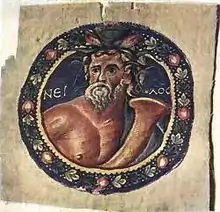
The Potamoi (Greek: Ποταμοί, "Rivers") are the gods of rivers and streams of the earth in Greek mythology.
Mythology
The river gods were the 3000 sons of the great earth-encircling river Oceanus and his wife Tethys and the brothers of the Oceanids.[1] They were also the fathers of the Naiads. The river gods were depicted in one of three forms: a man-headed bull, a bull-headed man with the body of a serpent-like fish from the waist down, or as a reclining man with an arm resting upon an amphora jug pouring water.
Notable river gods include:
- Achelous, the god of the Achelous River, the largest river in Greece, who gave his daughter in marriage to Alcmaeon,[2] and was defeated by Heracles in a wrestling contest for the right to marry Deianira.[3]
- Alpheus, who fell in love with the nymph Arethusa, pursuing her to Syracuse, where she was transformed into a spring by Artemis.[4]
- Asopus, father of many naiads. His daughter Aegina was carried off to the island Aegina by Zeus. Another daughter, Sinope, tricked three amorous gods into leaving her virginity intact.
- Inachus, the first king of Argos and progenitor of the Argive line through his son Argus.
- Nilus, Egyptian river god and the father of numerous daughters who mingled with the descendants of Inachus, forming a dynasty of kings in Egypt, Libya, Arabia and Ethiopia.
- Peneus, river god of Thessaly flowing from the foot of Pindus. He was the father of Daphne and Stilbe, love interests of the god Apollo.
- Scamander, who fought on the side of the Trojans during the Trojan War, and was offended when Achilles polluted his waters with the a large number of Trojan corpses. In response, he overflowed his banks, nearly drowning Achilles.[5]
Ancient Greek poet Hesiod mentioned several river gods by name, along with their origin story, in Theogonia[6] ("the birth of the gods"):
And Tethys bare to Ocean eddying rivers, Nilus, and Alpheus, and deep-swirling Eridanus, Strymon, and Meander, and the fair stream of Ister, and Phasis, and Rhesus, and the silver eddies of Achelous, Nessus, and Rhodius, Haliacmon, and Heptaporus, Granicus, and Aesepus, and holy Simois, and Peneus, and Hermus, and Caicus fair stream, and great Sangarius, Ladon, Parthenius, Euenus, Ardescus, and divine Scamander. — Theogony, Hesiod. Translated by Hugh G. Evelyn-White (1914)[7][8]
List of Potamoi
The following are the sons of Oceanus and Tethys:[9]
| Name of river | River god | Sources | Location | Son of Oceanus and Tethys | ||||||
|---|---|---|---|---|---|---|---|---|---|---|
| Hes. | Ovid | Apol. | Plut. | Hyg. | Pau. | Others | ||||
| Achelous or Akheloios | ✓ | ✓ | ✓ | ✓ | ✓ | ✓ | ✓ | Homer, Sophocles, Euripides, Callimachus, Apollonius Rhodius, Diodorus Siculus, Statius, Hyginus, Plato, Aristotle | Aetolia | ✓ |
| Acheron | ✓ | ✓ | ✓ | Underworld and Thesprotia | *presumably | |||||
| Acis | Changed into a river | ✓ | Sicily | son of Pan and nymph Symaethis | ||||||
| Acragas | ? | Sicily | ||||||||
| Aeas | ✓ | ✓ | Epirus | * | ||||||
| Aegaeus | ✓ | Apollonius | Scheria (Corcyra) | * | ||||||
| Aesar | ✓ | Strabo | Tyrrhenia or Etruria | * | ||||||
| Aesepus | ✓ | ✓ | Troad | ✓ | ||||||
| Almo | ✓ | ✓ | Latium | * | ||||||
| Alpheus | ✓ | ✓ | ✓ | ✓ | ✓ | ✓ | Arcadia | ✓ | ||
| Amnisos | ✓ | Apollonius, Callimachus | Crete | * | ||||||
| Amphrysos | ✓ | ✓ | Thessaly | * | ||||||
| Anapus | ✓ | ✓ | Nonnus | Sicily | * | |||||
| Anauros | ? | Thessaly | ||||||||
| Anigros | ✓ | Strabo | Elis | * | ||||||
| Apidanus | ✓ | ✓ | Thessaly | * | ||||||
| Arar | River named after | ✓ | Gallia Celtica (Celtic Gaul) | |||||||
| Araxes | River named after | ✓ | Armenia | son of Pylus | ||||||
| Ardescus | ✓ | ✓ | Thrace | ✓ | ||||||
| Arnos | ✓ | Strabo | Etruria | * | ||||||
| Ascanius | ✓ | ✓ | Antoninus | Mysia | * | |||||
| Asopus | ✓ | ✓ | ✓ | Boeotia and Argos | ✓; some accounts, son of Zeus and Eurynome or Poseidon and either Pero or Celusa | |||||
| Asterion | ✓ | ✓ | Argos | * | ||||||
| Axenus or Axius | ✓ | ✓ | Paeonia and Macedonia | ✓ | ||||||
| Baphyras | ? | Pieria | ||||||||
| Borysthenes | ✓ | Antoninus | Scythia | * | ||||||
| Brychon | ✓ | Lycophron | Chersonnese | * | ||||||
| Caanthus | ✓ | ✓ | ✓ | |||||||
| Caicinus | ✓ | ✓ | Bruttium | * | ||||||
| Caicus | ✓ | ✓ | ✓ | Teuthrania, Mysia | ✓ | |||||
| Cayster | ✓ | ✓ | Lydia | * | ||||||
| Cebren | ✓ | ✓ | ✓ | Parthenius | Troad | * | ||||
| Cephissus | ✓ | ✓ | ✓ | ✓ | ✓ | Phocis, Attica, Argos | ✓ | |||
| Chremetes | ✓ | Nonnus | Libya | * | ||||||
| Cladeus | ? | ✓ | Elis | * | ||||||
| Clitumnus | ? | Umbria | * | |||||||
| Cocytus | ✓ | Oppian | Underworld and Thesprotia | * | ||||||
| Cratais | ✓ | ✓ | * | |||||||
| Crinisus | ✓ | ✓ | Virgil, Lycophron, Servius, Aelian | Sicily | * | |||||
| Cydnos | ✓ | Nonnus | Cilicia | * | ||||||
| Cytheros | ? | ✓ | Elis | * | ||||||
| Elisson | ? | Statius | Achaea | * | ||||||
| Enipeus | ✓ | ✓ | ✓ | Thessaly | * | |||||
| Erasinus | ✓ | ✓ | Argos | * | ||||||
| Eridanus | ✓ | ✓ | ✓ | Attica | ✓ | |||||
| Eridanus | ✓ | ✓ | Virgil, Nonnus | Hyperborea, | ✓ | |||||
| Erymanthus | ✓ | ✓ | Aelian | Attica | * | |||||
| Euphrates | ✓ | ✓ | ✓ | Assyria | ✓ | |||||
| Eurotas | ✓ River named after | ✓ | ✓ | ✓ | Laconia | son of Lelex and Cleocharia or of Myles | ||||
| Evenus or | ✓ | ✓ | ✓ | ✓ | Aetolia | ✓ ; some accounts, a mortal son of Ares and either Demodice or Stratonice who flung himself to the river Lycormas | ||||
| Lycormas | ||||||||||
| Ganges | ✓ | ✓ | ✓ | India | * | |||||
| Granicus | ✓ | ✓ | ✓ | Troad | ✓ | |||||
| Haliacmon | ✓ | ✓ | Macedonia | ✓ | ||||||
| Halys | ✓ | Apollonius, Valerius Flaccus | Paphlygonia and Pontos | * | ||||||
| Hebrus | ✓ | ✓ | Lucian | Ciconia, Thrace | * | |||||
| Heptaporus | ✓ | ✓ | Troad | ✓ | ||||||
| Hermus | ✓ | ✓ | Lydia | * | ||||||
| Hydaspes | ✓ | ✓ | Nonnus | India | ✓; son of Thaumas and Electra | |||||
| Ilissos | ✓ | Plato | Attica | * | ||||||
| Imbrasos | ✓ | Athenaeus | Samos | * | ||||||
| Inachus | ✓ | ✓ | ✓ | ✓ | ✓ | Argos | ✓ | |||
| Indus | ✓ | ✓ | ✓ | India or Caria | ✓ | |||||
| Inopos | ✓ | Callimachus | Delos | * | ||||||
| Ismenus | ✓ | ✓ | ✓ | Boeotia | ✓ | |||||
| Istrus or Ister | ✓ | ✓ | Scythia | ✓ | ||||||
| Ladon | ✓ | ✓ | ✓ | ✓ | Arcadia | ✓ | ||||
| Lamos | ✓ | Nonnus | Cilicia or Boeotia | ✓ | ||||||
| Marsyas | River named after | ✓ | Phrygia | a satyr; son of Hyagnis and either Olympus or Oeagrus | ||||||
| Maeander | ✓ | ✓ | ✓ | ✓ | ✓ | ✓ | Caria | ✓ | ||
| Meles | ✓ | Hellanicus, Eugaeon | Lydia | * | ||||||
| Mincius | ✓ | Virgil | Gallia, Italy | * | ||||||
| Nestos or Nessus | ✓ | ✓ | Bistonia, Thrace | ✓ | ||||||
| Nilus | ✓ | ✓ | ✓ | ✓ | ✓ | Egypt | ✓ | |||
| Numicius | ✓ | ✓ | Latium, Italy | * | ||||||
| Nymphaeus | ? | Quintus Smyrnaeus | Bithynia and Paphlagonia | |||||||
| Orontes | ✓ | ✓ | Syria | ✓ | ||||||
| Pactolus | ✓ | ✓ | Nonnus | Lydia | * | |||||
| Parthenius | ✓ | ✓ | Paphlagonia | ✓ | ||||||
| Phasis | ✓ | ✓ | ✓ | Colchis | ✓ | |||||
| Phlegethon or Pyriphlegethon | ✓ | Virgil, Statius | Underworld | son of Cocytus | ||||||
| Phyllis | ✓ | Apollonius | Thynia, Anatolia | * | ||||||
| Peneus | ✓ | ✓ | ✓ | ✓ | Thessaly | ✓ | ||||
| Pleistos | ✓ | Apollonius | Phocis | * | ||||||
| Porpax | ✓ | Aelian | Sicily | * | ||||||
| Rhesus | ✓ | ✓ | Rhesus (Ancient Greek: Ῥῆσος / Rhẽsos, Latin; Rhesus) was a river in Bithynia,[10] Troad, Anatolia (modern-day Hisarlik, Çanakkale, Turkey).[11] Per the Barrington Atlas, the Rhesus is likely Karaath Çay, a tributary of the Biga Çayı (known to antiquity as the Granicus).[12] The Rhesus is alternately called the Rhedas, and was said to flow into the "Thracian Bosphorus at Chalcedon."[13] | ✓ | ||||||
| Rhine | ✓ | Nonnus | Switzerland/Germany/France/Netherlands | * | ||||||
| Rhodius | ✓ | ✓ | Troad | ✓ | ||||||
| Rhyndacus | ✓ | Nonnus | Phrygia and Bithynia | * | ||||||
| Sangarius or Sagaris | ✓ | ✓ | ✓ | ✓ | Phrygia | ✓ | ||||
| Satnioeis | ? | Homer | Troad | |||||||
| Scamander | ✓ | ✓ | ✓ | ✓ | ✓ | Troad | ✓ | |||
| Selemnus | ? | ✓ | Achaea | |||||||
| Simoeis | ✓ | ✓ | ✓ | ✓ | ✓ | Troad | ✓ | |||
| Spercheus | ✓ | ✓ | Malis | |||||||
| Strymon | ✓ | ✓ | ✓ | ✓ | ✓ | Edonia, Thrace | ✓ | |||
| Symaethus | ✓ | ✓ | Sicily | * | ||||||
| Tanais | ✓ | ✓ | ✓ | Scythia | ✓ | |||||
| Telmessus | ✓ | Aelian | Sicily | * | ||||||
| Termessus | ✓ | ✓ | Boeotia | * | ||||||
| Thermodon | ✓ | ✓ | ✓ | Pontos and Assyria | ✓ | |||||
| Tiberinus | ✓ | Virgil | Latium, Italy | * | ||||||
| Tigris | ✓ | ✓ | ✓ | Assyria | ✓ | |||||
| Titaressus[14] | ? | Homer, Strabo, Seneca | Thessaly | |||||||
| TOTAL | 89 | 26 | 18 | 17 | 26 | 22 | 18 | 40 (+50*) | ||
See also
- List of Oceanids
- Potamides (river nymphs)
Notes
- ↑ Hesiod, Theogony 337–345, 366–370.
- ↑ Apollodorus, 3.7.5.
- ↑ Apollodorus, 1.8.1, 2.7.5.
- ↑ Smith, "Alpheius".
- ↑ Homer, Iliad 20.74, 21.211 ff..
- ↑ θεογονία. Liddell, Henry George; Scott, Robert; A Greek–English Lexicon at the Perseus Project
- ↑ The Theogony. Translated by Evelyn-White, Hugh G. 1914. ISBN 978-1-4209-0525-0. OCLC 1289856352.
- ↑ Hesiod (1914). Hesiod, Homeric Hymns, Epic Cycle, Homerica. Vol. 57. H G. Loeb Classical Library. London: William Heinemann.
- ↑ Hesiod, Theogony 334; Pseudo-Plutarch, De fluviis; Hyginus, Fabulae Preface
- ↑ William Smith; William Wayte; G. E. Marindin (1890). "Rhesus". Dictionary of Greek and Roman Antiquities. Albemarle Street, London: John Murray. Retrieved 2023-01-23 – via www.perseus.tufts.edu.
- ↑ Homer (2011). "12". The Iliad of Homer. Richmond Lattimore, Richard P. Martin. Chicago: University of Chicago Press. ISBN 978-0-226-47048-1. OCLC 704121276.
[After the Greeks had departed from Troy :] Poseidon and Apollon took counsel to wreck the wall [of the Greeks], letting loose the strenght of rivers upon it, all the rivers that run to the sea from the mountains of Ida, Rhesos (Rhesus) and Heptaporos, Karesos (Caresus) and Rhodios, Grenikos (Granicus) and Aisepos (Aesepus), and immortal Skamandros (Scamander) and Simoeis (. . .).
- ↑ Huxley, George (2002). "Review of Parthenius of Nicaea. The poetical fragments and the ᾽Ερωτικὰ Παθήματα". Hermathena (172): 110–117. ISSN 0018-0750. JSTOR 23041295.
- ↑ A Classical Manual: Being a Mythological, Historical, and Geographical Commentary on Pope's Homer and Dryden's Aeneid of Virgil. London: J. Murray. 1833. p. 216 – via Google Books.
- ↑ Homer,Iliad
References
- Apollodorus, Apollodorus, The Library, with an English Translation by Sir James George Frazer, F.B.A., F.R.S. in 2 Volumes. Cambridge, Massachusetts, Harvard University Press; London, William Heinemann Ltd. 1921. Online version at the Perseus Digital Library.
- Hesiod, Theogony, in The Homeric Hymns and Homerica with an English Translation by Hugh G. Evelyn-White, Cambridge, Massachusetts., Harvard University Press; London, William Heinemann Ltd. 1914. Online version at the Perseus Digital Library.
- Homer, The Iliad with an English Translation by A.T. Murray, Ph.D. in two volumes. Cambridge, Massachusetts., Harvard University Press; London, William Heinemann, Ltd. 1924. Online version at the Perseus Digital Library.
- Hyginus, Gaius Julius, Astronomica, in The Myths of Hyginus, edited and translated by Mary A. Grant, Lawrence: University of Kansas Press, 1960.
- Smith, William; Dictionary of Greek and Roman Biography and Mythology, London (1873).
External links
- "Potamoi" at Theoi.com